Home / Foundations and how to read a call / Ports, transports, and where a request can go
Ports, transports, and where a request can go
SIP uses UDP or TCP on 5060 and TLS on 5061, and a request that does not fit one datagram needs a connection.
Learn in 5 minutes
- State the default ports for UDP, TCP, and TLS
- Explain why a large INVITE moves off UDP
- Recognize WebSocket as a transport, not a new method set
Visual
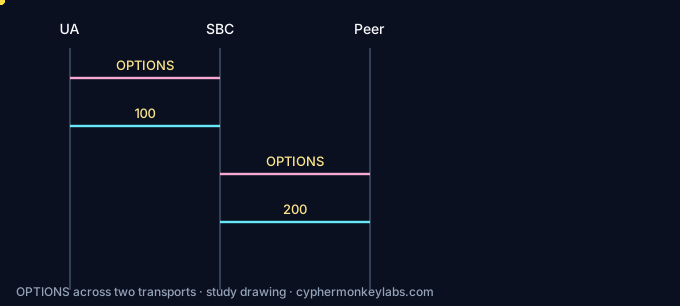
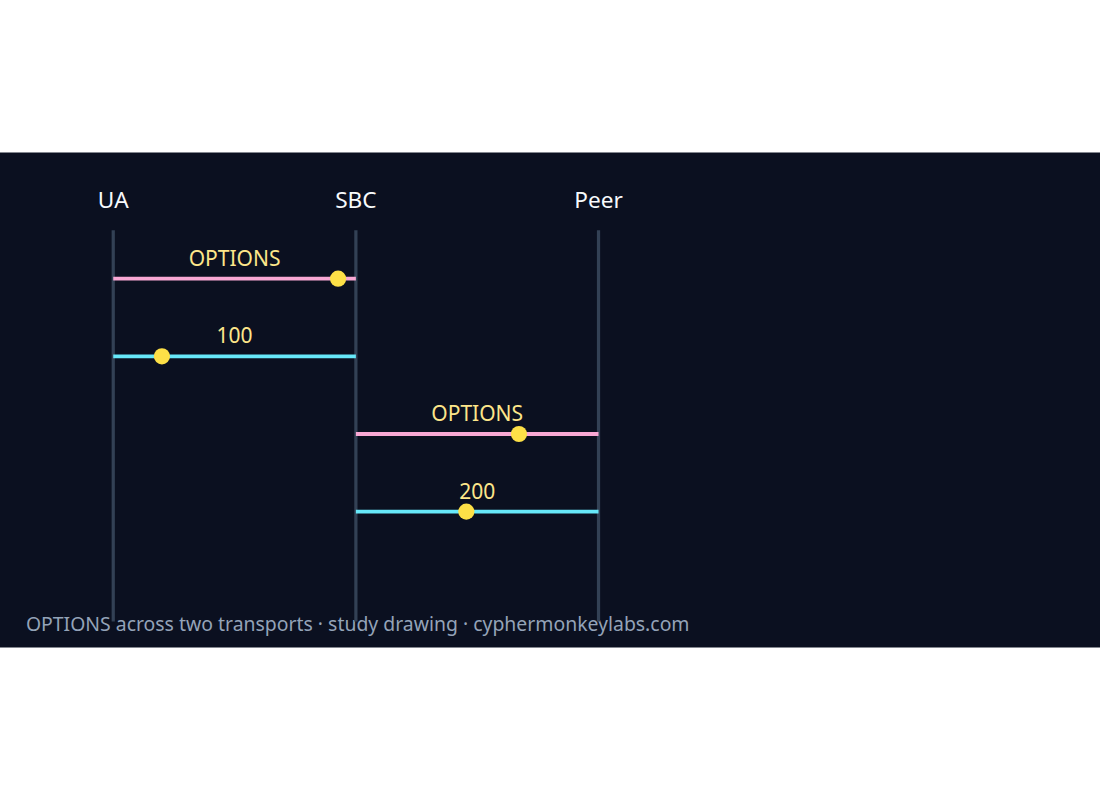
A peer document can override a default. The default is the rule when the peer is silent.
Worked example
Read the OPTIONS Dissect the OPTIONS. The CSeq method token has to match the request line.
- Paste the message into the dissector.
- Find the request line and the CSeq.
- Note the transport token in Via.
Fault
A large INVITE on UDP is retransmitted and then times out. The same peer answers when the request is sent on TCP.
Section 18 is why a large request moves to TCP or TLS.
Quiz
Ecosystem
Glossary, sister systems, and the integration seam for this room.
Quality management and recording QM scores interactions. The standardized way an SBC forks a session to a recorder is SIPREC.
Sources and go deeper
- RFC 3261 §18 — last checked 2026-10
- RFC 7118 — last checked 2026-10
- RFC 5764 — last checked 2026-10
- RFC 3261 §7 — last checked 2026-10
- RFC 3261 §8 — last checked 2026-10