Home / Foundations and how to read a call / What SIP is for
What SIP is for
SIP creates, changes, and ends sessions, while RTP carries the media those sessions describe.
Learn in 5 minutes
- Separate SIP signaling from RTP media
- Name user agent, proxy, registrar, and redirect server
- Treat 100 Trying as hop-by-hop quench, not as an answer
Visual
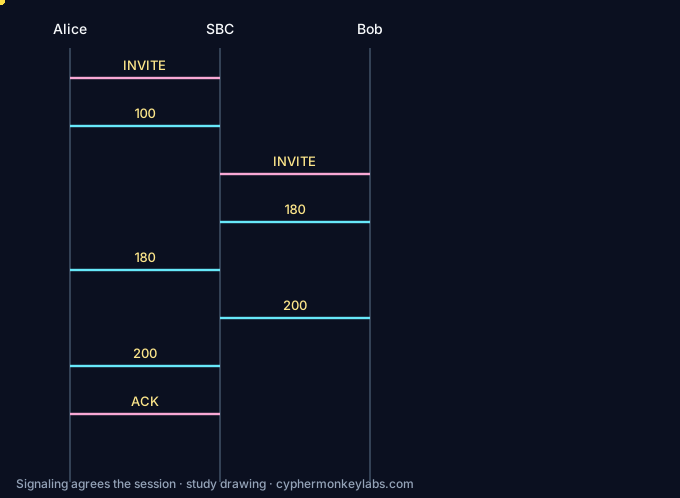
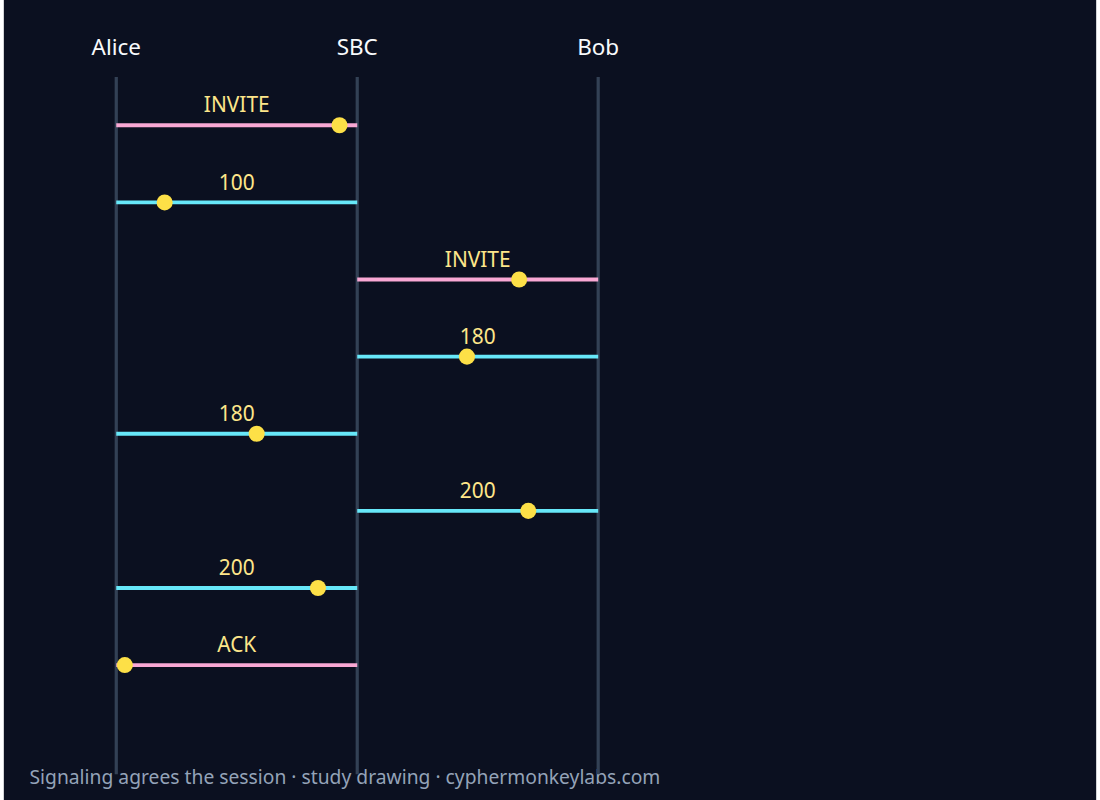
SIP agrees the session. SDP names the media. RTP moves the samples.
Worked example
Find the offer Play the ladder and open the first INVITE. The audio offer is the SDP body, not a later response.
- Play the ladder through the first INVITE.
- Inspect that INVITE and find the m= line.
- Confirm the 100 Trying has no SDP body.
Fault
The ladder shows 200 OK with SDP, and the caller hears silence.
SDP names the RTP address and port. The samples are a separate flow.
Quiz
Ecosystem
Glossary, sister systems, and the integration seam for this room.
Workforce management WFM forecasts volume and builds schedules. It consumes contact-center events. It does not parse Via headers. When a forecast is wrong, the SIP symptom is usually queue delay and 480 or carrier congestion, not a broken dialog ID.
Sources and go deeper
- RFC 3261 — last checked 2026-10
- RFC 3261 §4 — last checked 2026-10
- RFC 3550 — last checked 2026-10
- RFC 3264 — last checked 2026-10
- RFC 7092 — last checked 2026-10
- RFC 5853 — last checked 2026-10
- RFC 3261 §16 — last checked 2026-10
- RFC 3261 §10 — last checked 2026-10
- RFC 3261 §21 — last checked 2026-10