Home / RTP, codecs, and DTMF / G.711, G.729, and Opus
G.711, G.729, and Opus
Choose a codec both sides named. Read RFC 6716 and the Opus license before you draw any legal conclusion.
Learn in 5 minutes
- Separate G.711 PCMU from PCMA
- Point at ITU-T G.729 without stating a patent date
- Read the Opus RFC and the license, and stop there
Visual
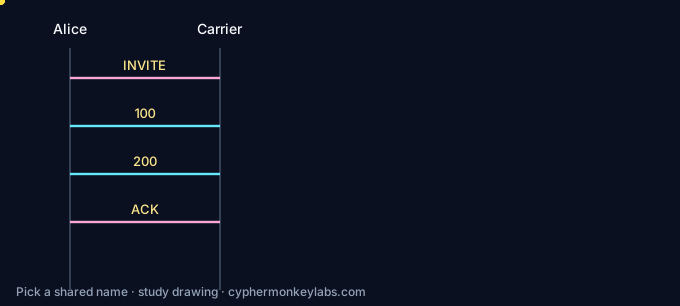
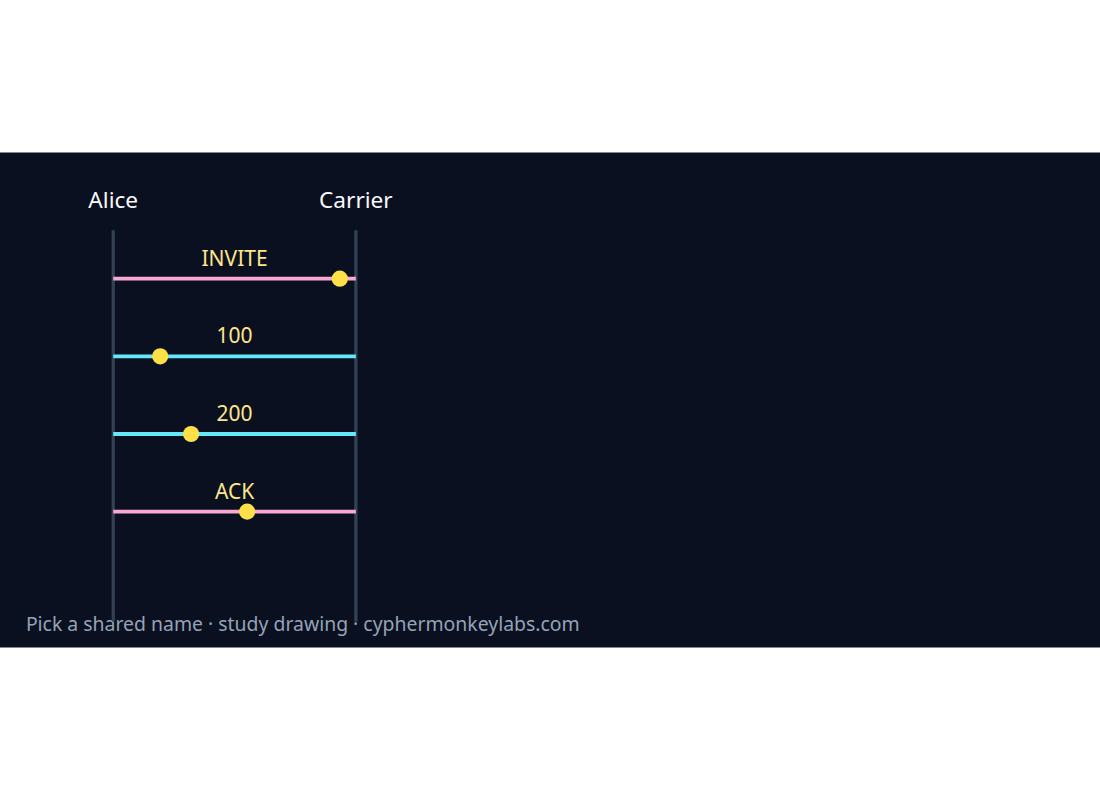
Codec documents and license pages are different from the payload type number.
Worked example
See opus survive a new payload type Negotiate the offer and answer. Confirm opus matches across payload types 96 and 111, and that G722 stays at 8000.
- Press Negotiate.
- Record both opus payload type numbers.
- Read the G722 clock.
Fault
The offer lists payload 0 only. The answer lists payload 8 only. Both sides claim G.711 and nobody hears audio.
G.711 includes both laws. RFC 3551 gives them different payload types.
Quiz
Ecosystem
Glossary, sister systems, and the integration seam for this room.
E911 / emergency calling Location has to ride with the call. RFC 6881 is the BCP, RFC 6442 carries location in SIP, and the FCC MLTS page states Kari’s Law and RAY BAUM’s Act obligations for multi-line systems.
Sources and go deeper
- ITU-T G.711 — last checked 2026-10
- ITU-T G.729 — last checked 2026-10
- RFC 3551 — last checked 2026-10
- RFC 6716 — last checked 2026-10
- Opus license — last checked 2026-10
- IETF IPR disclosures — last checked 2026-10
- RFC 3264 — last checked 2026-10