Home / RTP, codecs, and DTMF / The RTP header
The RTP header
RTP version 2 carries a sequence number, a timestamp, an SSRC, and a marker bit. SIP does not carry those fields.
Learn in 5 minutes
- Name version, sequence, timestamp, SSRC, and marker
- Separate the RTP header from the SIP message
- Use the timestamp clock of the payload, not the wall clock
Visual
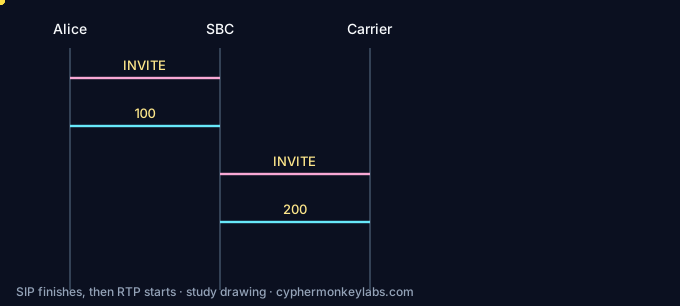
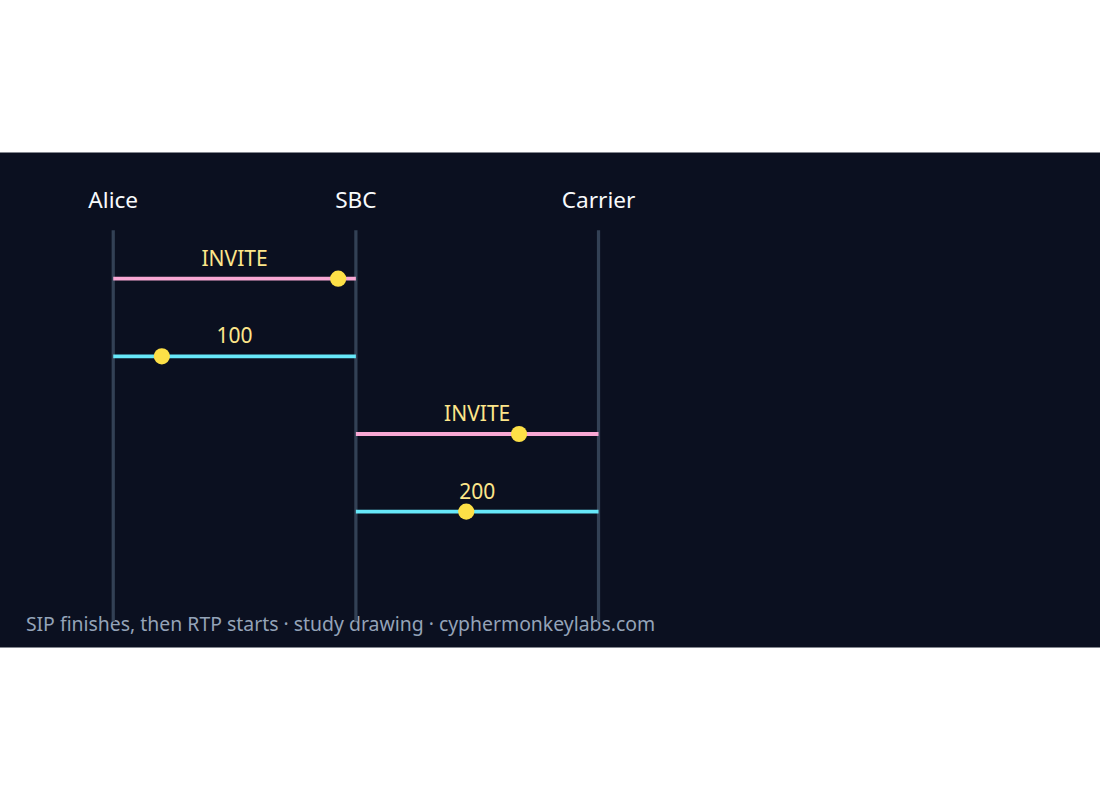
Version 2 is the version you will capture. The marker bit is part of this header.
Worked example
Find where the header is not Dissect the 200 OK. The body names a port. The RTP header is not one of the SIP headers.
- Dissect the response.
- Find m=audio.
- Name the five RTP header items you still have to capture.
Fault
The 200 OK is present, audio is choppy, and the ticket asks for the SIP CSeq to explain missing words.
RFC 3550 sequence numbers live on RTP packets. A jump from 44011 to 44014 is media loss.
Quiz
Ecosystem
Glossary, sister systems, and the integration seam for this room.
Workforce management WFM forecasts volume and builds schedules. It consumes contact-center events. It does not parse Via headers. When a forecast is wrong, the SIP symptom is usually queue delay and 480 or carrier congestion, not a broken dialog ID.