Home / NAT, ICE, and the ALG problem / TURN relays
TURN relays
TURN, RFC 8656, allocates a relay when host and server-reflexive paths fail. It obsoletes RFC 5766.
Learn in 5 minutes
- State that RFC 8656 obsoletes RFC 5766 and where status is decided
- Describe Allocate as the way a client gets a relayed address
- Use the relay only as a media path, not as a SIP registrar
Visual
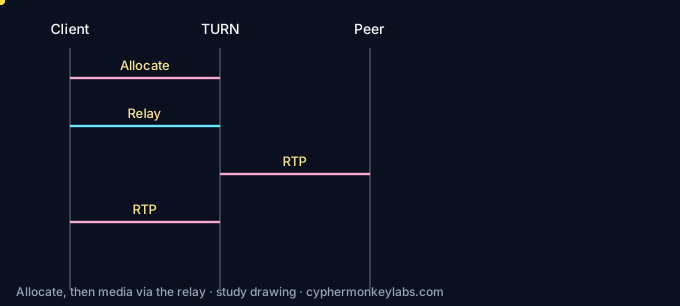
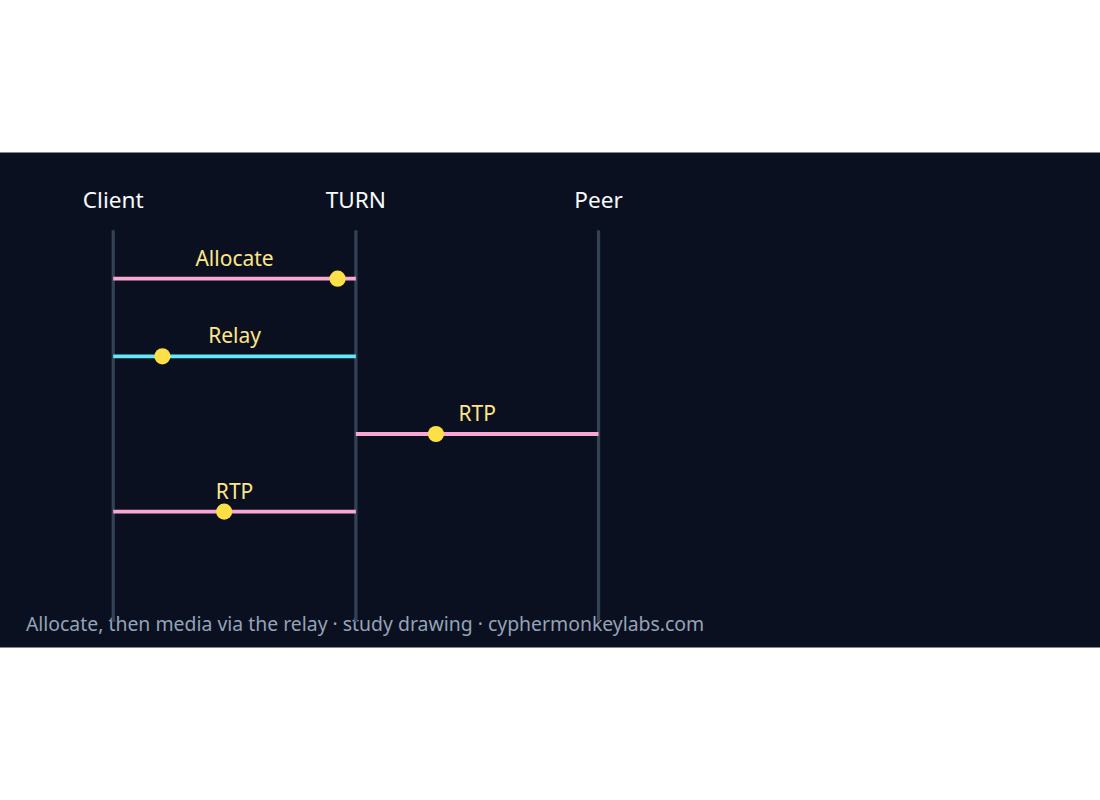
The relay address is allocated. It is candidate type relay in ICE.
Worked example
Read an Allocate result The text is a TURN result, not a SIP request. Identify the relayed address.
- Open the capture text.
- Find RELAYED-ADDRESS.
- Name the RFC that defines Allocate.
Fault
SDP says c=198.51.100.30 but no TURN Allocate succeeded. RTP to that address is dropped.
TURN relays exist because the server allocated them. RFC 8656 obsoletes RFC 5766, and the status banner is the authority.
Quiz
Ecosystem
Glossary, sister systems, and the integration seam for this room.
Analytics Amazon Connect can attach conversational analytics to an external voice system with a SIPREC connector. The analytics plane is not a second SIP proxy for the customer call.