Home / Toll fraud, E911, recording, and QoS / Emergency calling, location, and the FCC page
Emergency calling, location, and the FCC page
Service URN, location conveyance, and the FCC MLTS page. State PSAP rules are not invented here.
Learn in 5 minutes
- Use urn:service:sos from RFC 5031
- Carry location as RFC 6442 and RFC 6881 require
- Point national MLTS duties at the FCC page
Visual
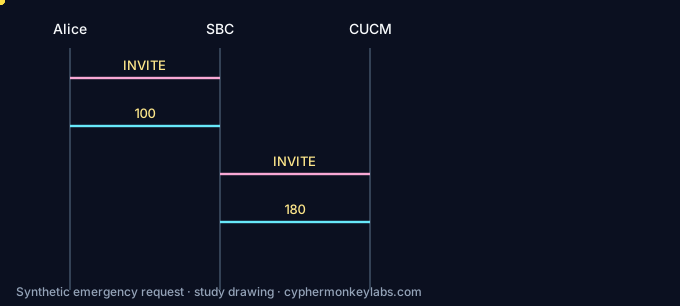
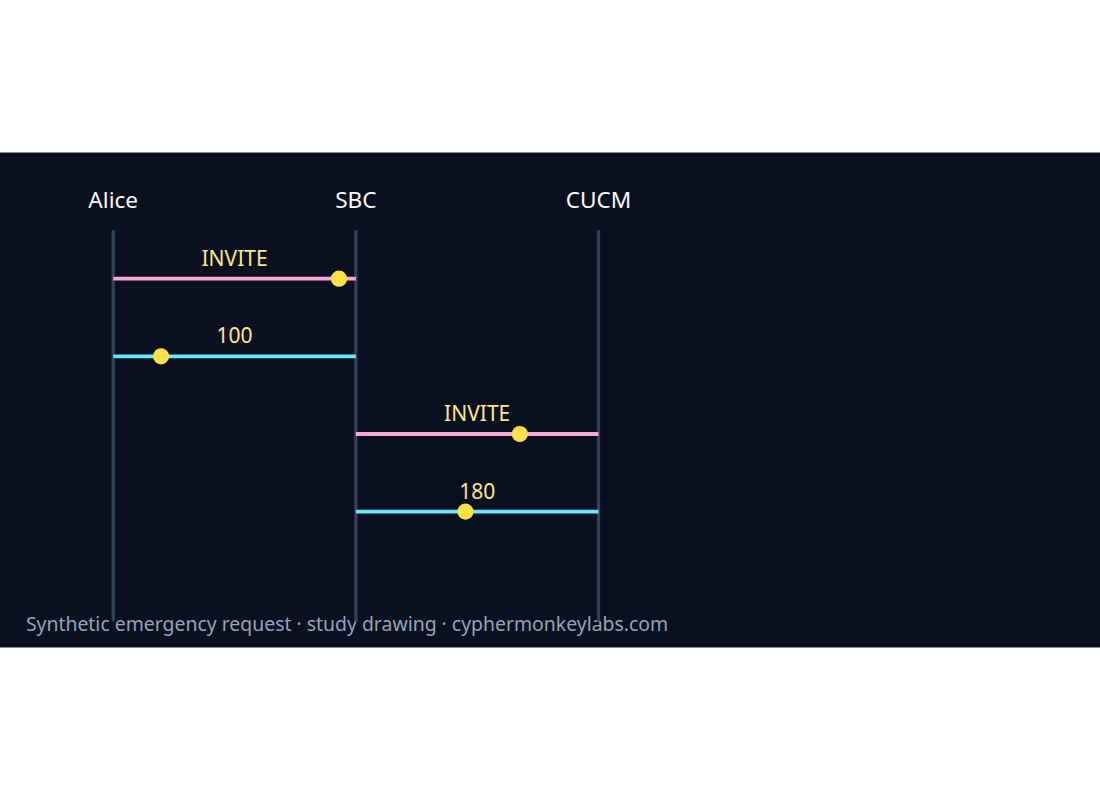
The synthetic ladder shows the URN and the header name. It does not invent a civic address or a state route.
Worked example
Read the Request-URI Inspect the first INVITE. What is the Request-URI?
- Press Play.
- Step until the hop named in the question.
- Inspect that message and answer the check.
Vendor menus, ports, and license names change. Confirm before relying on a sentence that is not an RFC.
Fault
Call-ID sos-1@example.com reaches CUCM with Request-URI urn:service:sos and no Geolocation header. The ticket says 100 Trying made location optional.
Trying is hop by hop. Location is a requirement of the emergency request.
Quiz
Ecosystem
Glossary, sister systems, and the integration seam for this room.
E911 / emergency calling Location has to ride with the call. RFC 6881 is the BCP, RFC 6442 carries location in SIP, and the FCC MLTS page states Kari’s Law and RAY BAUM’s Act obligations for multi-line systems.