Home / Toll fraud, E911, recording, and QoS / Trusted addresses and source restrictions
Trusted addresses and source restrictions
The IP address trusted list is per product page. CME and SRST do not share one list size.
Learn in 5 minutes
- Apply the trusted-list commands as a teaching snippet
- Refuse a single universal list size
- Keep source restrictions on the lab addresses
Visual
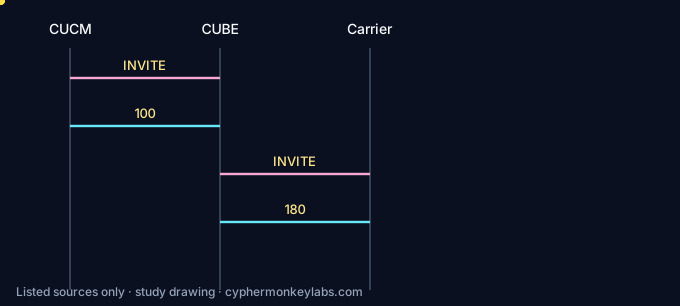
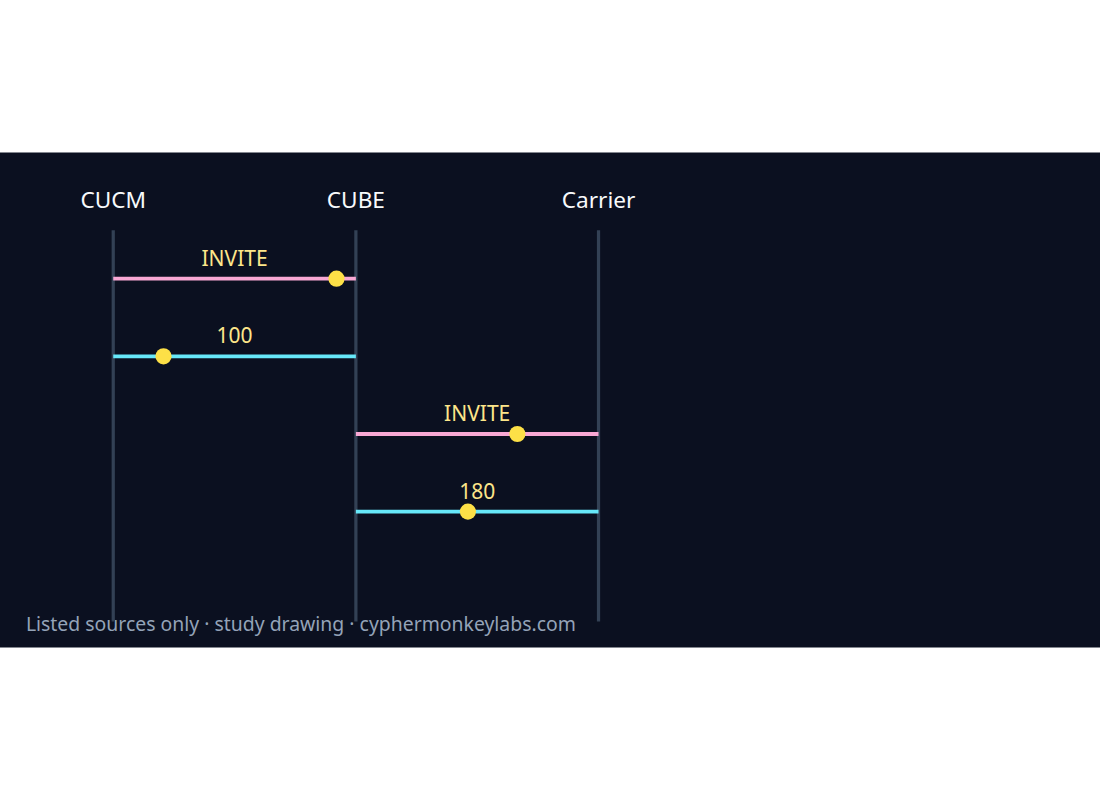
A border trusts the call agent and the carrier. Phones register to the call agent.
Worked example
Trusted list teaching snippet Read the snippet. It is the CME pattern for a border that trusts the call agent and the carrier. SRST uses its own page. No list size is stated.
- Read voice service voip.
- Name the two ipv4 addresses.
- Say why a list size is absent.
Vendor menus, ports, and license names change. Confirm before relying on a sentence that is not an RFC.
Fault
A change copies a maximum entry count from the CME page into an SRST box and drops the carrier address to make the count fit.
The lesson quotes no universal size. The carrier address belongs on this border snippet.
Quiz
Ecosystem
Glossary, sister systems, and the integration seam for this room.
Quality management and recording QM scores interactions. The standardized way an SBC forks a session to a recorder is SIPREC.
Sources and go deeper
- Cisco CME toll-fraud prevention — last checked 2026-10
- Cisco SRST trusted IP authentication — last checked 2026-10