Programming foundations · L1 · 15 min
Programs, files, and a notebook
Learn in five minutes
- A program is a file the computer can run again.
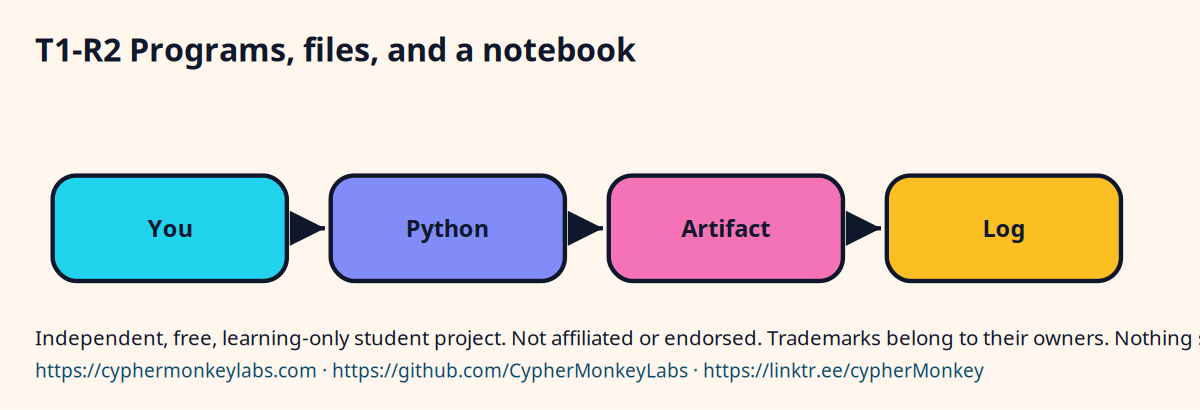
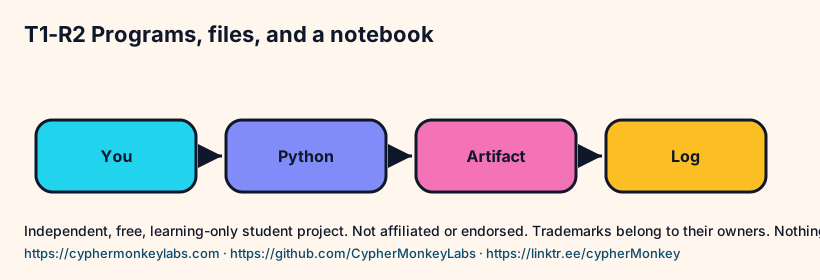
- A notebook here means a written log: input, command, output.
- The labs in labs/ use the Python standard library only.
- If no local model is listening, lab 01 says so and uses a mock.
- Commit the suite, not a secret.
The point of a notebook is that another person can see what ran. A screenshot without the command is weaker evidence than the command plus the file it wrote.
Visual
Run the local hello lab
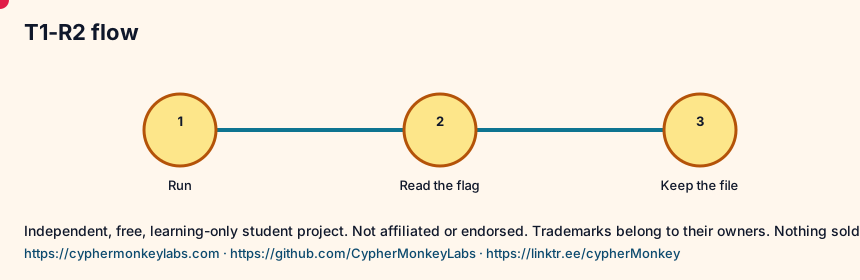
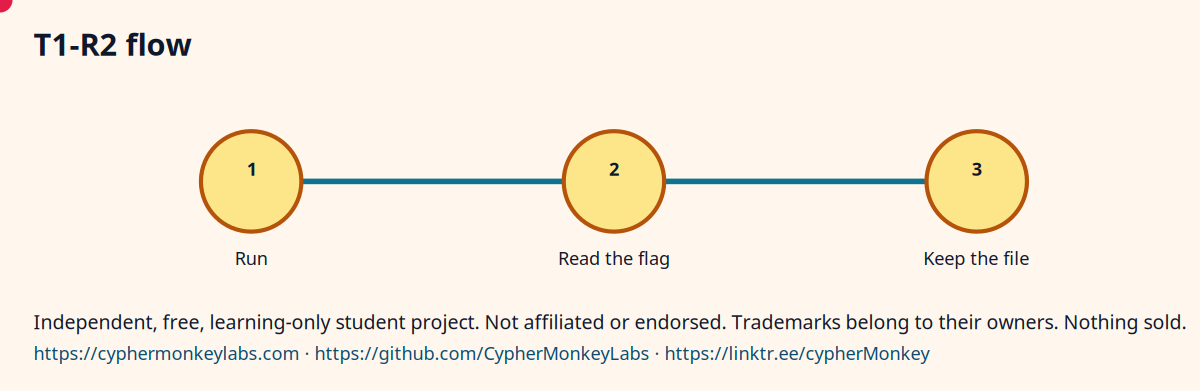
- From the repository root, run python3 labs/01-local-hello.py.
- Read whether the artifact says mock or a local runner.
- Keep the JSON artifact. Do not commit a key.
Quiz
Ecosystem
- Artifact
- A file the run wrote, so the result is not only a memory.
Sisters: Git, HTTP, JSON, unit tests.
A Python script can later call a local runner or a cloud API with the same JSON shape.
The same notebook becomes the capstone log.
Config
- Write the goal in one sentence.
- Name the input and the allowed output.
- Save the trace next to the result.
Troubleshooting
- The answer looks fluent and is wrong. Check whether a source passage actually contains the claim.
- The loop never stops. Set a step cap and stop when the tool result repeats.
Sources and go deeper
- Python 3 tutorial vendor last checked 2026-10
- Python.org community community last checked 2026-10
- Git reference vendor last checked 2026-10
- Python (programming language) — Wikipedia wikipedia last checked 2026-10
- Git — Wikipedia wikipedia last checked 2026-10