How models work · L2 · 15 min
Hallucination
Learn in five minutes
- A hallucination here means a confident claim the sources do not support.
- The model is not lying in a human sense. It is continuing text.
- Citations you did not retrieve can be invented too.
- Ask the system to refuse when the notes are silent.
- NIST's AI RMF is a vocabulary for risk, not a product certificate.
If the notes do not mention a price, the right output is a refusal, not a guessed price. This lab does not publish prices.
Visual
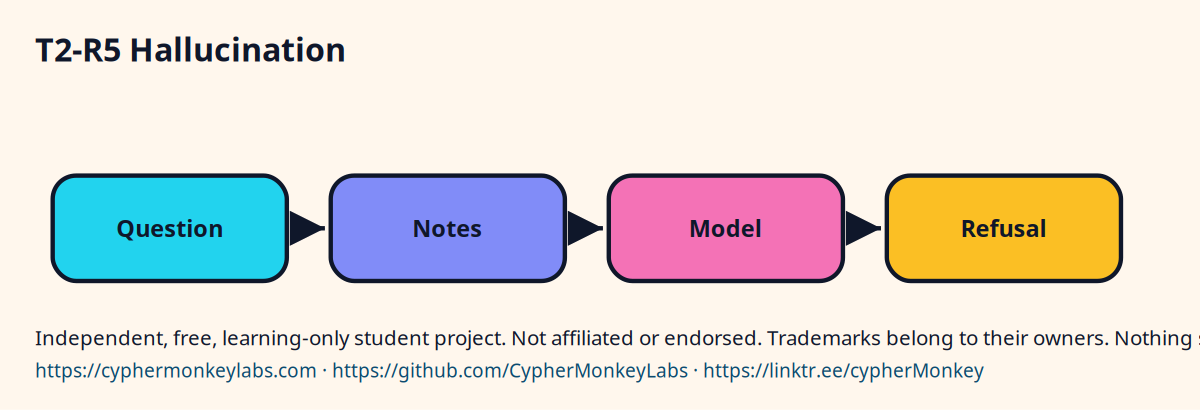
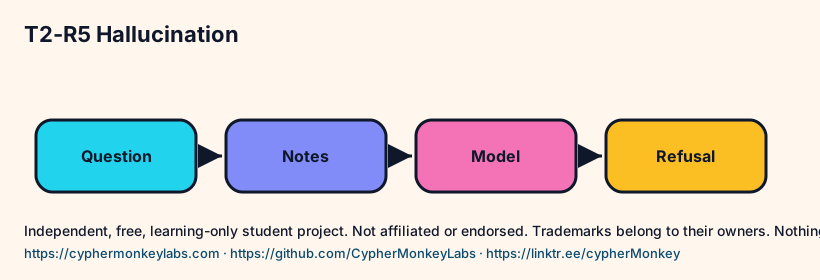
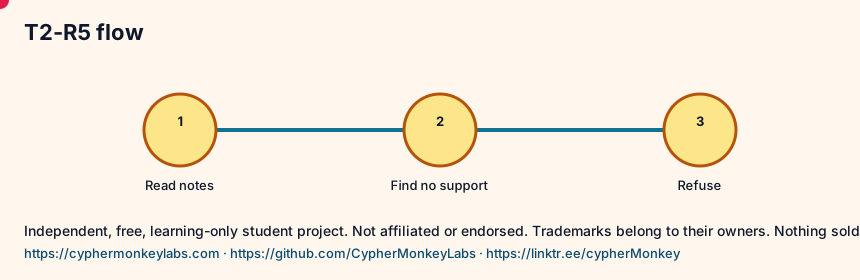
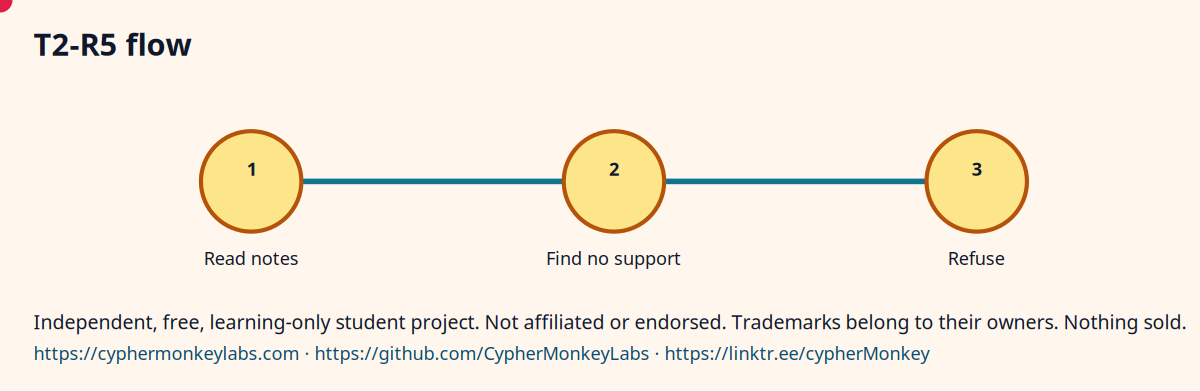
Refuse a missing price
- Give a note that has no price.
- Ask for the price.
- Accept only 'not in the note' or an equivalent refusal.
- Reject a fluent number.
Quiz
Ecosystem
- Refusal
- Stopping instead of filling a gap with a guess.
Sisters: Tokenizers, Transformers, Decoding, Model cards.
The same next-token idea sits under chat, voice, and tool calls.
Pin a model id when you leave the toy explanations.
Config
- Write the goal in one sentence.
- Name the input and the allowed output.
- Save the trace next to the result.
Troubleshooting
- The answer looks fluent and is wrong. Check whether a source passage actually contains the claim.
- The loop never stops. Set a step cap and stop when the tool result repeats.
Sources and go deeper
- NIST AI Risk Management Framework spec last checked 2026-10
- OWASP Top 10 for Large Language Model Applications community last checked 2026-10
- Large language model — Wikipedia wikipedia last checked 2026-10