T4 · T4-R02
Mobile and Remote Access
Learn it in 5 minutes
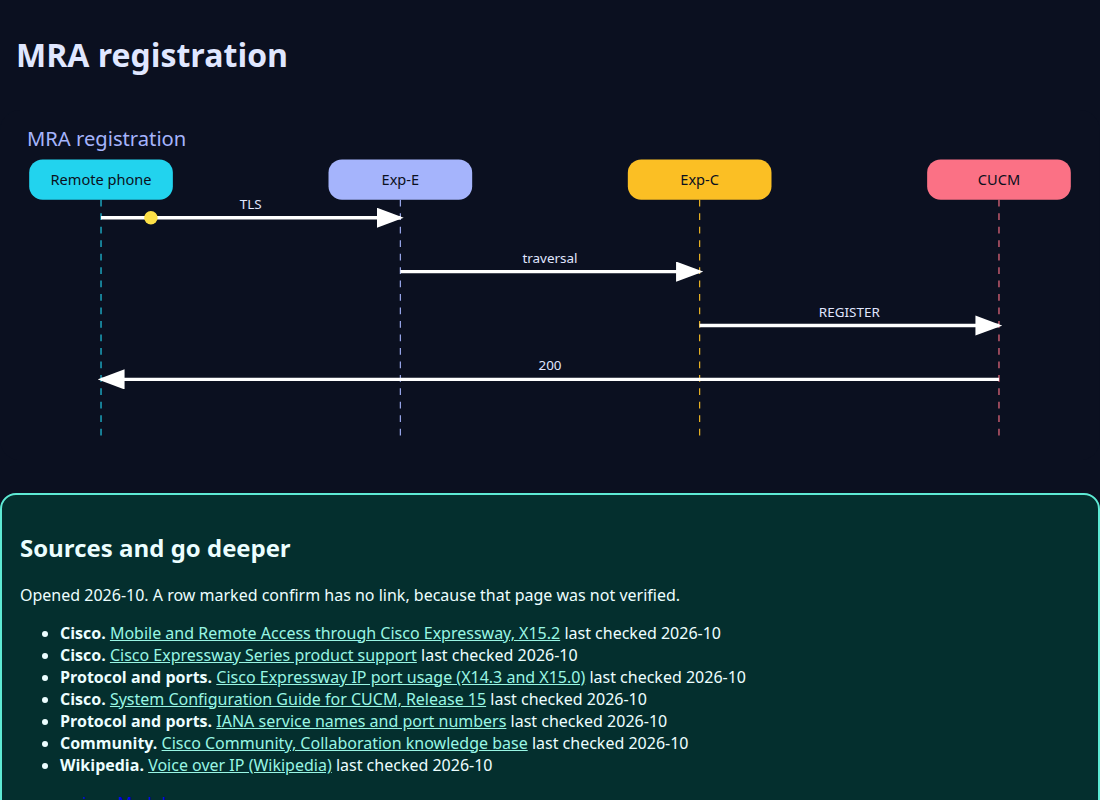
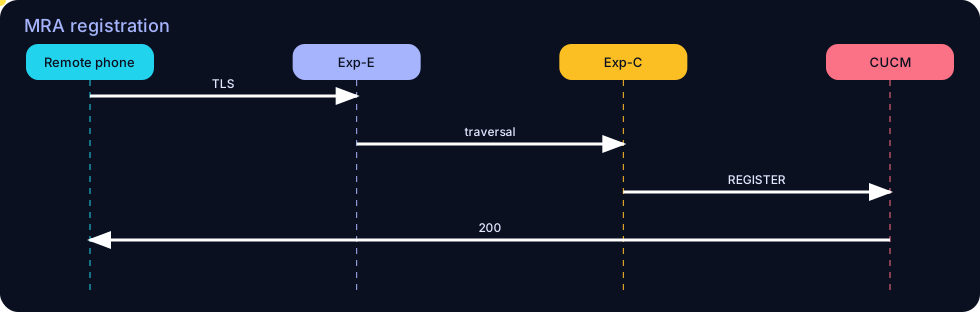
- MRA lets a remote Cisco phone or Jabber register to CUCM through the Expressway pair.
- DNS SRV records point the client at Expressway-E.
- The registration still belongs to CUCM.
- Media traversal is a separate problem from the REGISTER.
- A VPN is a different design. Do not mix the words.
Visual
What is going on
Users say the phone is 'on the VPN' when it is on MRA, or the reverse. The logs are different. MRA failures are often DNS, certificates, or the CUCM registration that never completes after the edge accepted the TLS session.
Confirm before relying. Confirm the current SRV names and port list in the MRA deployment guide.
Worked example
A remote phone resolves the edge, completes TLS to Expressway-E, and never appears on CUCM. The traversal zone is up, but the CUCM domain or the registration allow list on Expressway does not include that device. Look at the Expressway registration status and then CUCM.
Quiz
1. MRA replaces CUCM as the registrar.
False. CUCM remains the registrar.
Ecosystem
Sister pieces sit on the ecosystem page: the glossary, the mind map, the integration map, and the sibling labs.
- MRA — Mobile and Remote Access through Expressway.
- SRV — A DNS record the client uses to find the edge.
Config. Record the SRV names you published and the certificate SAN.
Troubleshooting. If LAN phones work and remote phones fail, compare DNS and certificates before the dial plan.
Bridge. Webex app registration to the cloud is not MRA. Say which client you mean.
Mind map, sister technologies, and future hooks live on the ecosystem page.
Sources
Product screens move. Confirm the guide for your release before you change a live system.
Sources and go deeper
Opened 2026-10. A row marked confirm has no link, because that page was not verified.
- Cisco. Mobile and Remote Access through Cisco Expressway, X15.2 last checked 2026-10
- Cisco. Cisco Expressway Series product support last checked 2026-10
- Protocol and ports. Cisco Expressway IP port usage (X14.3 and X15.0) last checked 2026-10
- Cisco. System Configuration Guide for CUCM, Release 15 last checked 2026-10
- Protocol and ports. IANA service names and port numbers last checked 2026-10
- Community. Cisco Community, Collaboration knowledge base last checked 2026-10
- Wikipedia. Voice over IP (Wikipedia) last checked 2026-10