T8 · T8-R22 · Webhooks and IVR
Webhooks come inbound
Direction is the whole lesson. Your POST to the vendor creates or asks. The vendor's HTTP request to you is the event. Mixing them up looks like a timeout when you are waiting on the wrong side.
Counts on this page
Opened sources
Confirm rows, no URL
Learn it in 5 minutes
- Twilio's webhook introduction says Twilio uses webhooks to notify your web app when events such as incoming calls or SMS messages occur.
- It says the REST API handles requests from your app to Twilio, and webhooks handle the reverse, requests from Twilio to your app.
- The same docs area names signing webhooks with shared keys, and authentication with OAuth 2.0, Basic, or Digest.
- Bandwidth's messaging guide says a create call returns HTTP 202 Accepted, meaning the message is queued.
- Bandwidth says it retries a webhook for 24 hours until your server returns an HTTP 2xx, and then it stops.
Visual
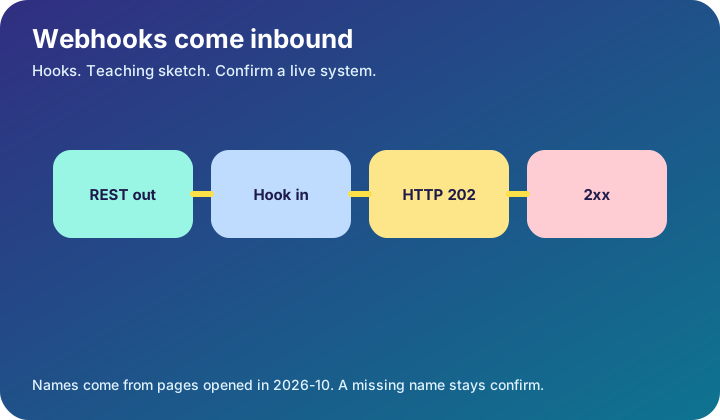
Count the boxes: 4. Each label is a name from a page or a study label marked on the drawing.
Flow
What is going on
Direction is the whole lesson. Your POST to the vendor creates or asks. The vendor's HTTP request to you is the event. Mixing them up looks like a timeout when you are waiting on the wrong side.
Bandwidth's 202 is acceptance, not delivery. Delivery is a later webhook, and failure is a message-failed webhook. The 24-hour retry is the page's limit. A handler that returns 500 for a day will stop receiving that event. Twilio's retry schedule was not the sentence this session copied, so Twilio's timing stays confirm.
Worked example
Draw two arrows. App to Twilio: REST. Twilio to app: webhook. For Bandwidth, write 202 on the create response and 2xx on the webhook response. Write the shared-key signature as a check you still have to implement from the Twilio page, not as a secret you paste here.
Quiz
1. Twilio's introduction says webhooks are requests from Twilio to your app.
True. That is the reverse of the REST direction the page describes.
2. Bandwidth's HTTP 202 means the handset has already displayed the message.
False. 202 means the message was accepted into the queue.
Ecosystem
Sister pieces sit on the ecosystem page: the glossary, the mind map, the integration map, and the bridges.
- Webhook — Twilio's name for the HTTP request it sends your app when an event occurs.
- HTTP 202 — The status Bandwidth says it returns when a message has been queued, not when it has been delivered.
Config. Record the public URL, the event type, and how you authenticate the request. Keep the signing key out of the repo.
Troubleshooting. If the vendor shows accepted and your app shows nothing, inspect the webhook response code. A non-2xx is Bandwidth's reason to retry, and then to stop after 24 hours.
Bridge. IVR verbs are what you return to a voice webhook. The next room names the verbs. This room is only the direction.
Mind map, sister technologies, and future hooks live on the ecosystem page.
Sources and go deeper
Opened 2026-10. A row marked confirm has no link, because that page was not verified.
- Twilio. Introduction to Webhooks last checked 2026-10
- Bandwidth. Bandwidth Messaging API last checked 2026-10
- Twilio. Security last checked 2026-10
- Confirm. Twilio's webhook retry schedule. confirm. Not copied from the introduction. last checked 2026-10
- Confirm. The list of ISO certificates on the Twilio security page. confirm. The page title opened. The certificate names were not read. last checked 2026-10