You pair an SBC FQDN on a verified domain, present a public certificate, signal TLS to sip.pstnhub.microsoft.com and its sip2 and sip3 partners on port 5061, and allow media UDP 3478–3481 and 49152–53247.Firewall rules must allow the published IP ranges, not only today’s DNS answer.GCC High and DoD use different proxy names.
Users need Teams and Teams Phone, homed online, not in Islands mode.Budget at least two media ports per concurrent call.Microsoft does not support media re-targeting mid-call.Codecs include SILK, G.711, G.722, G.729, and AMR-WB only when bypass is off.
Direct Routing is your certified SBC, TLS on 5061 to the PSTN hubs, and a voice route on a Teams Phone user.
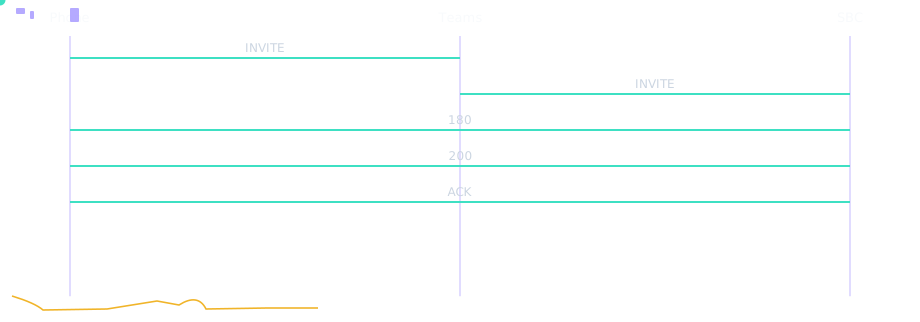
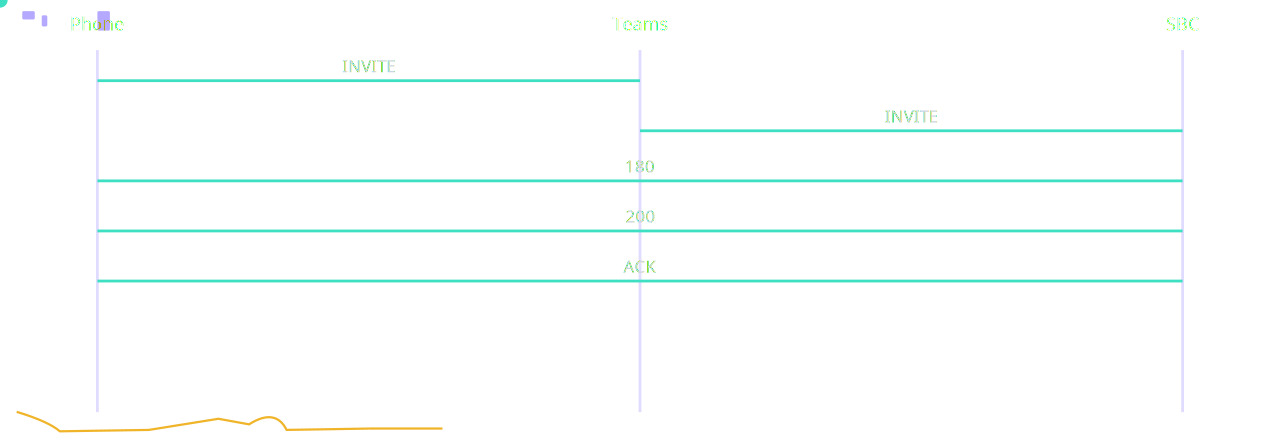
Signaling for Direct Routing. Teams keeps the dialog. A 488 is codecs, not a greeting.Documented destinations. Not a traffic volume. Counts in this drawing are teaching order, not customers.
Which description of Media ports for Direct Routing is accurate?
UDP 3478–3481 and 49152–53247 between the SBC and the media processors, unless media bypass keeps the media off that path. People open 5061 and forget media, so signaling works and audio does not. Source: https://learn.microsoft.com/en-us/microsoftteams/direct-routing-plan accessed 2026-10-14.
A colleague reports: Calls connect and both sides hear silence. Where do you start?
Calls connect and both sides hear silence. Budget at least two media ports per concurrent call on the SBC. Source: https://learn.microsoft.com/en-us/microsoftteams/direct-routing-plan accessed 2026-10-14.
Which description of Media re-targeting is accurate?
Microsoft does not support changing the media target in the middle of an active Direct Routing call. A clever SBC feature that moves media mid-call will not be a supported troubleshooting step. Source: https://learn.microsoft.com/en-us/microsoftteams/direct-routing-plan accessed 2026-10-14.
Operator Connect A certified carrier manages PSTN for you inside the tenant. You need Teams Phone. You do not need a Microsoft Calling Plan or your own SBC. Config: Enable the operator in the admin center and assign the numbers they provide. Fault: Someone also builds a Direct Routing SBC for the same numbers and the routes fight.
Operator Connect for India The India-specific operator model. It exists because India PSTN rules are not the same as a generic Operator Connect deployment. Config: Use the current India plan article and the licensed operator there. Fault: A UK SBC was proposed as the egress for an India office.
Teams Phone Mobile The user’s mobile SIM number is also their Teams number, through a certified mobile operator. Teams Phone is required. Config: Assign the operator number to the user. Do not also treat it as a spare Calling Plan. Fault: One human has two different caller IDs and the CRM matches neither.
Direct Routing You connect a certified SBC to Teams and bring your own carrier. Users need Teams and Teams Phone. They must be homed online. Islands mode is not supported. Config: Pair the FQDN, open 5061, allow media ranges, assign a voice route. Fault: The SBC is up and the user has no voice routing policy.
Sister technologies
Around the call: compliance recording, workforce management, emergency location, analytics, CRM screen pop, and an agent with a human escape. Each one has its own failure.
Config and troubleshooting
5061 is open, media is not, and both sides hear silence.
Cross-platform bridges
CUCM
Cisco CUBE is one of the SBC families named in this lab’s certification lesson. A certified release can be the Direct Routing SBC between Unified CM and Teams.
The tenant still needs a verified domain on the SBC FQDN, and the user still needs Teams Phone. The studio translator does not open a live AXL session. Confirm the current certified release before you build.
Webex
Teams Phone and Webex Calling are separate clouds. This lab does not describe a feature that registers a Webex Calling user into a Teams tenant.
A number move is usually a carrier port, a certified SBC, or a meetings interop product. Confirm before relying.
UCCE
Unified CCE stays the ACD until you migrate it. Microsoft’s contact-center articles name Connect, Extend, and Unify. They do not name a UCCE connector in the notes this lab cites.
Public switched telephone network — Wikipedia — last checked 2026-10. Wikipedia fallback for background. Confirm the vendor page before you change a tenant
Session Initiation Protocol — Wikipedia — last checked 2026-10. Wikipedia fallback for background. Confirm the vendor page before you change a tenant
Microsoft Teams blog index — Community — last checked 2026-10. Community index for the Microsoft Teams blog. This is the index, not a claim that a post discusses this room