PSTN usages are names.Voice routes attach to them.The user’s voice routing policy lists the usages in order.Teams walks that order.This campus’s matcher does the same and says so on the lab.
Give a branch a policy whose usages stop at national.Give headquarters a policy that continues to international.Do not share one policy and hope the route patterns save you.
PSTN usages are how a policy allows a route.Walk them in order.
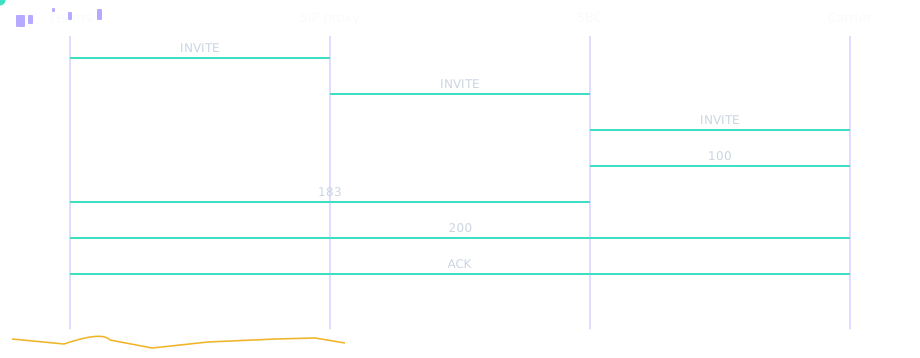
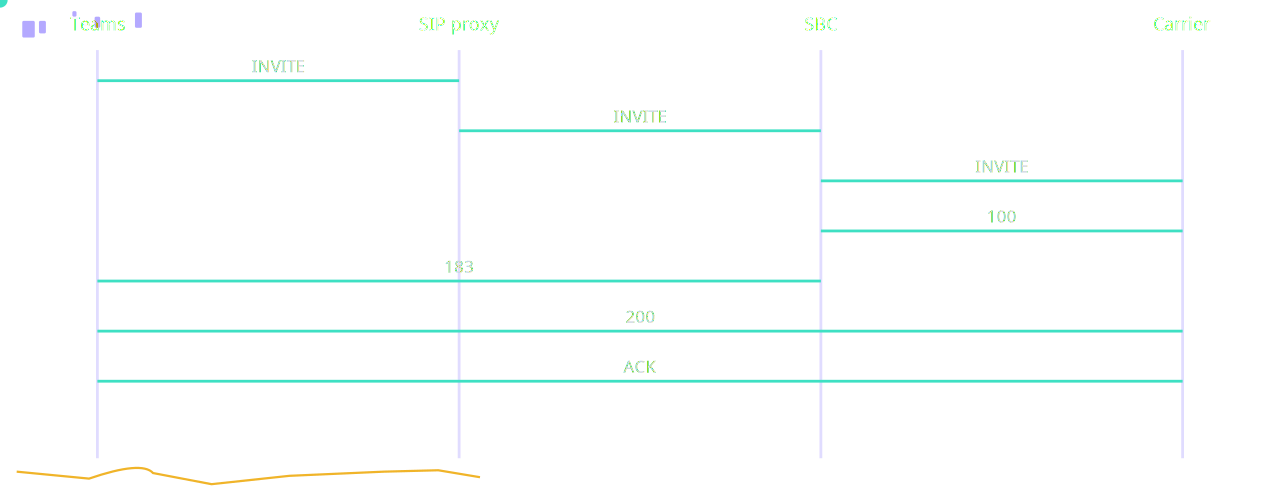
Signaling for PSTN usages are the permission. Teams keeps the dialog. A 488 is codecs, not a greeting.Example policies, not a directory. Counts in this drawing are teaching order, not customers.
A number pattern plus an ordered list of SBC gateways. It does nothing until a PSTN usage on the user’s policy points at it. The pattern is a regular expression, not a CUCM route-pattern wildcard. Source: https://learn.microsoft.com/en-us/microsoftteams/manage-voice-routing-policies accessed 2026-10-14.
A colleague reports: The route expects 10 digits and the dial plan already added +1. Where do you start?
The route expects 10 digits and the dial plan already added +1. Anchor the pattern. Test with the normalized number, not the raw digits. Source: https://learn.microsoft.com/en-us/microsoftteams/manage-voice-routing-policies accessed 2026-10-14.
Which description of Voice routing policy is accurate?
The per-user list of PSTN usages, in order. Teams walks that order when it looks for a route. Granting the wrong policy is the most common ‘the SBC is broken’ ticket. Source: https://learn.microsoft.com/en-us/microsoftteams/manage-voice-routing-policies accessed 2026-10-14.
Normalization The dial plan rewrites what a person dialed into a number the routes can match, usually E.164. The first matching rule wins. Config: Put the specific rules above the general ones. Fault: A catch-all rule is first, so the emergency rule never runs.
Tenant dial plan A set of normalization rules you assign to users. A user can have a more specific plan than the tenant default. Config: Grant the plan to the user and test from that user. Fault: You edit the global plan and a branch with its own plan does not change.
PSTN usage A name that links a voice routing policy to one or more voice routes. The policy’s ordered list of usages is the permission to place those calls. Config: Create the usage, attach routes, then put the usage on the policy in the right order. Fault: International works because the international usage was left on a branch policy.
Voice route A number pattern plus an ordered list of SBC gateways. It does nothing until a PSTN usage on the user’s policy points at it. Config: Anchor the pattern. Test with the normalized number, not the raw digits. Fault: The route expects 10 digits and the dial plan already added +1.
Sister technologies
Around the call: compliance recording, workforce management, emergency location, analytics, CRM screen pop, and an agent with a human escape. Each one has its own failure.
Config and troubleshooting
International works at a branch because that usage was left on the policy.
Cross-platform bridges
CUCM
Cisco CUBE is one of the SBC families named in this lab’s certification lesson. A certified release can be the Direct Routing SBC between Unified CM and Teams.
The tenant still needs a verified domain on the SBC FQDN, and the user still needs Teams Phone. The studio translator does not open a live AXL session. Confirm the current certified release before you build.
Webex
Teams Phone and Webex Calling are separate clouds. This lab does not describe a feature that registers a Webex Calling user into a Teams tenant.
A number move is usually a carrier port, a certified SBC, or a meetings interop product. Confirm before relying.
UCCE
Unified CCE stays the ACD until you migrate it. Microsoft’s contact-center articles name Connect, Extend, and Unify. They do not name a UCCE connector in the notes this lab cites.
E.164 — Wikipedia — last checked 2026-10. Wikipedia fallback for background. Confirm the vendor page before you change a tenant
Microsoft Teams blog index — Community — last checked 2026-10. Community index for the Microsoft Teams blog. This is the index, not a claim that a post discusses this room