Assign the emergency calling policy that notifies the people who can meet responders.Test the notification.A policy that exists and is not assigned notifies nobody.
Use the carrier’s test number or process.Do not dial the real emergency number from a lab because you were curious.Record the result: location shown, SBC used, who was notified.
Assign the notification policy and test emergency calling with the carrier’s process, not a real emergency call.
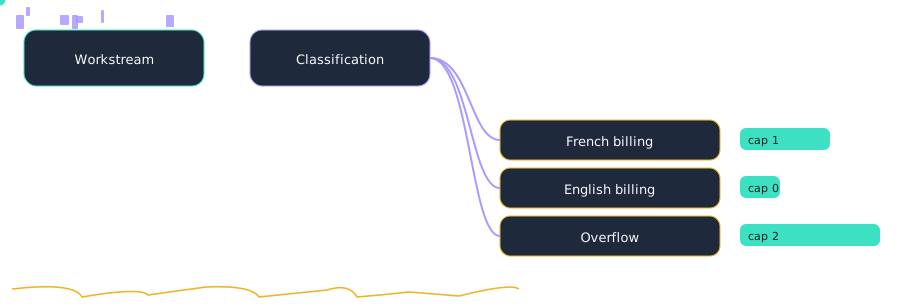
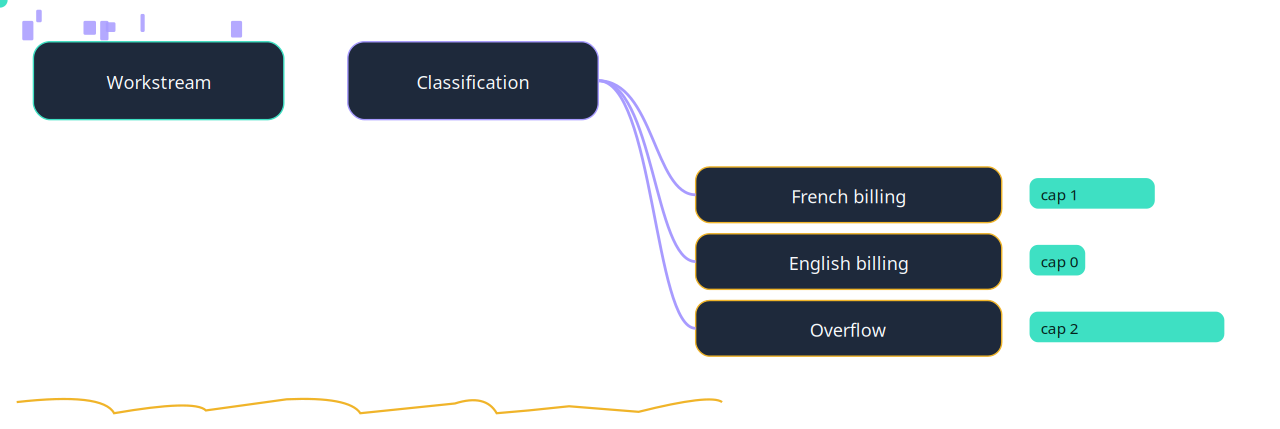
Language, intent, and capacity for Notification and the test call. Overflow is a rule.Write these down. Counts in this drawing are teaching order, not customers.
A colleague reports: The office loses the WAN and nobody can call emergency services. Where do you start?
The office loses the WAN and nobody can call emergency services. Deploy a supported appliance, point the local clients at it, and test a WAN cut. Source: https://learn.microsoft.com/en-us/microsoftteams/direct-routing-survivable-branch-appliance accessed 2026-10-14.
Which description of PIDF-LO is accurate?
A location object that can be carried in a SIP INVITE for an emergency call so the far end sees where the caller is. It does not replace a carrier who knows how to route emergency calls in that country. Source: https://learn.microsoft.com/en-us/microsoftteams/what-are-emergency-locations-addresses-and-call-routing accessed 2026-10-14.
A colleague reports: The location is stripped at the SBC and the PSAP gets the trunk’s address only. Where do you start?
The location is stripped at the SBC and the PSAP gets the trunk’s address only. Confirm the SBC passes it and the carrier reads it. Source: https://learn.microsoft.com/en-us/microsoftteams/what-are-emergency-locations-addresses-and-call-routing accessed 2026-10-14.
Dynamic emergency calling Teams picks a civic address from the network location it can see: trusted IP, site, and subnet in the usual design. Config: Build the topology, assign addresses, and test from a known subnet. Fault: A laptop on the VPN reports the HQ floor.
Civic address The street address you validate for emergency calling. A dispatchable location is specific enough for responders. Config: Validate the address and tie subnets to places inside it. Fault: The PSAP gets a city and no building.
Trusted IP An address that means ‘this client is inside our network.’ It is how Teams decides the client is on a site you mapped. Config: List the real internet egress addresses, not the VPN pool, unless you mean to. Fault: Remote users inherit a building.
Emergency calling policy Controls notification and how the client looks up location. It is not the PSTN route. Config: Pair the policy with a routing policy and a tested number from the carrier. Fault: Security is notified for a test call and the route still left the country.
Sister technologies
Around the call: compliance recording, workforce management, emergency location, analytics, CRM screen pop, and an agent with a human escape. Each one has its own failure.
Config and troubleshooting
The notification policy exists and is assigned to nobody.
Cross-platform bridges
CUCM
Cisco CUBE is one of the SBC families named in this lab’s certification lesson. A certified release can be the Direct Routing SBC between Unified CM and Teams.
The tenant still needs a verified domain on the SBC FQDN, and the user still needs Teams Phone. The studio translator does not open a live AXL session. Confirm the current certified release before you build.
Webex
Teams Phone and Webex Calling are separate clouds. This lab does not describe a feature that registers a Webex Calling user into a Teams tenant.
A number move is usually a carrier port, a certified SBC, or a meetings interop product. Confirm before relying.
UCCE
Unified CCE stays the ACD until you migrate it. Microsoft’s contact-center articles name Connect, Extend, and Unify. They do not name a UCCE connector in the notes this lab cites.
Emergency telephone number — Wikipedia — last checked 2026-10. Wikipedia fallback for background. Confirm the vendor page before you change a tenant
Microsoft Teams blog index — Community — last checked 2026-10. Community index for the Microsoft Teams blog. This is the index, not a claim that a post discusses this room