Commercial clouds use sip.pstnhub.microsoft.com, sip2, and sip3, on TCP 5061.IPv6 names exist on the plan page.GCC High uses sip.pstnhub.gov.teams.microsoft.us.DoD uses sip.pstnhub.dod.teams.microsoft.us.Those government clouds do not use the commercial trio.
Checked 15 October 2026.The Direct Routing plan page lists commercial SBC signaling and media in 52.112.0.0/14 and 52.120.0.0/14.IPv6 signaling is 2603:1063:400::/40, and IPv6 media adds 2603:1063:100::/40.The Teams client optimize ranges on the Office 365 URLs article and the worldwide endpoints feed are 52.112.0.0/14 and 52.122.0.0/15, plus 2603:1063::/38.52.120.0.0/14 does not appear on that client list, and 52.122.0.0/15 does not appear on the commercial SBC list.Allow the list that matches the traffic.Re-read both pages when you change the firewall.
Signal to all three commercial PSTN hubs on 5061, and allow the published IP ranges.
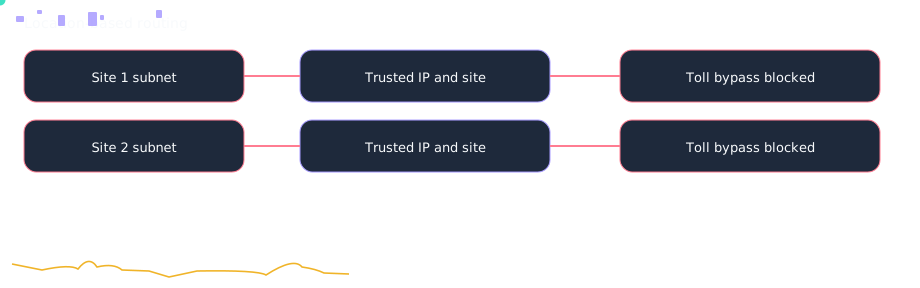
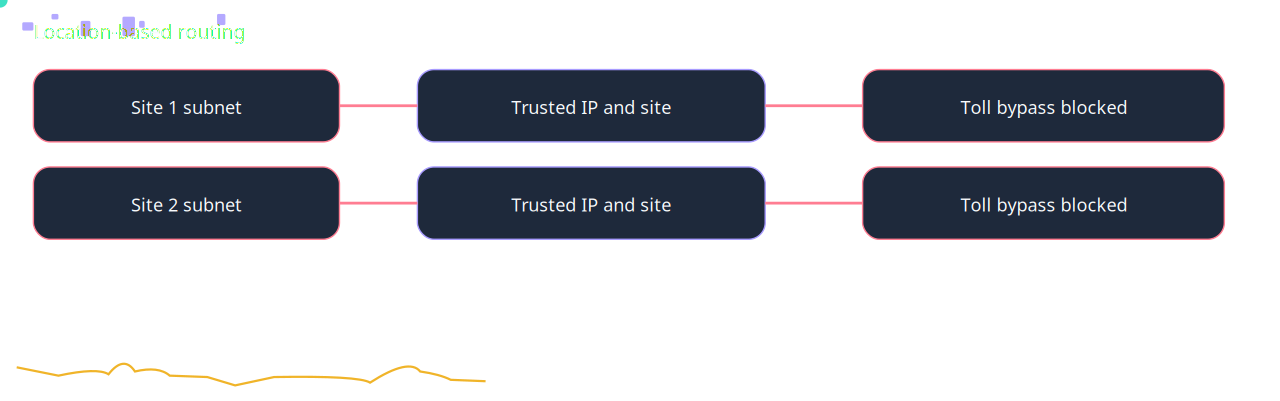
A site map for Three SIP proxies and failover. LBR is toll-bypass control, not emergency location by itself.Priority order from the plan page. Counts in this drawing are teaching order, not customers.
Which description of Microsoft trusted root is accurate?
The SBC certificate must come from a CA in Microsoft’s trusted root program. A private lab CA is not enough for production pairing. Lab trunks that use a private CA teach the wrong lesson. Source: https://learn.microsoft.com/en-us/microsoftteams/direct-routing-plan accessed 2026-10-14.
A colleague reports: The trunk works in the lab and fails the morning you point it at sip.pstnhub. Where do you start?
The trunk works in the lab and fails the morning you point it at sip.pstnhub. Use a public CA for the production FQDN. Source: https://learn.microsoft.com/en-us/microsoftteams/direct-routing-plan accessed 2026-10-14.
Which description of Server Authentication EKU is accurate?
The certificate should include the server authentication extended key usage. A client-auth-only certificate is the wrong object. Source: https://learn.microsoft.com/en-us/microsoftteams/direct-routing-plan accessed 2026-10-14.
SRTP The media encryption Direct Routing uses. Signaling is TLS. A successful INVITE with plaintext RTP is not the design. Config: Allow the UDP media range. Do not strip SRTP on the SBC. Fault: The SBC offers RTP/AVP only and the call fails or is unsupported.
TLS 1.2 Direct Routing signaling expects modern TLS. TLS 1.0 is not a compatible offer. Config: Upgrade firmware and offer TLS 1.2 or newer toward the proxies. Fault: The handshake dies before OPTIONS.
Certificate SAN The name on the SBC certificate must match the FQDN you paired. Wildcards are allowed when they follow RFC 2818. Config: Issue the certificate for the paired name. Include the chain. Fault: TLS fails with a name mismatch and someone restarts the SBC.
Microsoft trusted root The SBC certificate must come from a CA in Microsoft’s trusted root program. A private lab CA is not enough for production pairing. Config: Use a public CA for the production FQDN. Fault: The trunk works in the lab and fails the morning you point it at sip.pstnhub.
Sister technologies
Around the call: compliance recording, workforce management, emergency location, analytics, CRM screen pop, and an agent with a human escape. Each one has its own failure.
Config and troubleshooting
The firewall allows only today’s DNS answer and the trunk fails after a resolver change.
Cross-platform bridges
CUCM
Cisco CUBE is one of the SBC families named in this lab’s certification lesson. A certified release can be the Direct Routing SBC between Unified CM and Teams.
The tenant still needs a verified domain on the SBC FQDN, and the user still needs Teams Phone. The studio translator does not open a live AXL session. Confirm the current certified release before you build.
Webex
Teams Phone and Webex Calling are separate clouds. This lab does not describe a feature that registers a Webex Calling user into a Teams tenant.
A number move is usually a carrier port, a certified SBC, or a meetings interop product. Confirm before relying.
UCCE
Unified CCE stays the ACD until you migrate it. Microsoft’s contact-center articles name Connect, Extend, and Unify. They do not name a UCCE connector in the notes this lab cites.
Transport Layer Security — Wikipedia — last checked 2026-10. Wikipedia fallback for background. Confirm the vendor page before you change a tenant
Session Initiation Protocol — Wikipedia — last checked 2026-10. Wikipedia fallback for background. Confirm the vendor page before you change a tenant
Microsoft Teams blog index — Community — last checked 2026-10. Community index for the Microsoft Teams blog. This is the index, not a claim that a post discusses this room