Teams Phone extensibility, documented for ACS and announced for Dynamics 365 Contact Center and some Unify-certified ISVs, lets the agent’s telephony be Teams Phone.The announcement named a set of vendors.That set moves.Certification is still the bar if you want the supported experience.An API existing is not a finished certification.
Presence can be synced with Graph.Presence sync is not audio.Do not declare the integration done because a status bubble moves.
Teams Phone extensibility reuses Teams calling inside a certified contact center.Presence sync is not the audio path.
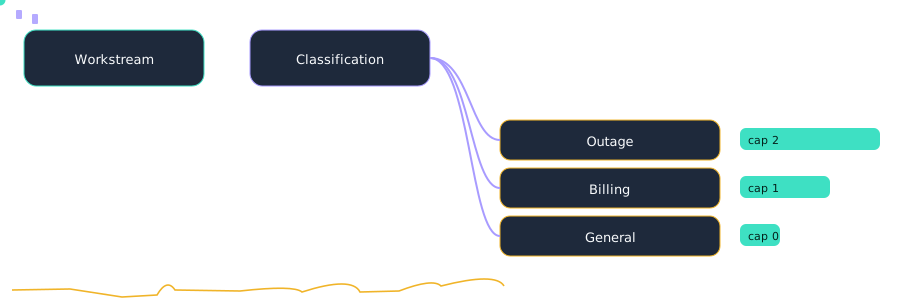
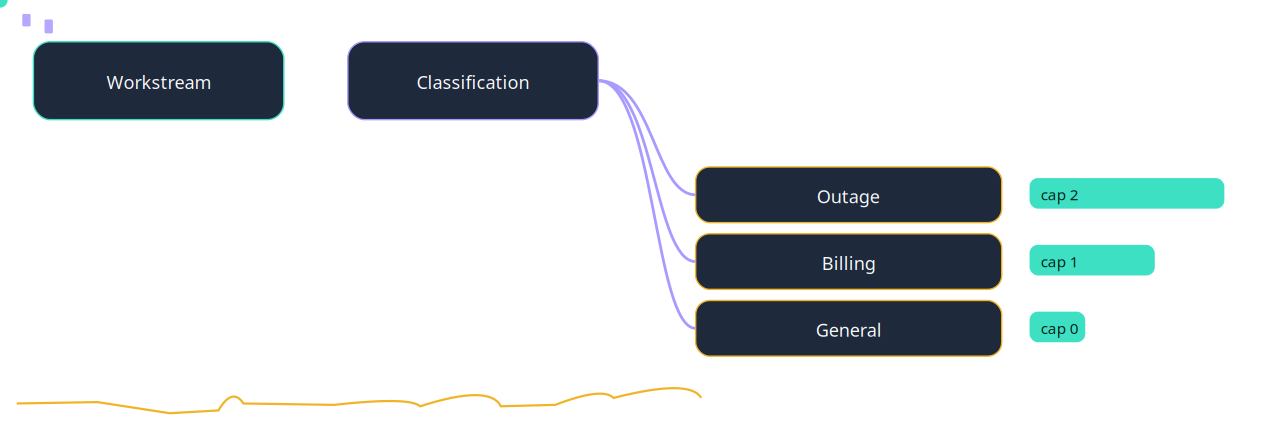
Language, intent, and capacity for Teams Phone extensibility. Overflow is a rule.Presence is not the phone call. Counts in this drawing are teaching order, not customers.
A colleague reports: The design buys a Connect SBC for an Extend product. Where do you start?
The design buys a Connect SBC for an Extend product. Read the Extend section of the contact-center article before you license agents. Source: https://learn.microsoft.com/en-us/microsoftteams/teams-contact-center accessed 2026-10-14.
Which description of Unify model is accurate?
The model Microsoft Learn names, as of 14 October 2026, for a native experience. Partner material describes it as ACS-based applications on Teams calling infrastructure. Older decks say Power. Ask which current model a vendor holds. Licensing and media follow the model, not the sales adjective. Source: https://learn.microsoft.com/en-us/microsoftteams/teams-contact-center accessed 2026-10-14.
A colleague reports: A proposal says Power and nobody can find the media path. Where do you start?
A proposal says Power and nobody can find the media path. Get the vendor’s certification letter and match it to Connect, Extend, or Unify. Source: https://learn.microsoft.com/en-us/microsoftteams/teams-contact-center accessed 2026-10-14.
Connect model A certified contact center attaches to Teams through certified SBCs and Direct Routing. Config: Confirm the vendor’s current certification, then design the SBC and the transfer target’s license. Fault: Transfers to experts fail because the expert has no Teams Phone number.
Extend model The contact center uses the Teams client, Graph, and Cloud Communications APIs. Teams Phone is the calling system and the agent works in Teams. Config: Read the Extend section of the contact-center article before you license agents. Fault: The design buys a Connect SBC for an Extend product.
Unify model The model Microsoft Learn names, as of 14 October 2026, for a native experience. Partner material describes it as ACS-based applications on Teams calling infrastructure. Older decks say Power. Ask which current model a vendor holds. Config: Get the vendor’s certification letter and match it to Connect, Extend, or Unify. Fault: A proposal says Power and nobody can find the media path.
Teams Phone extensibility A way for a contact center, including Dynamics 365 Contact Center, to use a customer’s existing Teams Phone for the agent’s telephony. Config: Use a solution that has finished the certification if you want the supported experience. The API existing is not the same as a finished certification. Fault: Two phone systems ring the same person.
Sister technologies
Around the call: compliance recording, workforce management, emergency location, analytics, CRM screen pop, and an agent with a human escape. Each one has its own failure.
Config and troubleshooting
Two phones ring the same person, or only presence works.
Cross-platform bridges
CUCM
Cisco CUBE is one of the SBC families named in this lab’s certification lesson. A certified release can be the Direct Routing SBC between Unified CM and Teams.
The tenant still needs a verified domain on the SBC FQDN, and the user still needs Teams Phone. The studio translator does not open a live AXL session. Confirm the current certified release before you build.
Webex
Teams Phone and Webex Calling are separate clouds. This lab does not describe a feature that registers a Webex Calling user into a Teams tenant.
A number move is usually a carrier port, a certified SBC, or a meetings interop product. Confirm before relying.
UCCE
Unified CCE stays the ACD until you migrate it. Microsoft’s contact-center articles name Connect, Extend, and Unify. They do not name a UCCE connector in the notes this lab cites.
Session Initiation Protocol — Wikipedia — last checked 2026-10. Wikipedia fallback for background. Confirm the vendor page before you change a tenant
Session border controller — Wikipedia — last checked 2026-10. Wikipedia fallback for background. Confirm the vendor page before you change a tenant
Microsoft Teams blog index — Community — last checked 2026-10. Community index for the Microsoft Teams blog. This is the index, not a claim that a post discusses this room