Workforce management consumes offered, answered, abandoned, and handle time from the contact center or the queue, in the same interval the schedule uses.Erlang C is a teaching model of how many people must be available.Shrinkage is the fraction of paid time that is not available.Roster is larger than the Erlang number.Occupancy is handle time over handle time plus ready time.Very high occupancy burns people and raises abandons.
Troubleshooting: if WFM says you were overstaffed while the queue overflowed, check whether overflow removed calls from this queue’s offered count, whether the interval was a day instead of 30 minutes, and whether handle time forgot after-call work.Agents set to available in Teams while still writing a case will poison both tools.
WFM eats queue intervals.Erlang C plus shrinkage is the teaching math.Do not feed it from a user’s call history.
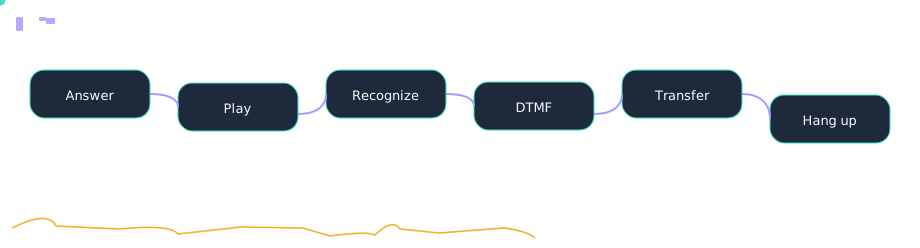
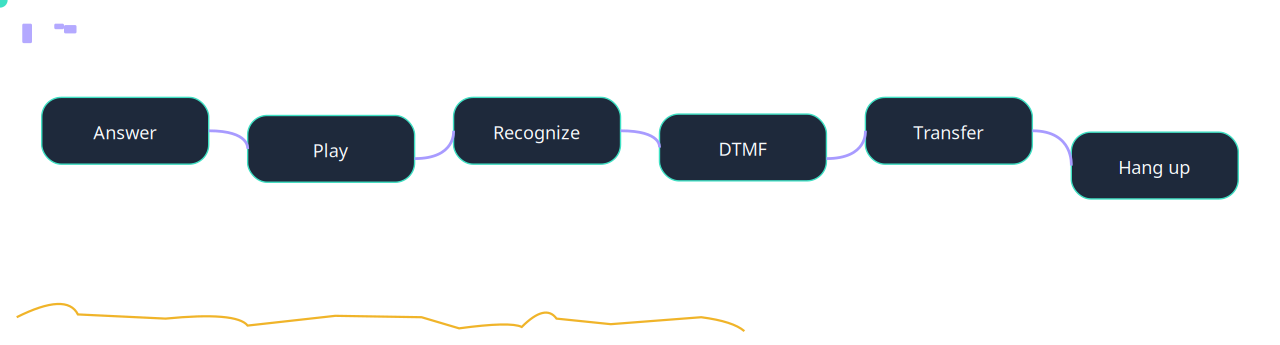
Events, not a phone tree hidden in a form. Workforce management still needs a human escape.Teaching relationship, not a vendor screen. Counts in this drawing are teaching order, not customers.
The fraction of paid time that is not available for contacts: leave, training, meetings, breaks. Erlang C tells you how many people must be on the phone. Shrinkage tells you how many to roster. Source: https://learn.microsoft.com/en-us/dynamics365/contact-center/ accessed 2026-10-14.
A colleague reports: The schedule staffs the Erlang number and half the team is in training. Where do you start?
The schedule staffs the Erlang number and half the team is in training. Publish the assumption. A 30 percent guess should be labeled as a guess. Source: https://learn.microsoft.com/en-us/dynamics365/contact-center/ accessed 2026-10-14.
Which description of Occupancy is accurate?
Handle time divided by handle time plus available time. High occupancy feels efficient and burns people out. WFM and quality fight here. Source: https://learn.microsoft.com/en-us/dynamics365/contact-center/ accessed 2026-10-14.
Convenience recording A user starts a recording of a call, meeting, or event. Policy can allow it. The user can stop it. Storage follows meeting rules. Config: Set the meeting, calling, and events policies on purpose. Fault: A regulated desk is told to ‘just hit record.’
Compliance recording A third-party recorder is invited by policy into new calls, meetings, and events. The user does not start it and participant consent is not the control. Notification is enforced. Config: Create the application instance, enable the policy, grant it, and test a new call. Fault: The policy is granted and nothing records because the bot instance was never created.
Compliance recording application The bot instance of a certified recorder. The policy references it. Without it, granting the policy does not record. Config: New-CsTeamsComplianceRecordingApplication attaches it to the policy. Fault: Recording works in the vendor’s cloud and never joins the Teams call.
Existing calls are unaffected When you grant a compliance recording policy, calls and meetings already up are not swept in. Test with a new call. Config: Place a fresh call after the grant and confirm the bot joined. Fault: The pilot says recording failed because they watched an old meeting.
Sister technologies
Around the call: compliance recording, workforce management, emergency location, analytics, CRM screen pop, and an agent with a human escape. Each one has its own failure.
Config and troubleshooting
The forecast is ten times too high because the interval was a whole day.
Cross-platform bridges
CUCM
Cisco CUBE is one of the SBC families named in this lab’s certification lesson. A certified release can be the Direct Routing SBC between Unified CM and Teams.
The tenant still needs a verified domain on the SBC FQDN, and the user still needs Teams Phone. The studio translator does not open a live AXL session. Confirm the current certified release before you build.
Webex
Teams Phone and Webex Calling are separate clouds. This lab does not describe a feature that registers a Webex Calling user into a Teams tenant.
A number move is usually a carrier port, a certified SBC, or a meetings interop product. Confirm before relying.
UCCE
Unified CCE stays the ACD until you migrate it. Microsoft’s contact-center articles name Connect, Extend, and Unify. They do not name a UCCE connector in the notes this lab cites.
Microsoft Teams — Wikipedia — last checked 2026-10. Wikipedia fallback for background. Confirm the vendor page before you change a tenant
Call centre — Wikipedia — last checked 2026-10. Wikipedia fallback for background. Confirm the vendor page before you change a tenant
Microsoft Teams blog index — Community — last checked 2026-10. Community index for the Microsoft Teams blog. This is the index, not a claim that a post discusses this room