Microsoft’s Teams contact-center article describes three provider models.Extend uses the Teams client as the calling endpoint.The Dynamics Teams Phone page, which is a different article, says the representative receives the Teams-number call in the Copilot Service workspace app.Those are different desktops.Do not describe the Dynamics workspace as the Extend client.
The Salesforce learning map includes Link Calls with Customer Contact Records.Store the number and the call identifier the product gives you, and test a record that should not match.The Dynamics voice-channel table includes customer and case lookup.A lookup that returns the wrong record is a data fault, not a codec fault.Track 17’s CRM room is the place for the screen-pop fields this campus already names.
Name the desktop the page describes, then store the identifier that joins the call to the record.
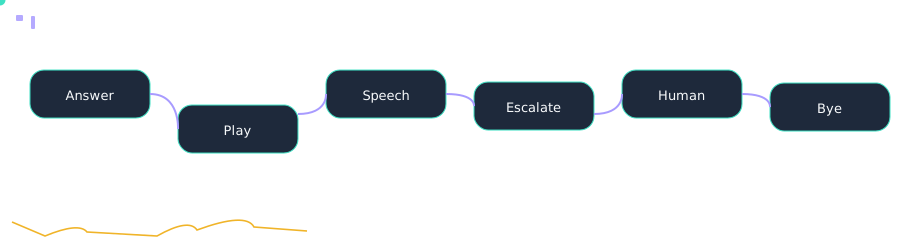
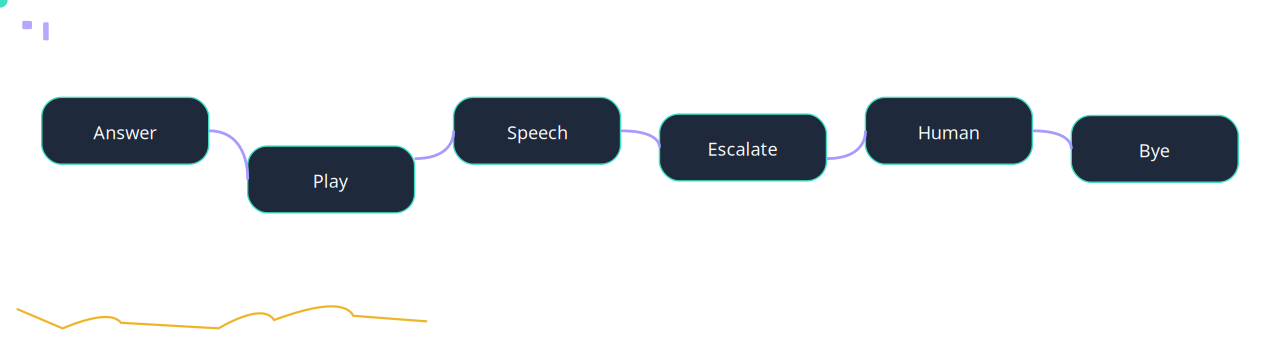
Events, not a phone tree hidden in a form. The call-to-record seam still needs a human escape.Three desktops. Not a winner. Counts in this drawing are teaching order, not customers.
Which description of Partner Contact Center is accurate?
The Salesforce help page titled Connect Voice from a Partner Contact Center says Salesforce Voice with Telephony Providers, formerly Service Cloud Voice, is now part of Partner Contact Center. The same note still names Salesforce Voice with Amazon Connect, Partner Telephony, and Partner Telephony from Amazon Connect, and points to Agentforce Contact Center Voice for built-in telephony. Source: https://help.salesforce.com/s/articleView?id=service.voice_about.htm&language=en_US&type=5 accessed 2026-10-14.
A colleague reports: A project assumes one telephony model because the product was renamed. Where do you start?
A project assumes one telephony model because the product was renamed. Use the learning map on that page for setup, bring-your-own Amazon Connect, and linking calls with customer contact records. Source: https://help.salesforce.com/s/articleView?id=service.voice_about.htm&language=en_US&type=5 accessed 2026-10-14.
Which description of Computer telephony integration is accurate?
Wikipedia’s opened page says computer-telephony integration, also computer–telephone integration or CTI, is a general term for technologies that coordinate interactions between telephones and computers. The next sentence on that page is marked citation needed. This lab does not use it. Source: https://en.wikipedia.org/wiki/Computer_telephony_integration accessed 2026-10-14.
Computer telephony integration Wikipedia’s opened page says computer-telephony integration, also computer–telephone integration or CTI, is a general term for technologies that coordinate interactions between telephones and computers. Config: Use the vendor page for the product you are configuring. Keep Wikipedia as the name only. Fault: A design calls every CRM screen a CTI product.
Dynamics 365 voice channel The voice-channel page says it applies to Dynamics 365 Contact Center embedded, Contact Center standalone, and Customer Service. It provides native PSTN calling in Dynamics and says the channel is built on Azure Communication Services. Config: Read the capabilities table on that page. Do not copy the marketing section above it. Fault: Someone expects the Teams client because the number was bought in Teams.
Teams Phone in the voice channel The configure-Teams-Phone page says PSTN connectivity can be a Teams Calling Plan (service numbers only), Operator Connect, or Direct Routing, and that a Teams resource account is required for every number used with Dynamics 365 Contact Center. Config: Sync from Teams in Copilot Service admin center after the resource account and the number exist. Copy the application ID from the current page. Fault: Sync is run before TeamsResourceAccount.Read.All has admin consent.
Salesforce Voice The help page Connect Voice from a Partner Contact Center says Salesforce Voice with Telephony Providers, formerly Service Cloud Voice, is now part of Partner Contact Center. Config: Use the learning map on that page. A developer-guide URL did not open from this build, so it is not quoted here. Fault: A runbook still says only Service Cloud Voice and never opens the current title.
Sister technologies
Around the call: compliance recording, workforce management, emergency location, analytics, CRM screen pop, and an agent with a human escape. Each one has its own failure.
Config and troubleshooting
The call connects and the case that opens belongs to a different person.
Cross-platform bridges
CUCM
Cisco CUBE is one of the SBC families named in this lab’s certification lesson. A certified release can be the Direct Routing SBC between Unified CM and Teams.
The tenant still needs a verified domain on the SBC FQDN, and the user still needs Teams Phone. The studio translator does not open a live AXL session. Confirm the current certified release before you build.
Webex
Teams Phone and Webex Calling are separate clouds. This lab does not describe a feature that registers a Webex Calling user into a Teams tenant.
A number move is usually a carrier port, a certified SBC, or a meetings interop product. Confirm before relying.
UCCE
Unified CCE stays the ACD until you migrate it. Microsoft’s contact-center articles name Connect, Extend, and Unify. They do not name a UCCE connector in the notes this lab cites.