The forecasting overview says a forecast estimates volume and average handle time by channel and queue.Volume excludes conversations that AI agents handle with no representative joining.Forecasting is the first stage.Capacity planning uses the default forecast snapshot to calculate staffing requirements.Scheduling turns those requirements into shifts.
A short-term scenario is 15-minute intervals for a horizon of up to six weeks, which the page also states as 42 days, using a linear trend on internal or external data.A long-term scenario is daily, for up to three years, stated as 1,096 days.Weighted average is marked preview, uses external data, and refreshes manually.The page says not to use the feature for employment decisions.It also says forecasts might not account for unexpected trends.This room does not copy a shrinkage percentage.The Erlang calculator elsewhere in this campus stays a teaching model.
Forecasting estimates volume and average handle time.Short-term is 15-minute intervals up to 42 days.Long-term is daily, up to 1,096 days.
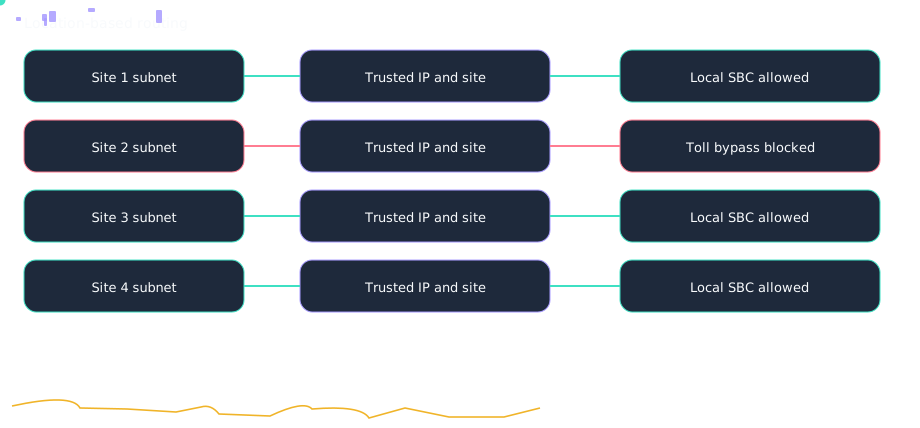
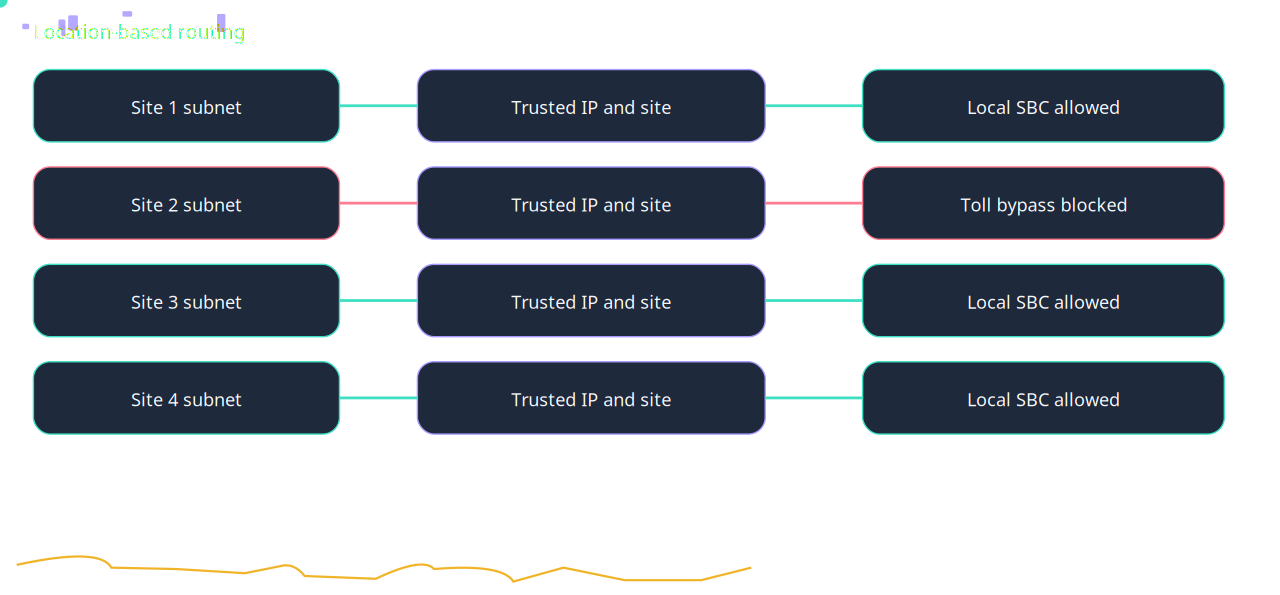
A site map for Forecast, capacity, and schedule. LBR is toll-bypass control, not emergency location by itself.The numbers are the horizons the page states. Counts in this drawing are teaching order, not customers.
A colleague reports: Least active is promised on a record queue. Where do you start?
Least active is promised on a record queue. The page says the last-capacity-release data is in msdyn_agentchannelstate. It also says not to use the feature for employment decisions. Source: https://learn.microsoft.com/en-us/dynamics365/customer-service/administer/assignment-methods accessed 2026-10-14.
Which description of Quality evaluation plan is accurate?
The quality and coaching page, which applies to Dynamics 365 Contact Center only, says an evaluation plan sets the criteria, the conversations, the timing, and the actions. Frequency on that page is In real time or On conversation close. Sampling is a percentage of matching conversations. Source: https://learn.microsoft.com/en-us/dynamics365/contact-center/administer/configure-quality-coach accessed 2026-10-14.
A colleague reports: A plan is activated before any indicator exists in the quality library. Where do you start?
A plan is activated before any indicator exists in the quality library. The page names the Omnichannel Administrator role, plus consumption-based billing and capacity. It says not to use the feature for employment decisions. Source: https://learn.microsoft.com/en-us/dynamics365/contact-center/administer/configure-quality-coach accessed 2026-10-14.
Least active assignment The assignment-methods page says least active is available for voice and messaging only, and is the default selection when you create a voice or messaging queue. Config: The page says the last-capacity-release data is in msdyn_agentchannelstate. It also says not to use the feature for employment decisions. Fault: Least active is promised on a record queue.
Quality evaluation plan The quality and coaching page, which applies to Dynamics 365 Contact Center only, says an evaluation plan sets the criteria, the conversations, the timing, and the actions. Config: The page names the Omnichannel Administrator role, plus consumption-based billing and capacity. It says not to use the feature for employment decisions. Fault: A plan is activated before any indicator exists in the quality library.
Quality guardrail On the quality and coaching page, a guardrail defines a required or prohibited behavior. Guardrails are evaluated for violations rather than assigned numeric scores, and each has a priority. Config: Set priority and optional nudge text, then activate the guardrail before you add it to a plan. Fault: A prohibited behavior is given a numeric score because the indicator form was copied.
Short-term forecast The forecasting overview says a short-term scenario predicts volume and average handle time in 15-minute intervals for a horizon of up to six weeks (42 days), using a linear trend on internal or external data. Config: The same page says a long-term scenario is daily, up to three years (1,096 days). Weighted average is marked preview. Fault: A six-week forecast is read as a daily three-year plan.
Sister technologies
Around the call: compliance recording, workforce management, emergency location, analytics, CRM screen pop, and an agent with a human escape. Each one has its own failure.
Config and troubleshooting
A daily three-year scenario is used to staff a 15-minute interval this afternoon.
Cross-platform bridges
CUCM
Cisco CUBE is one of the SBC families named in this lab’s certification lesson. A certified release can be the Direct Routing SBC between Unified CM and Teams.
The tenant still needs a verified domain on the SBC FQDN, and the user still needs Teams Phone. The studio translator does not open a live AXL session. Confirm the current certified release before you build.
Webex
Teams Phone and Webex Calling are separate clouds. This lab does not describe a feature that registers a Webex Calling user into a Teams tenant.
A number move is usually a carrier port, a certified SBC, or a meetings interop product. Confirm before relying.
UCCE
Unified CCE stays the ACD until you migrate it. Microsoft’s contact-center articles name Connect, Extend, and Unify. They do not name a UCCE connector in the notes this lab cites.