This file is the study app in one page. Colours, the guide, search, and the sūtra index are inside the file. The optional 3D wheel stays in the multi-file site.
Sūtra Nexus
A free offline study of Sanskrit sound and grammar, with the gaps labeled.
Learn it in 5 minutes
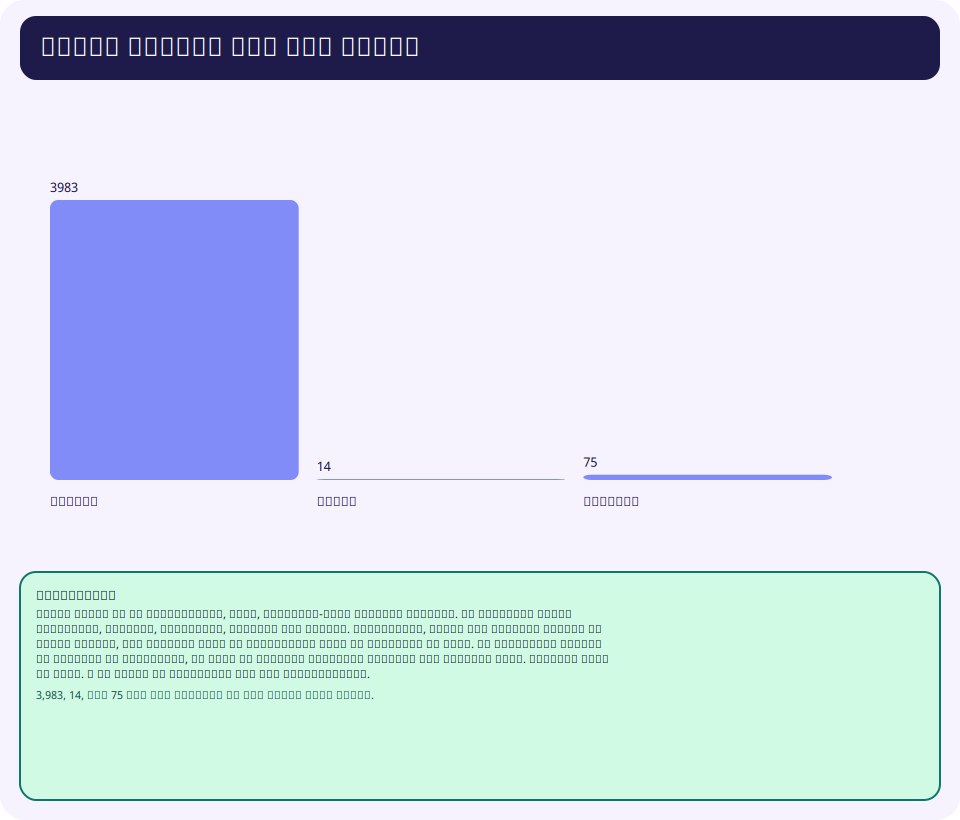
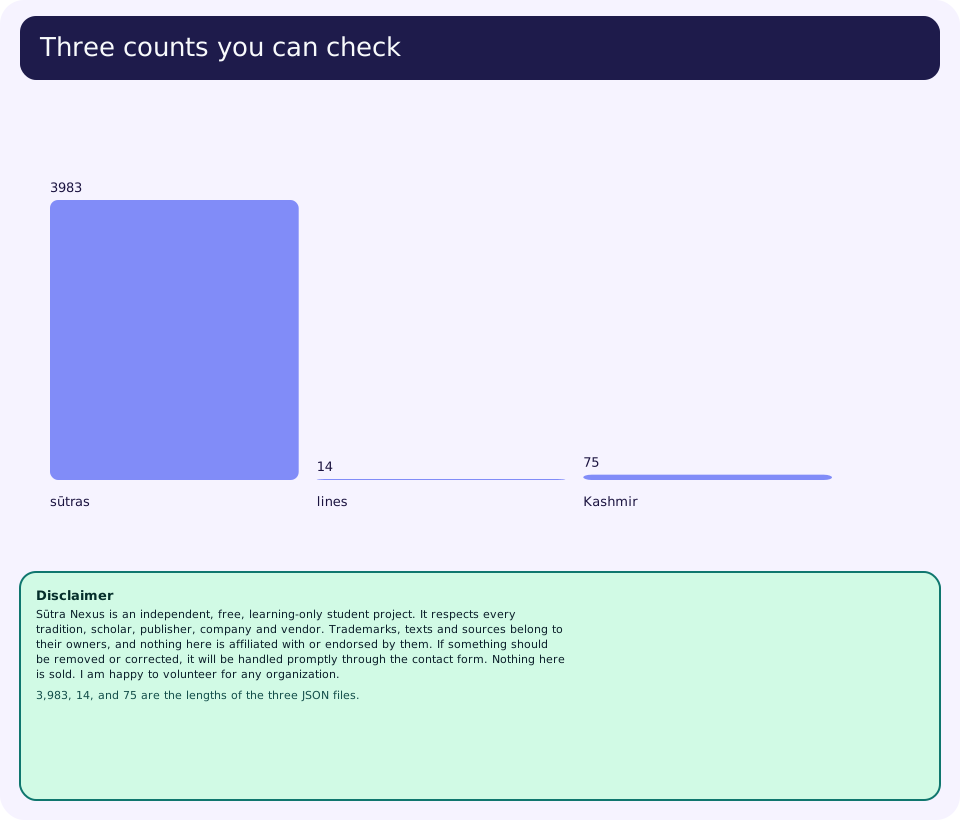
Sūtra Nexus is a free study desk for three open data files: 3,983 Aṣṭādhyāyī lines, 14 Māheśvara lines, and 75 Kashmir Śiva Sūtras. It is a learning project by a lifelong student and AI enthusiast moving toward AI omni-channel agents.
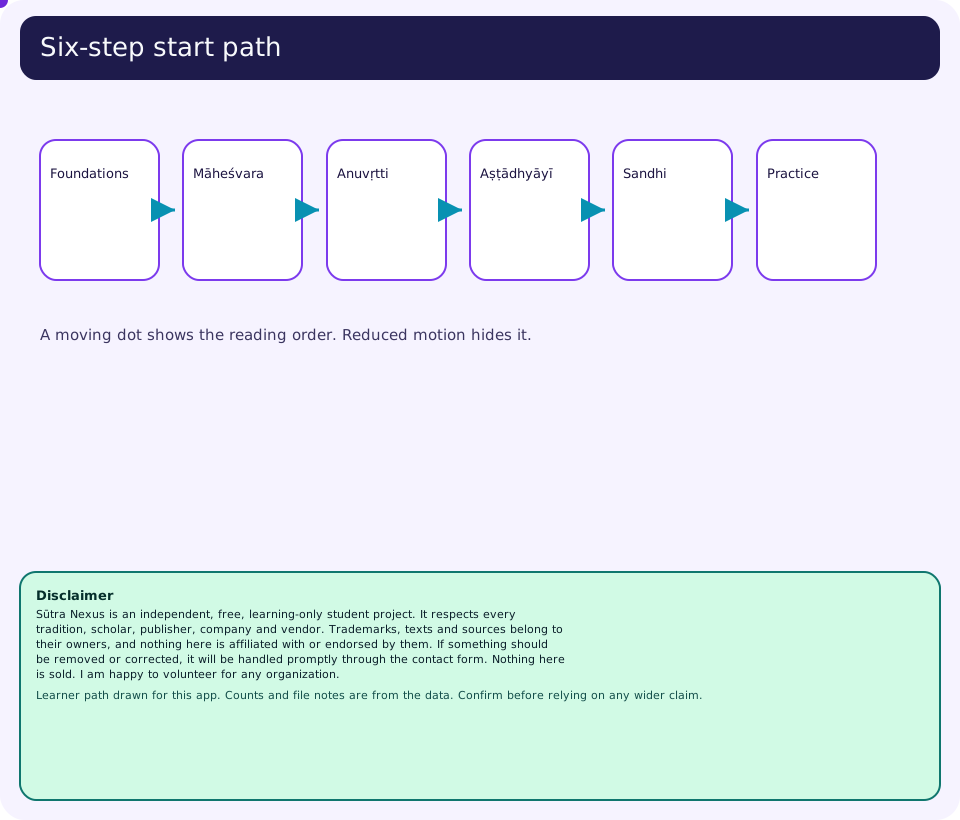
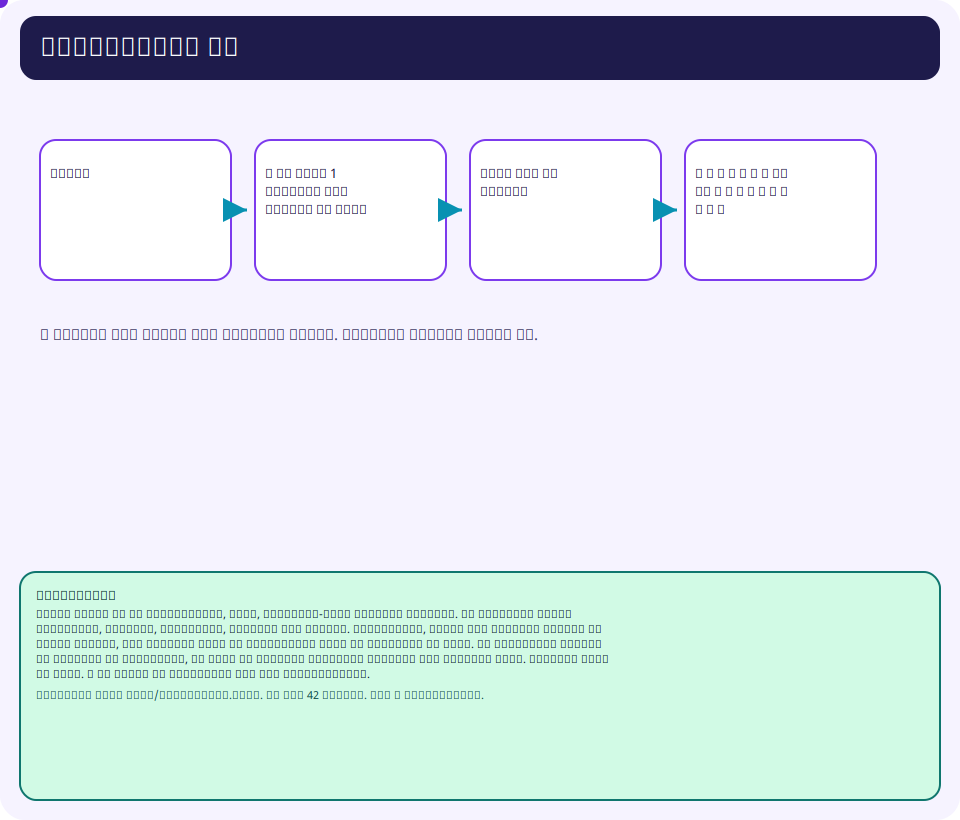
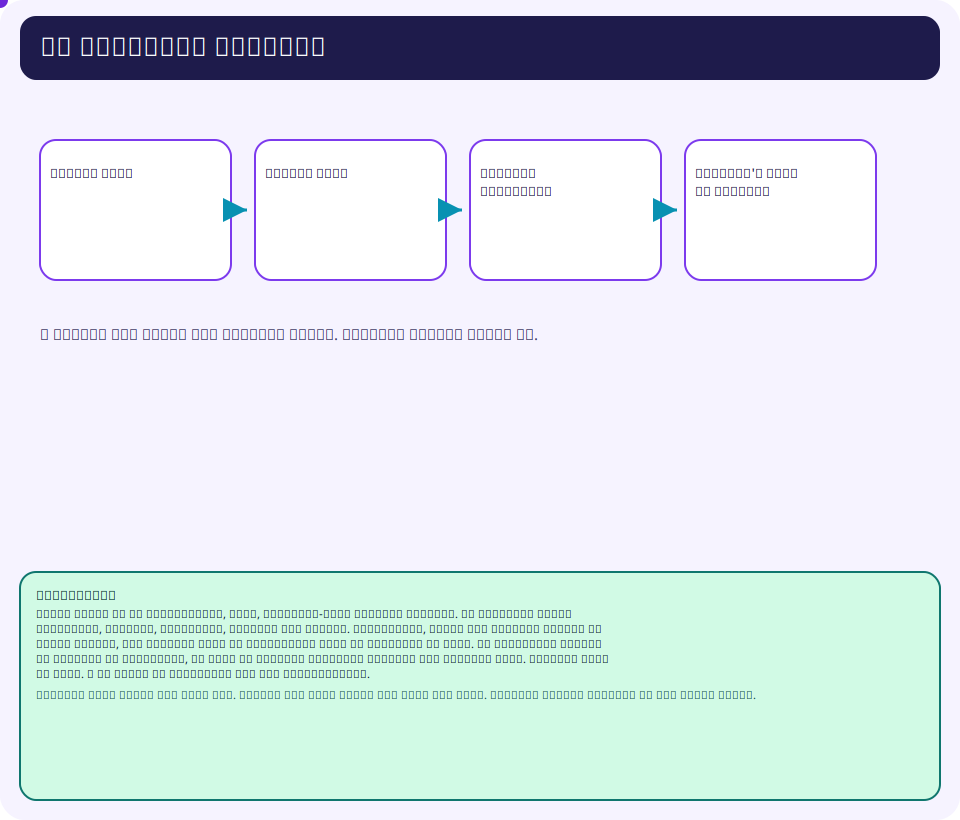
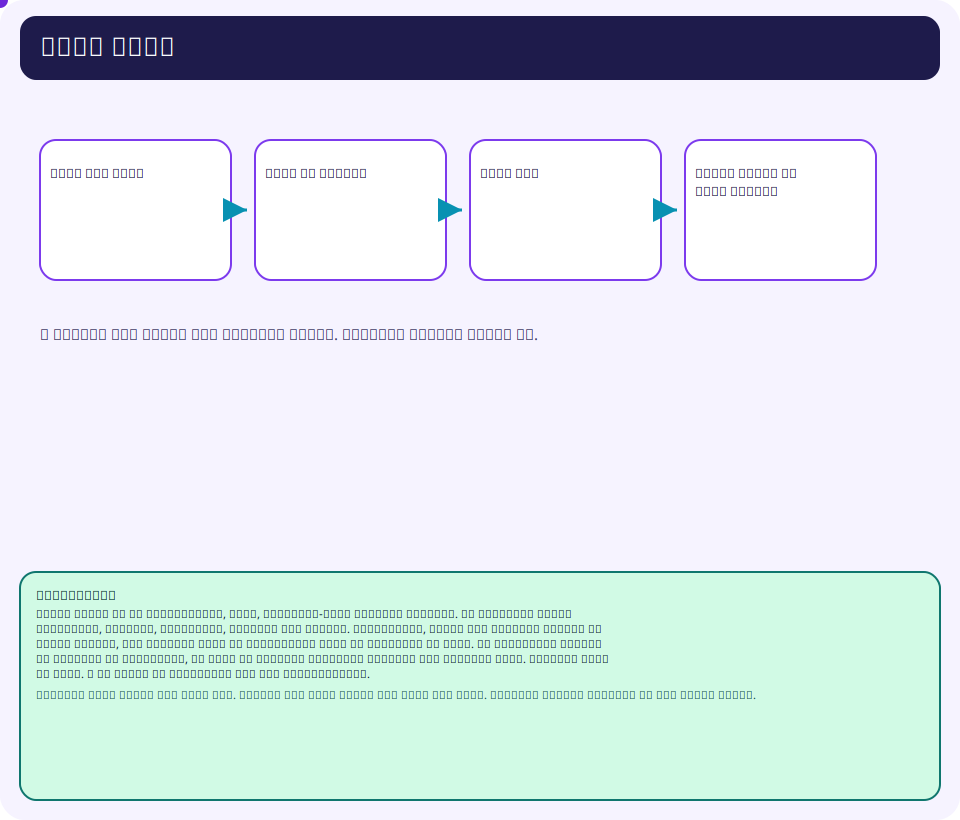
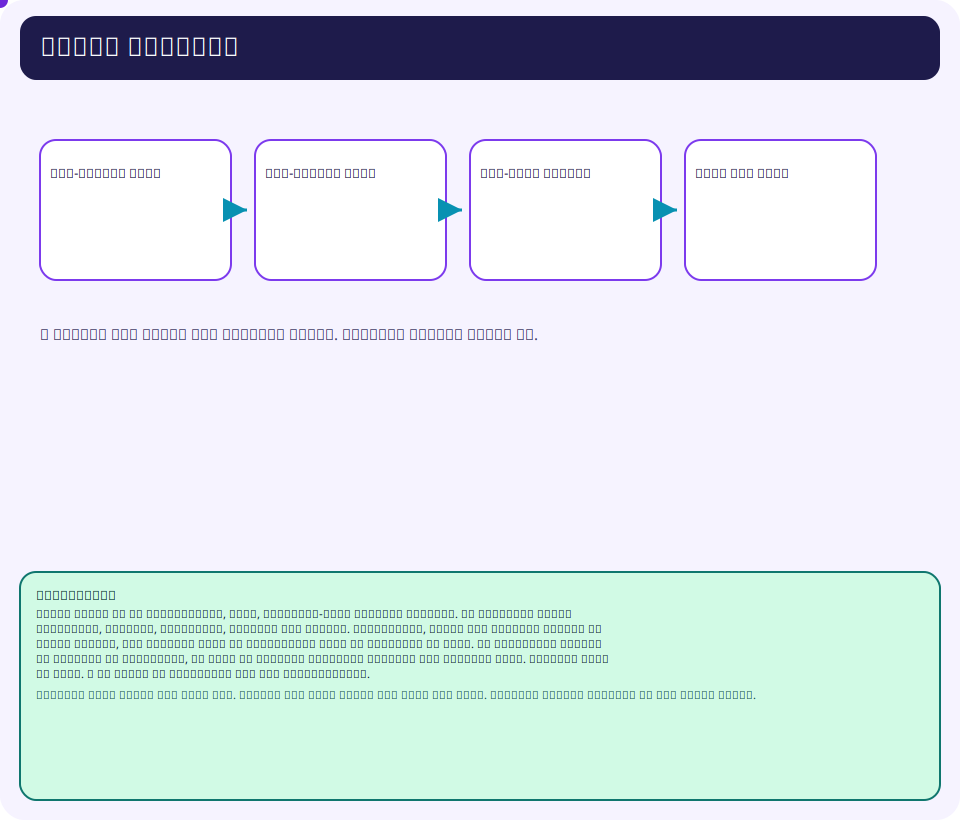
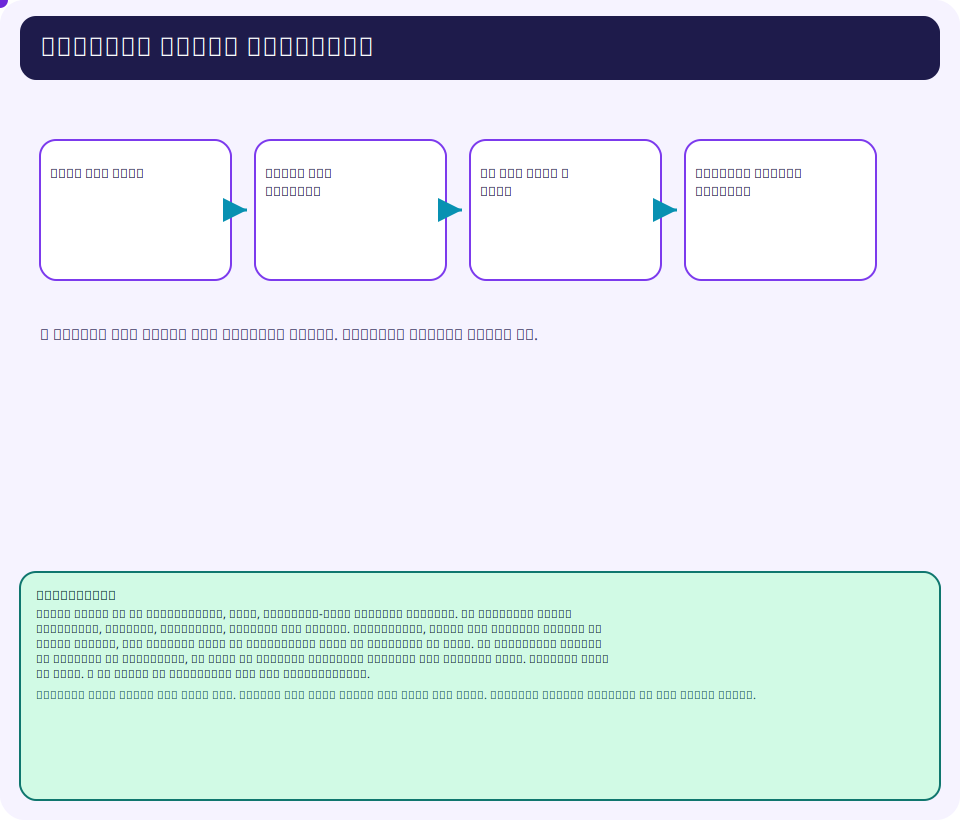
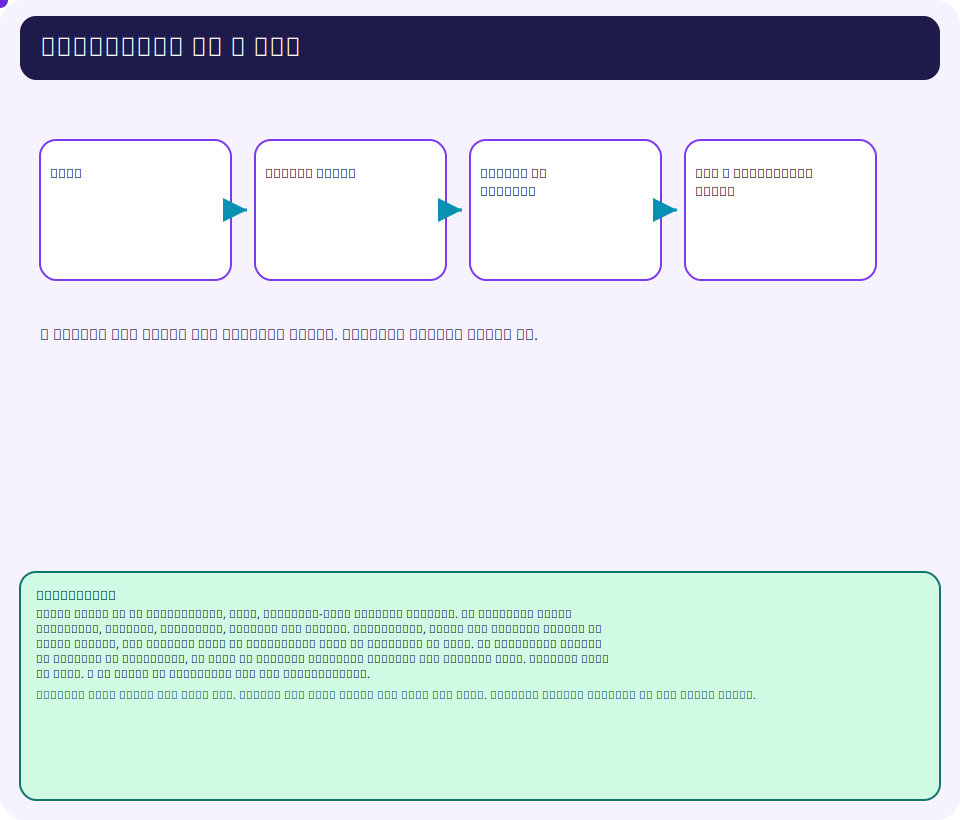
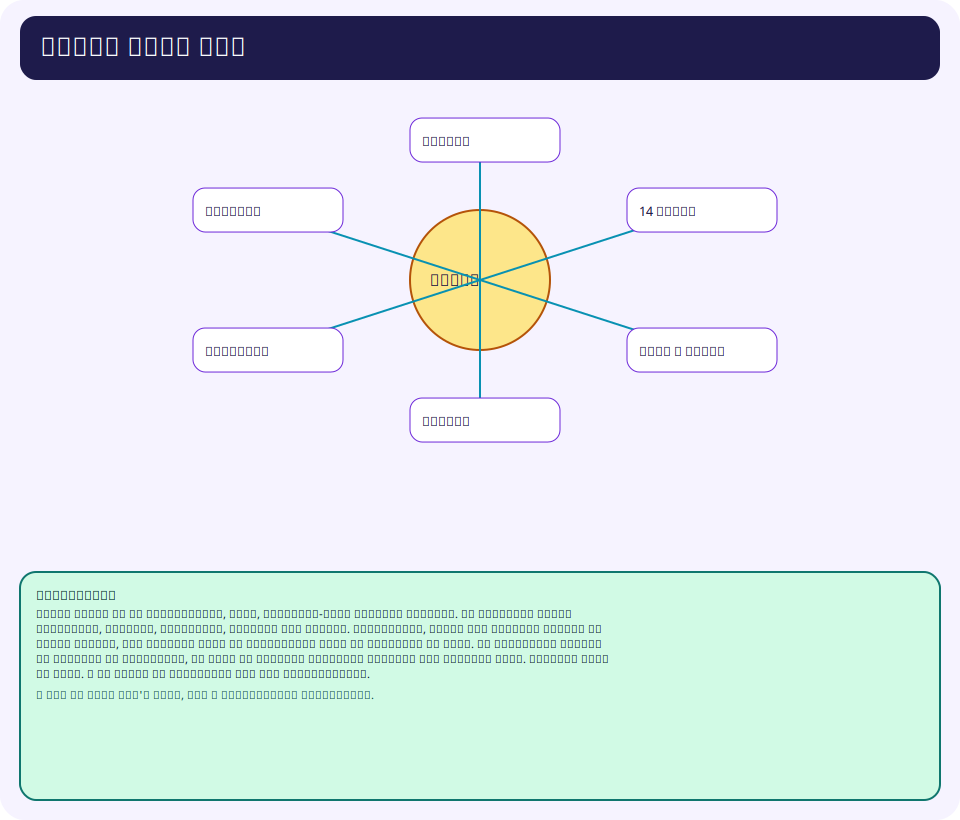
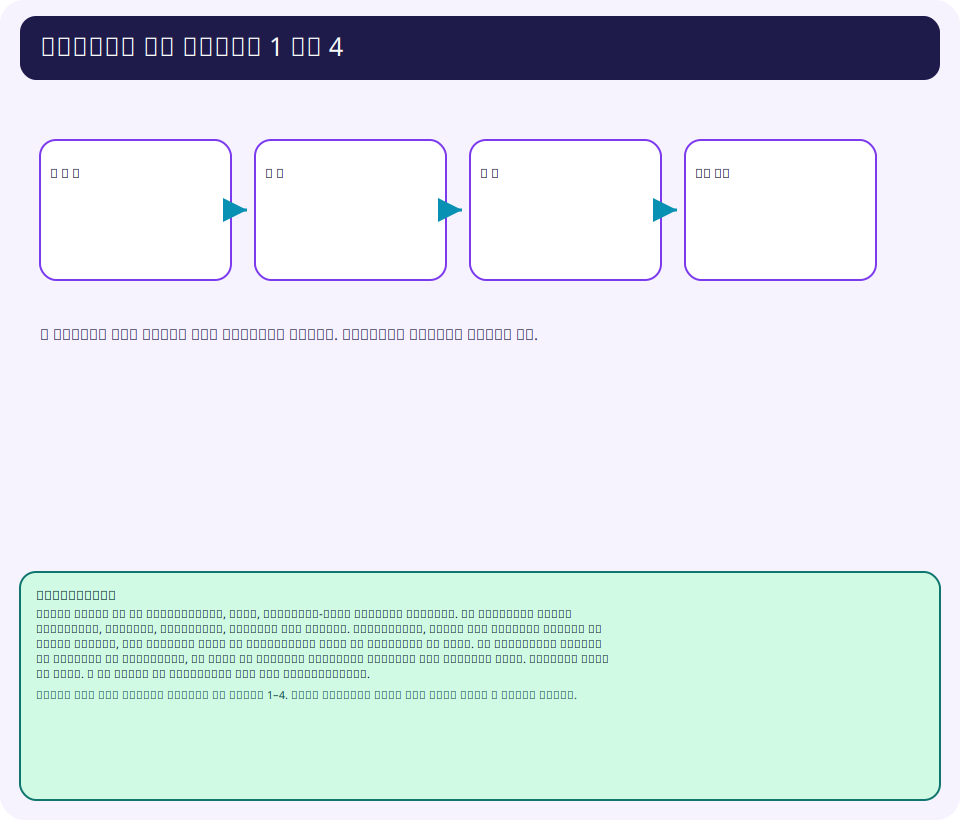
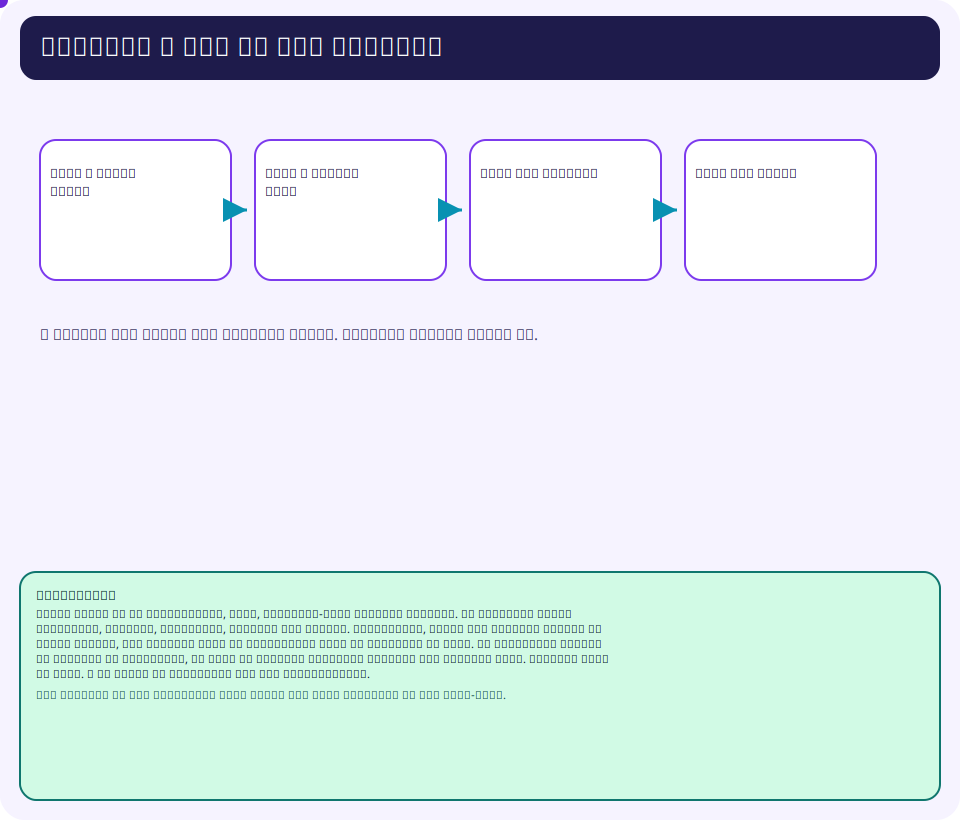
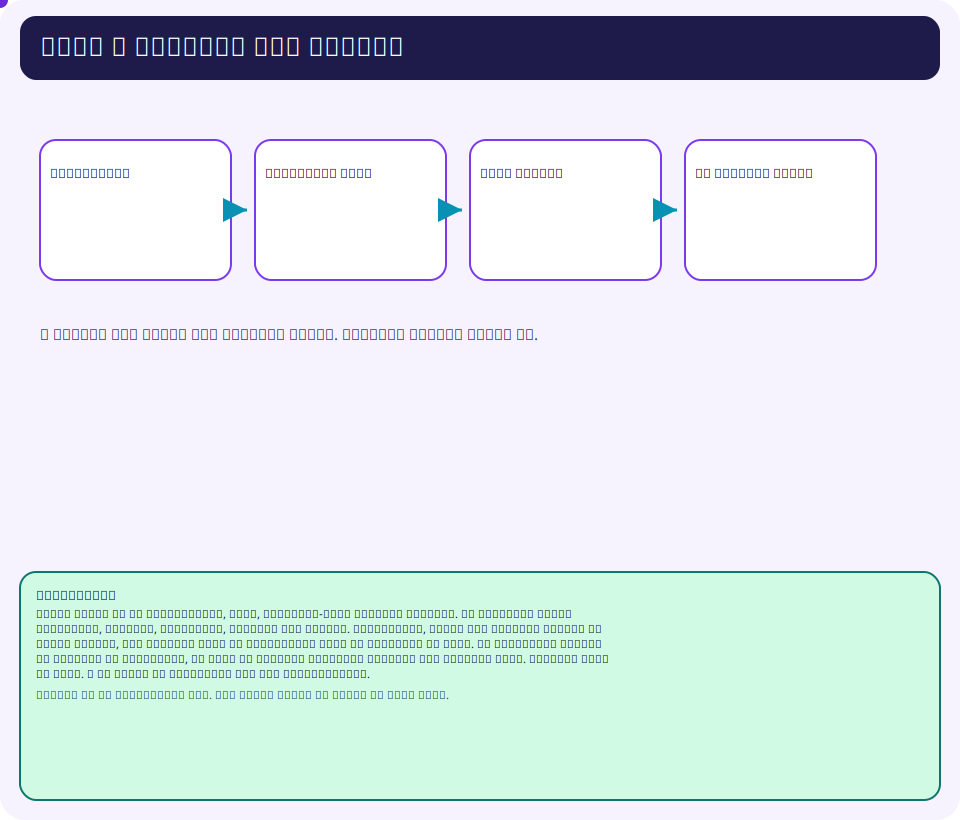
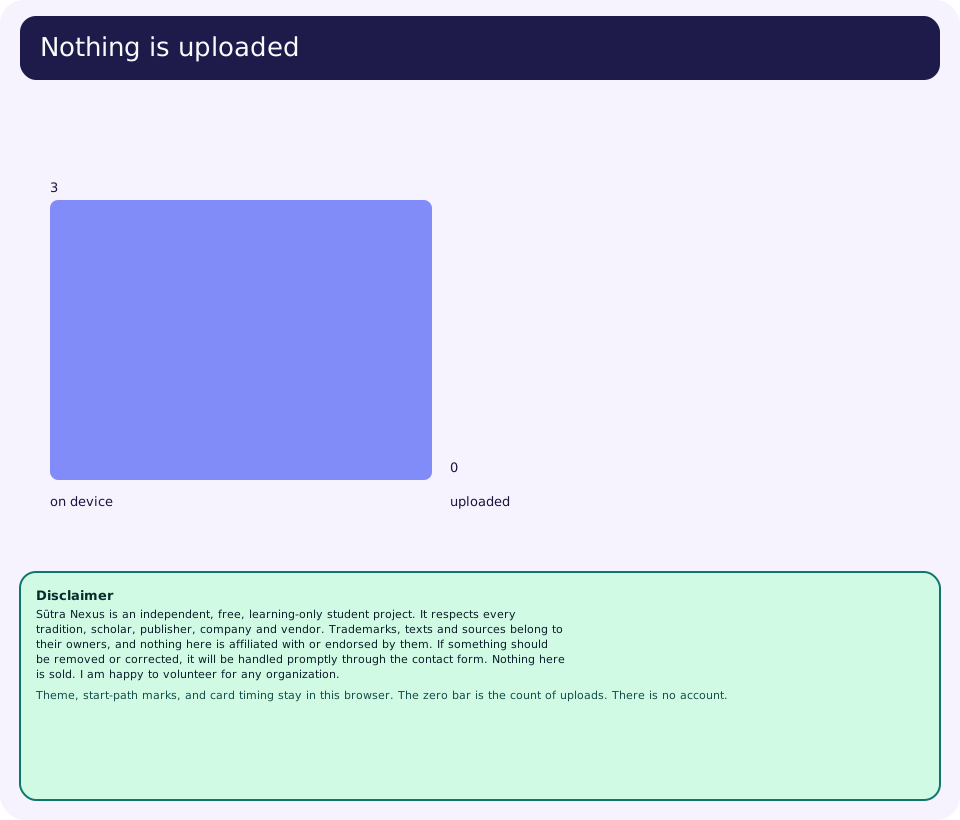
The start path has six steps. Progress marks stay in this browser. Nothing is uploaded.
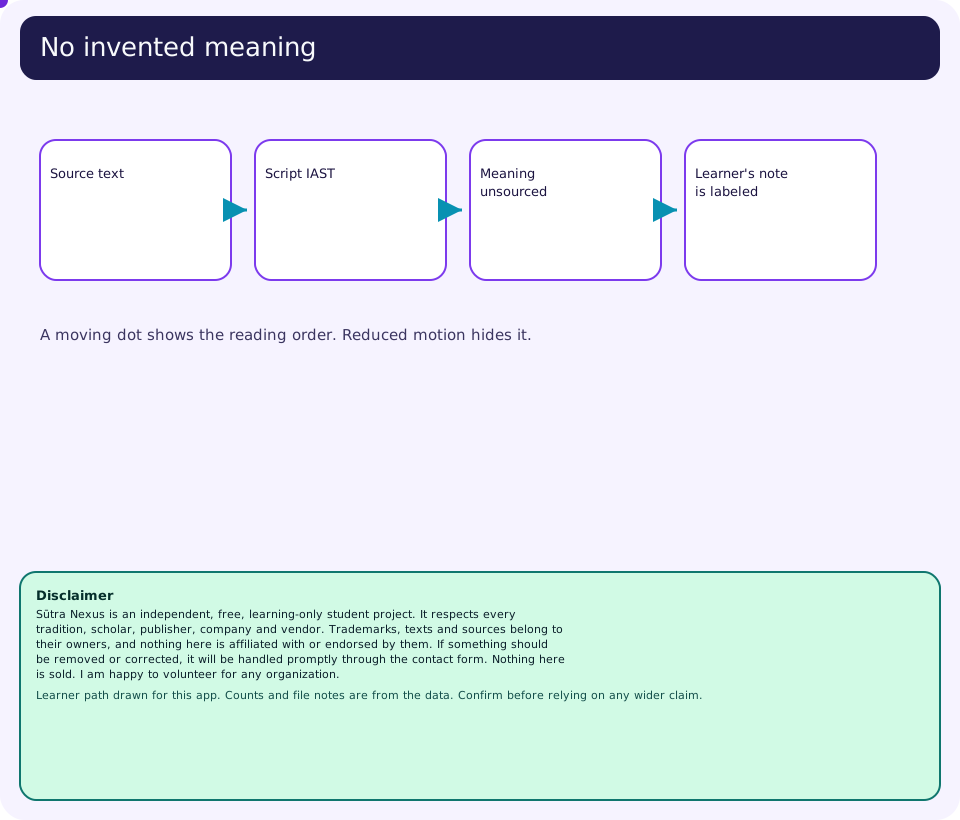
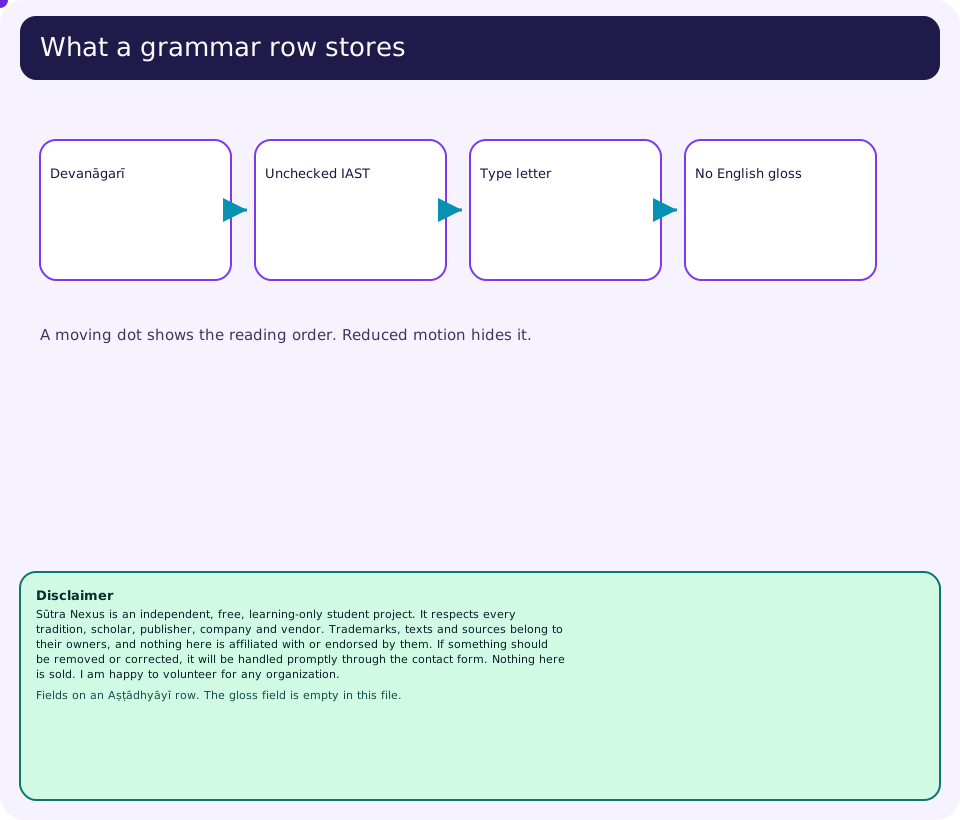
Meaning field for every canon line in this app: meaning: not yet sourced from an open text. IAST from the Aṣṭādhyāyī file is script-converted, not yet human-checked.
A short plain-English line in this app is a learner's note (not a translation). It teaches how the app is organized. It is not a scholar's rendering of a sūtra.
Foundations, dependencies, history, roadmap
Dependencies. None. This is the front door.
History. Dates are on the history page, and only as the opened article states them.
Roadmap. Next: an open-licensed meaning, then a human check of the IAST.
Where the idea shows up. People compare rule lists with programming and with linguistics. Those comparisons in this app are learner's bridges, not claims about Pāṇini's intent. Confirm before relying.
A visual
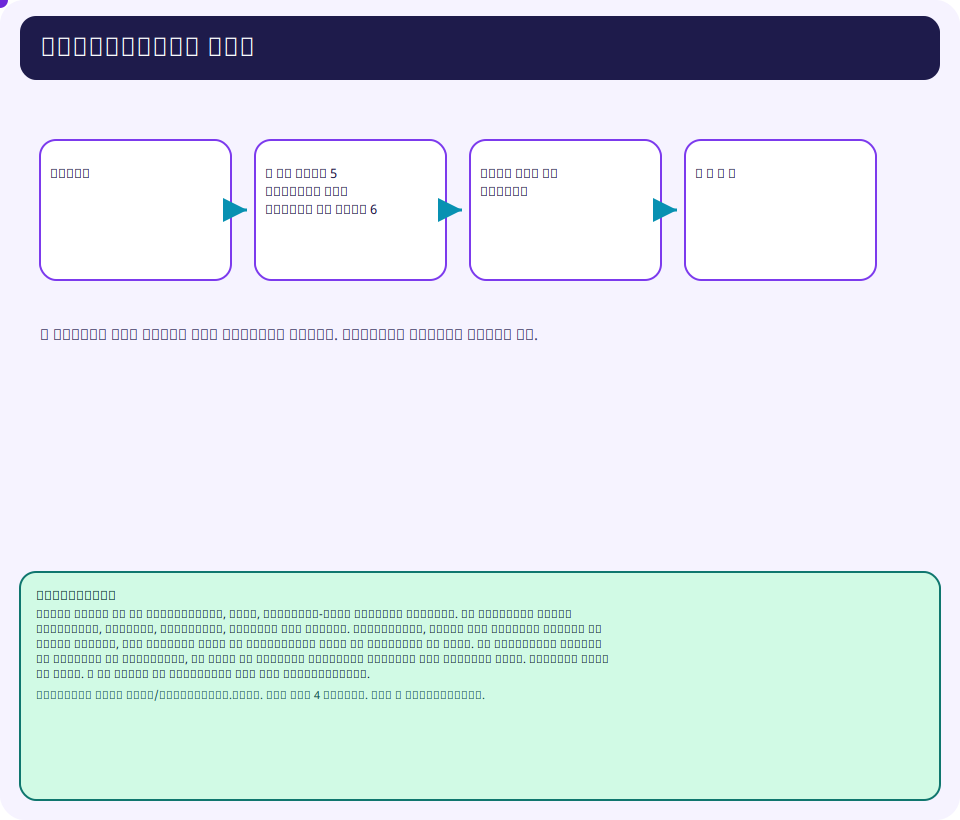
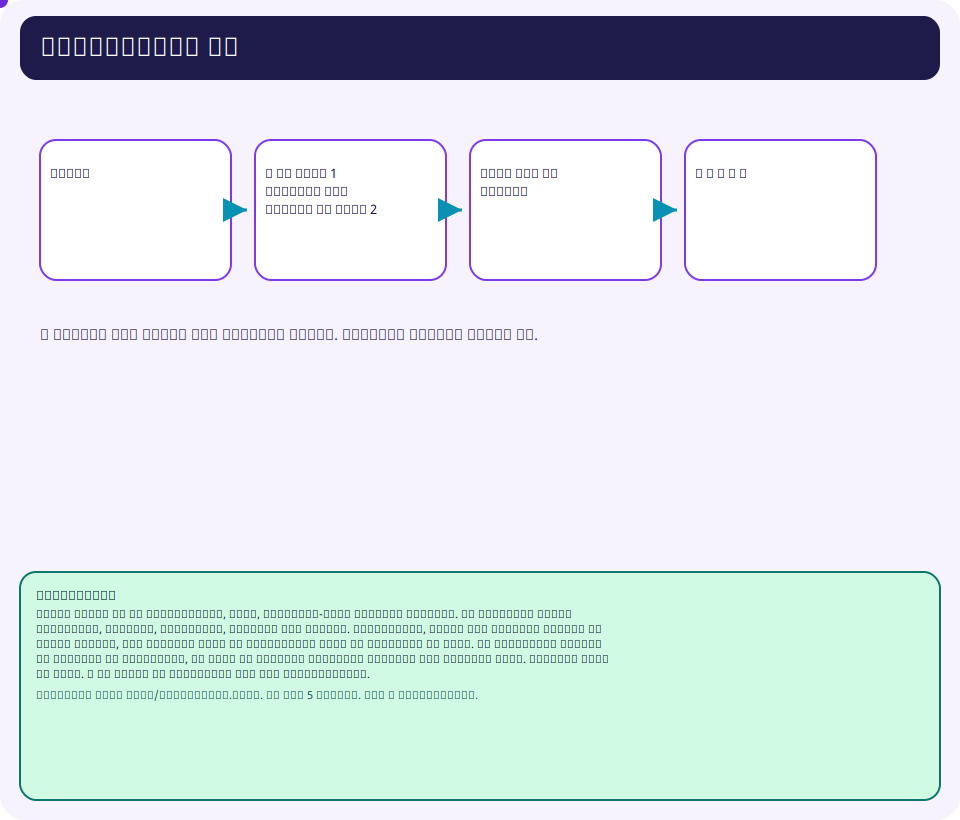
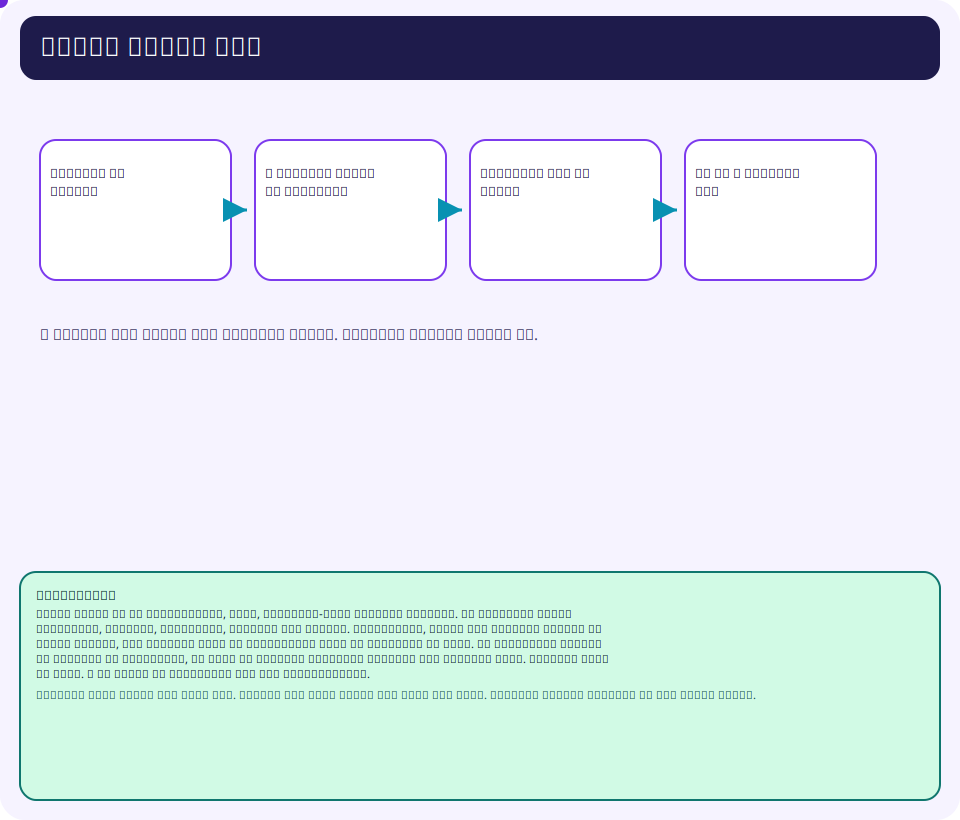
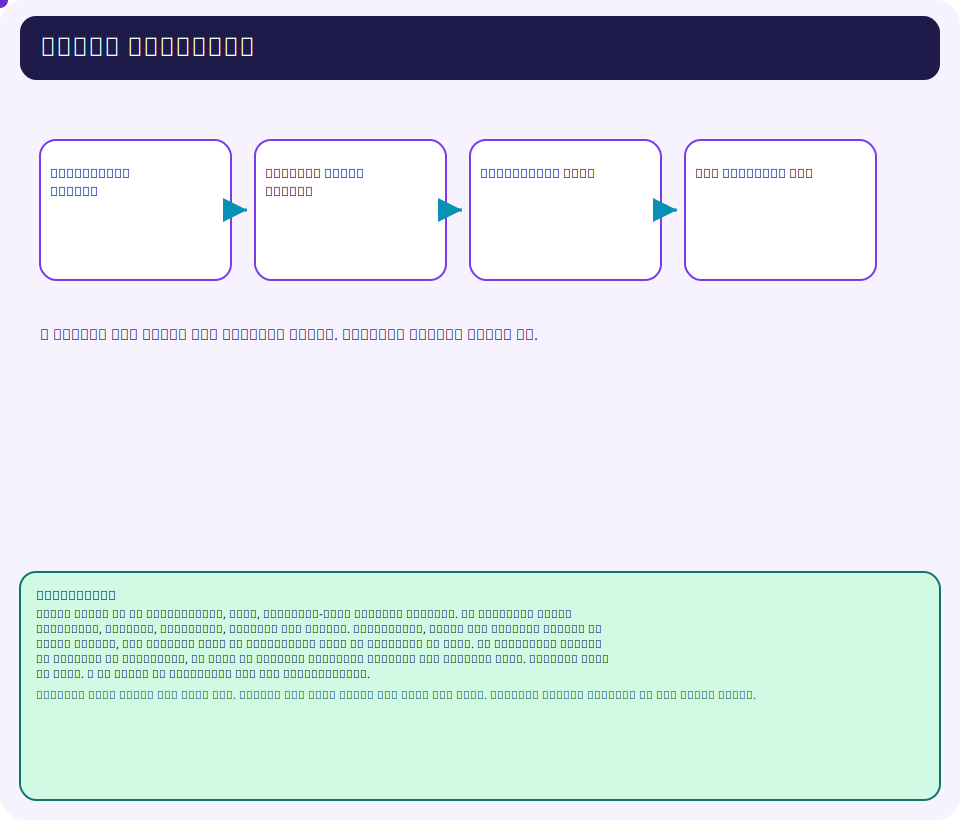
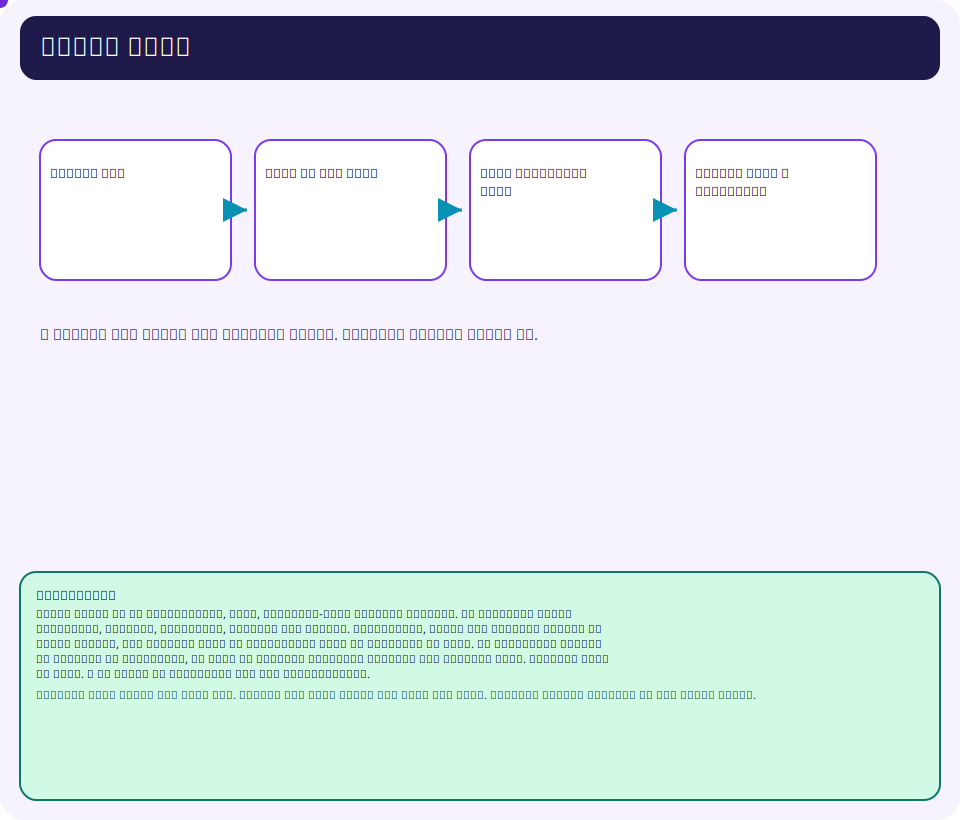
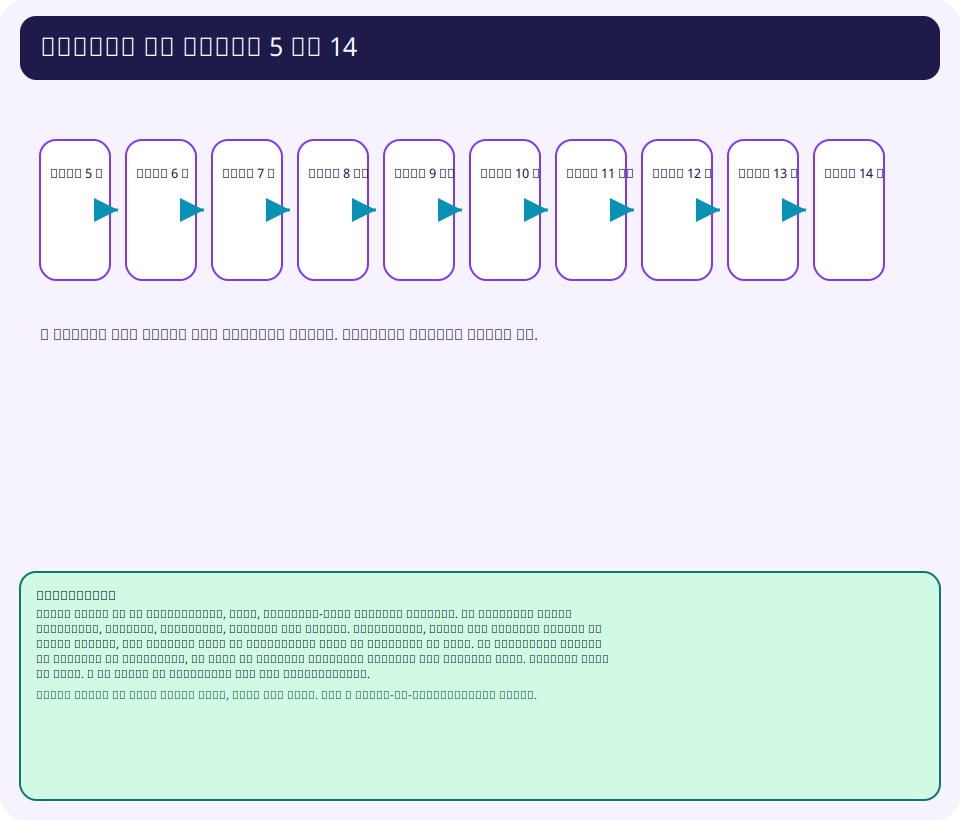
Six-step start path. Learner path drawn for this app. Counts and file notes are from the data. Confirm before relying on any wider claim.
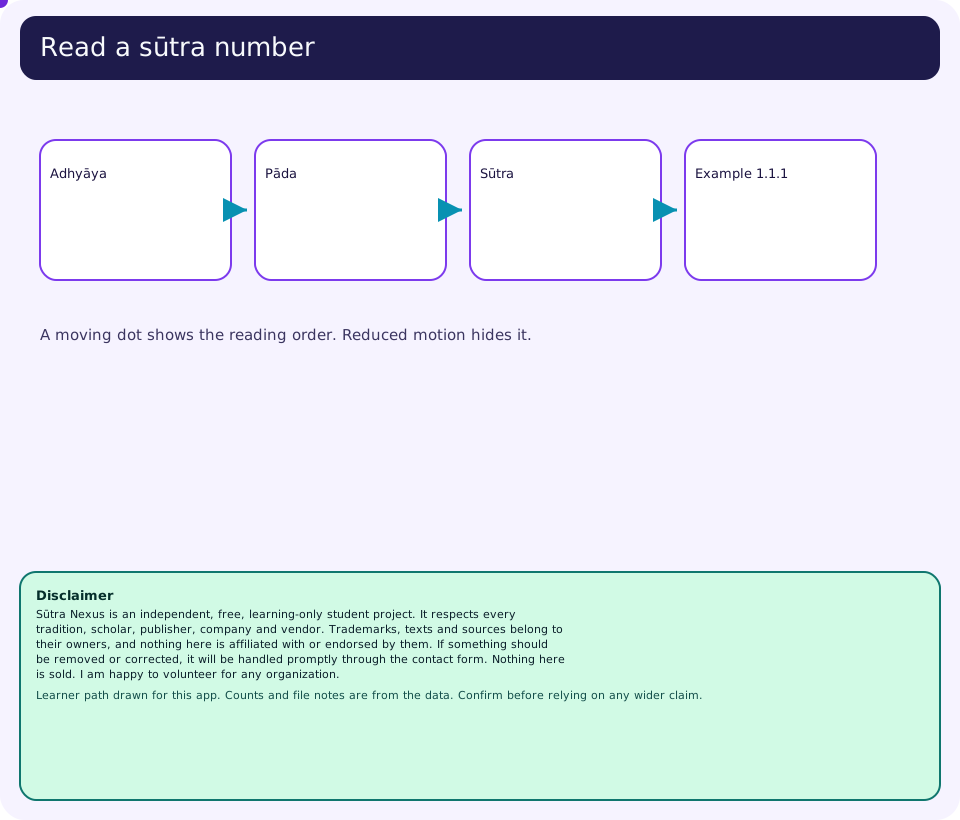
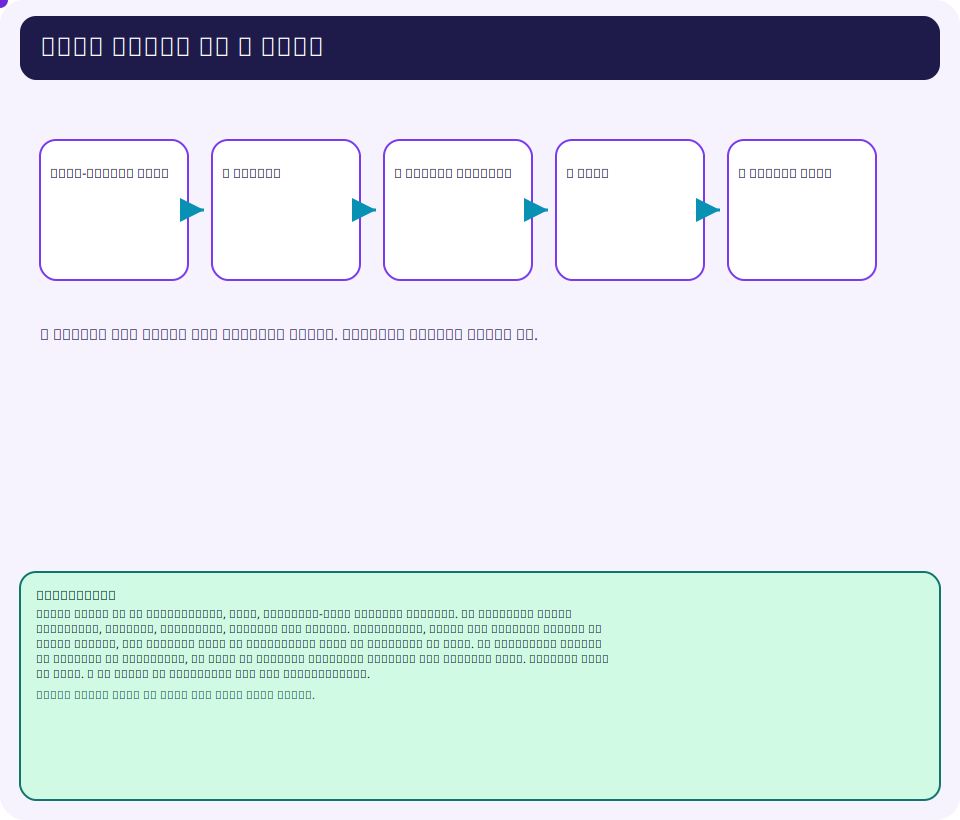
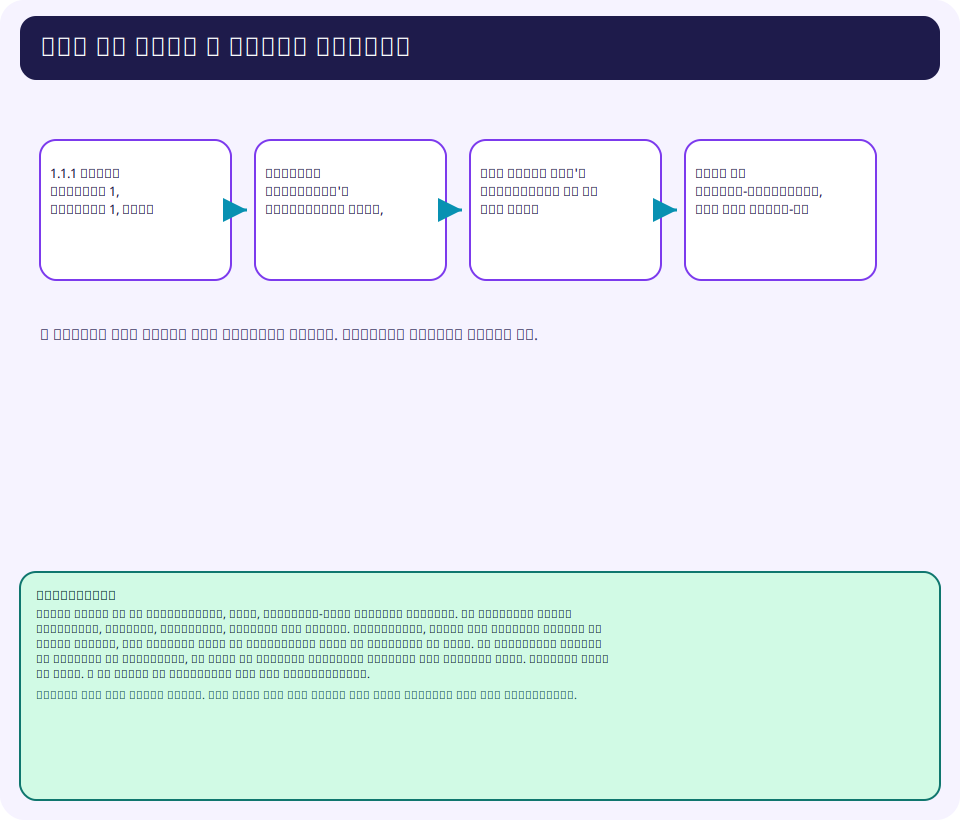
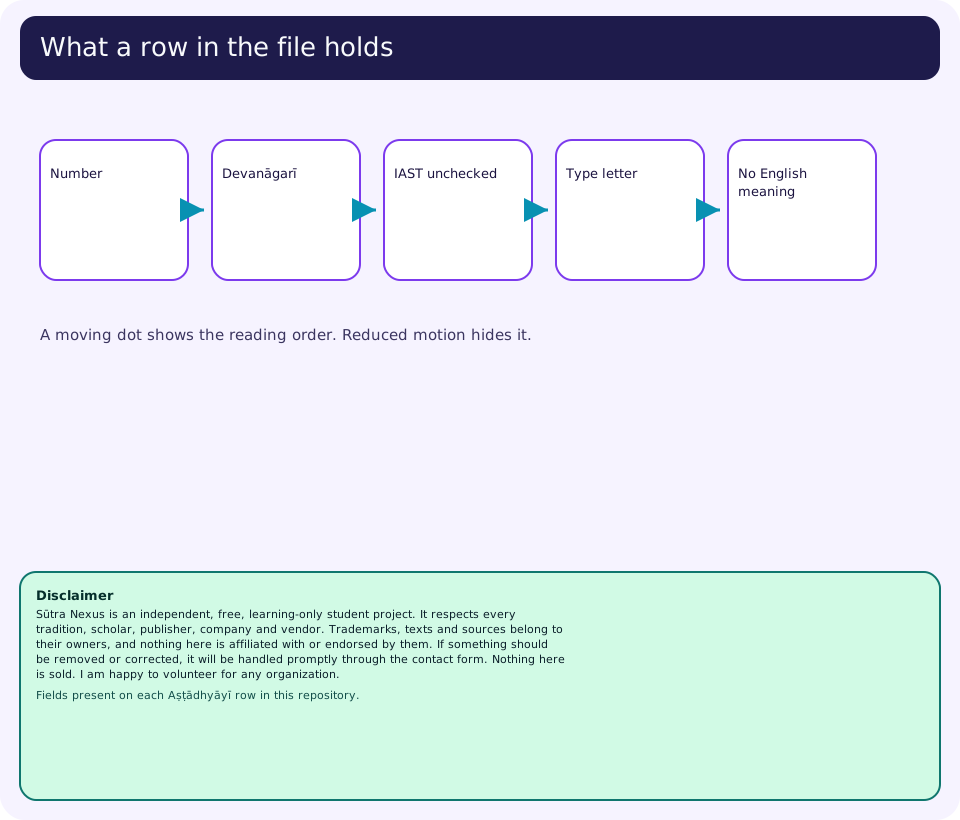
The file stores the number 1.1.1 on the first row.
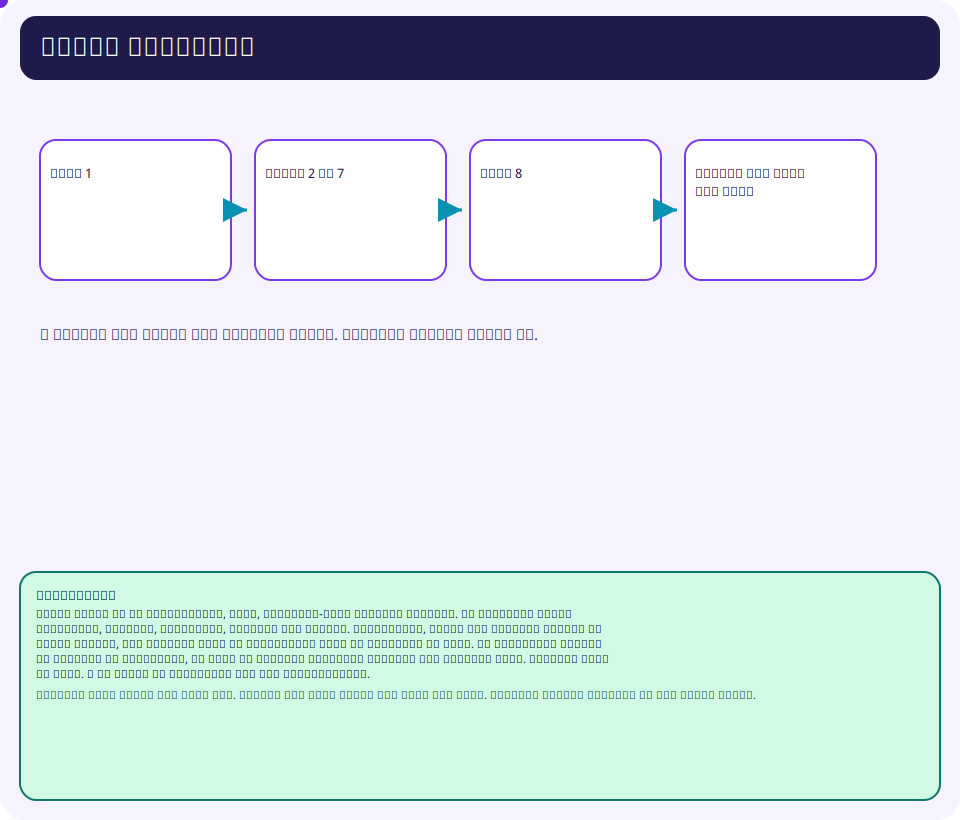
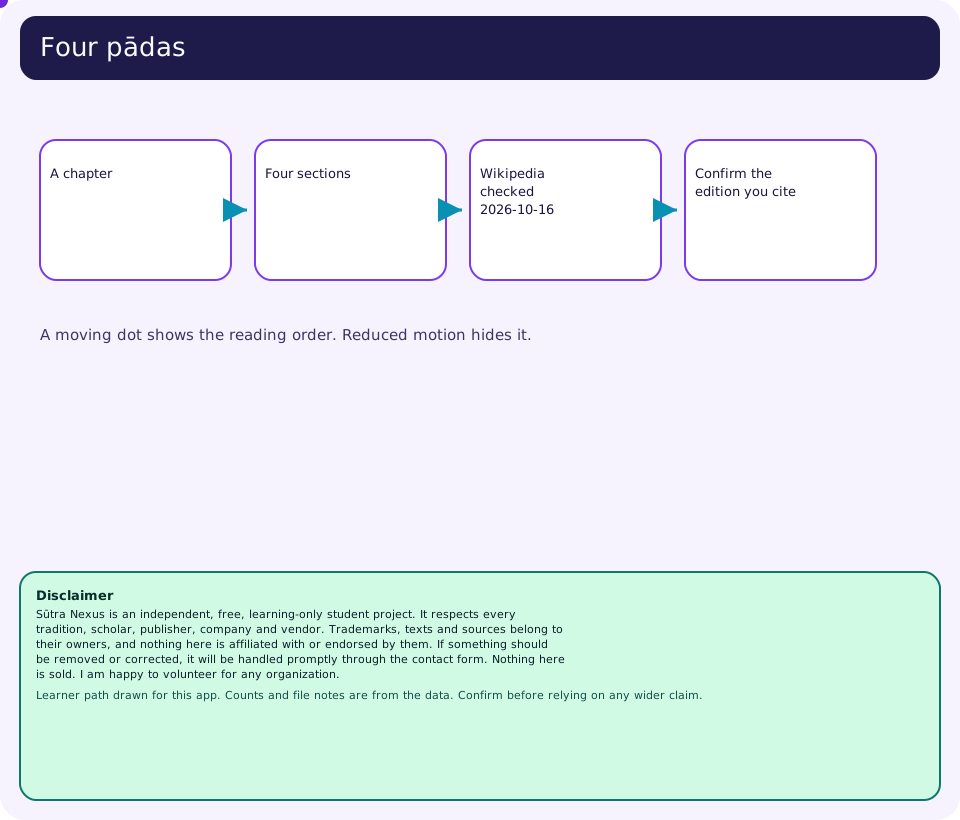
The digits mean chapter 1, section 1, line 1. English Wikipedia's Aṣṭādhyāyī page, checked 2026-10-16, says eight chapters each subdivided into four sections.
The Devanāgarī on that row is वृद्धिरादैच्. The file's IAST is vṛddhirādaic and is script-converted, not yet human-checked.
The meaning is not yet sourced from an open text. This example stops there on purpose.
Start here
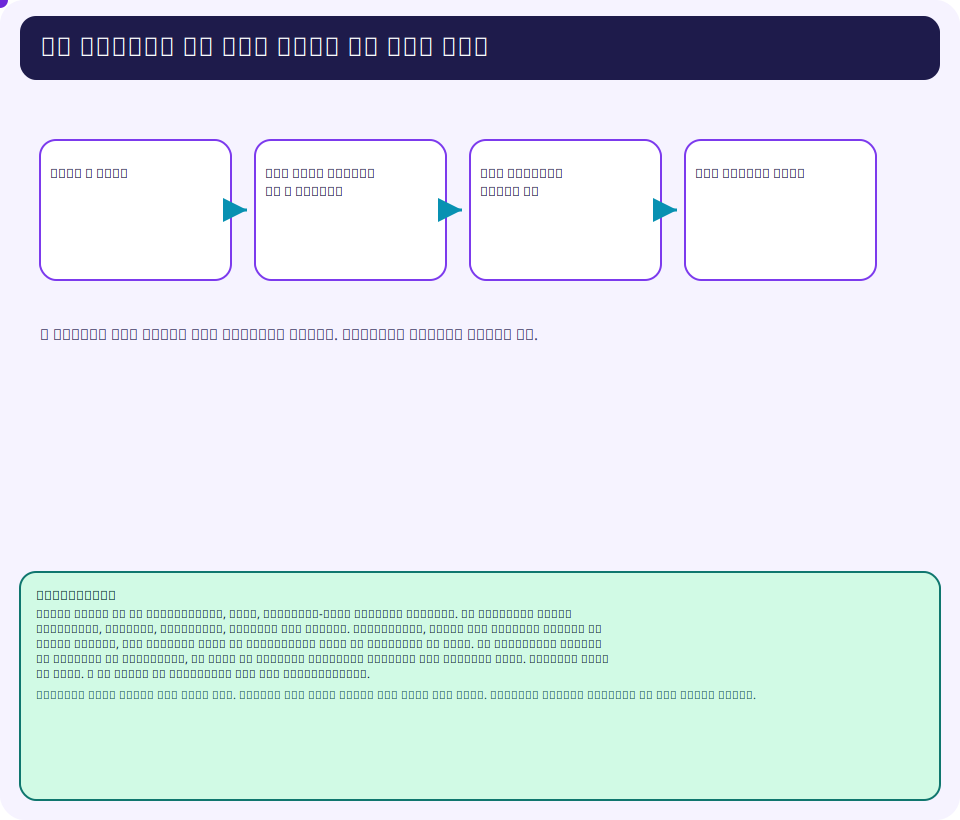
Foundations: script and what a sound chart still lacks. Open
Māheśvara lines and a pratyāhāra you compute. Open
sūtra — A short rule line. This app shows the source text and does not translate it.
IAST — A Latin transliteration scheme. Here it is script-converted unless a row says otherwise.
Sister topics
Foundations, Māheśvara, and the downloads page.
Bridges
Learner's note (not a translation): a pratyāhāra names a set of sounds, which is why programmers sometimes think of a character class. That is an analogy made here, not a quotation.
Later hooks
A checked translation, and a reviewer for the IAST.
Sources and go deeper
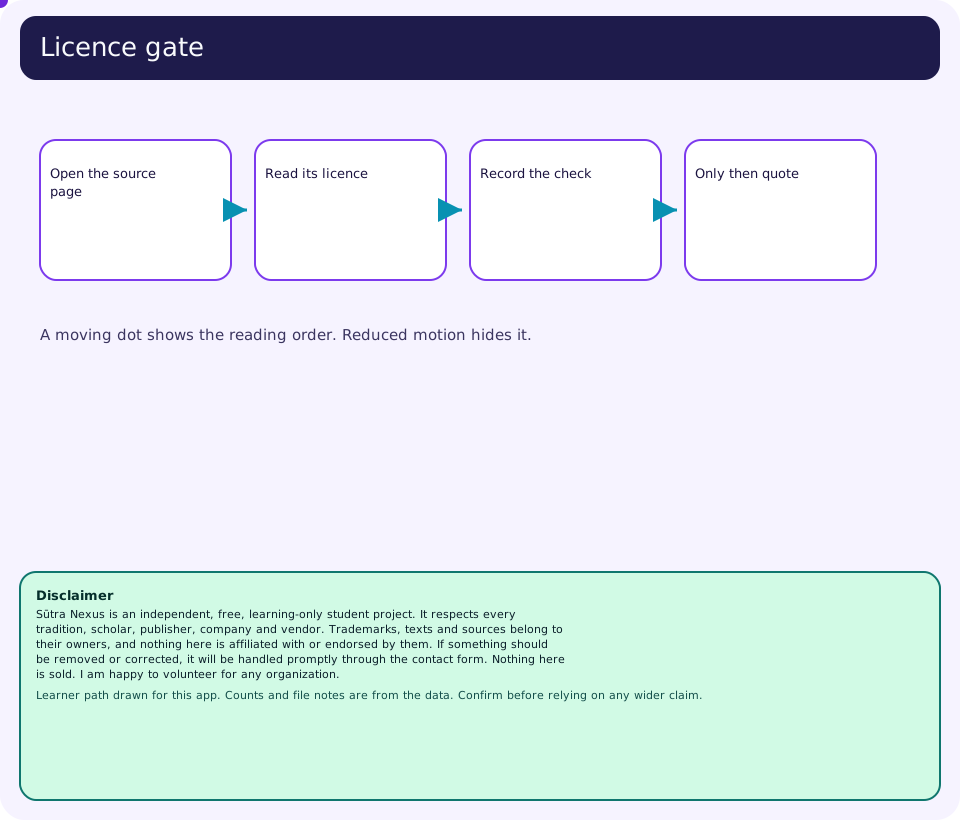
ashtadhyayi-com/data README. The raw README says you are free to use the data in your own projects if you give appropriate credit. No SPDX identifier is stated. last checked 2026-10. Licence: credit required, no formal SPDX, confirmed from the raw README.
English Wikipedia, Aṣṭādhyāyī. The page says the work has 3,983 sūtras in eight chapters, each subdivided into four pādas, and lists vidhi, paribhāṣā, adhikāra, atideśa, niyama, and negation rules. CC BY-SA. last checked 2026-10. Licence: CC BY-SA 4.0.
Foundations
Devanāgarī, IAST, and the phonetic chart this app will not invent.
Learn it in 5 minutes
The rows in this app are written in Devanāgarī. English Wikipedia's Devanagari page, checked 2026-10-16, describes it in the short description as an Indic script used in the Indian subcontinent.
IAST is the Latin scheme used beside those rows. English Wikipedia's IAST page, checked the same day, calls it a transliteration scheme for Indic scripts. In the Aṣṭādhyāyī file the IAST was produced by a script and has not been checked by a person. The label is: script-converted, not yet human-checked.
English Wikipedia's Shiksha page, checked 2026-10-16, calls Śikṣā a Vedic-era study of phonetics and phonology, one of six Vedangas. Sthāna (place) and prayatna (effort) are the classroom names for phonetic charts. This app does not draw those charts, because no open phonetic edition was opened and recorded. Confirm before relying on any place-of-articulation table you bring from elsewhere.
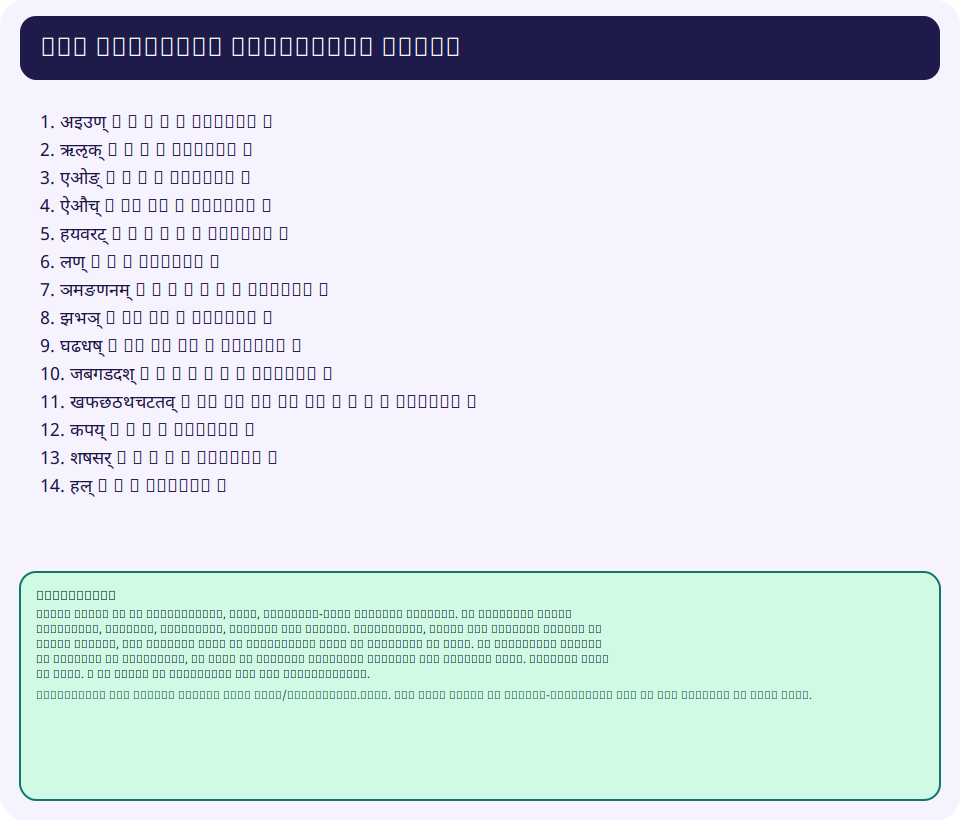
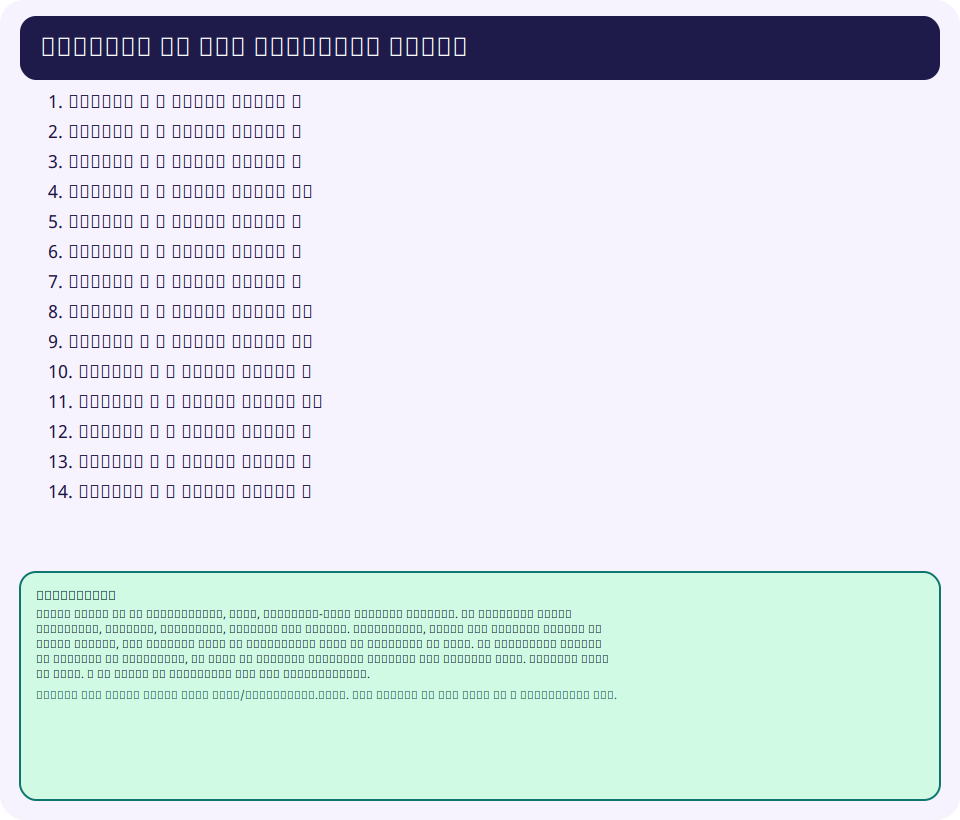
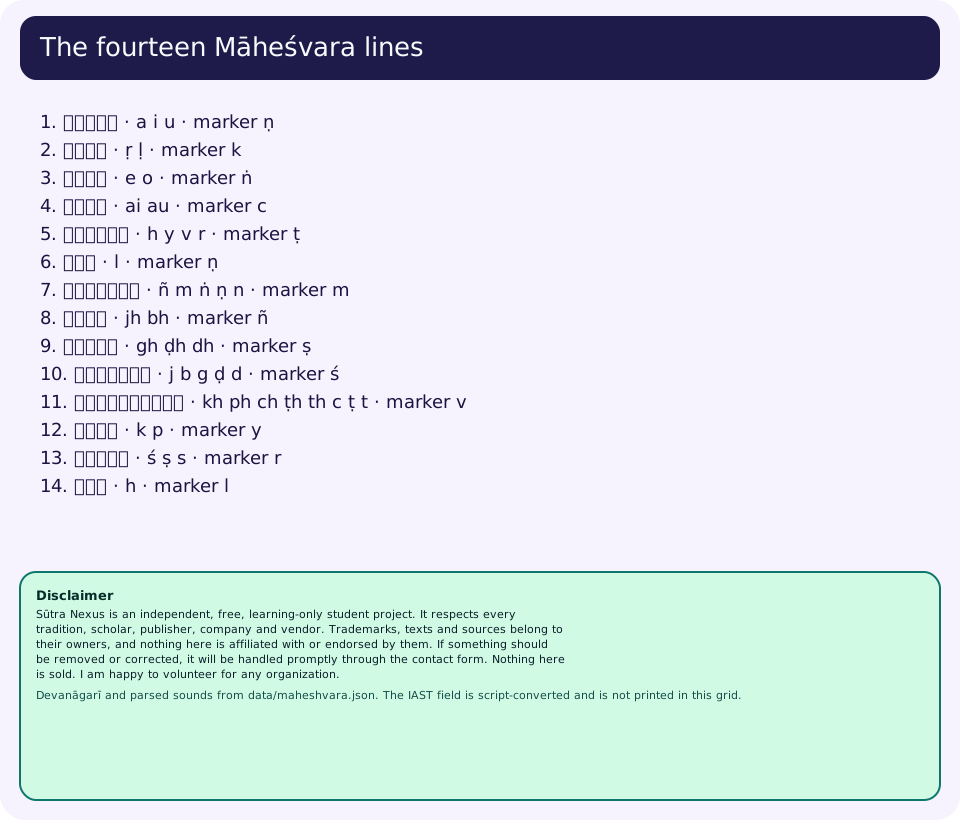
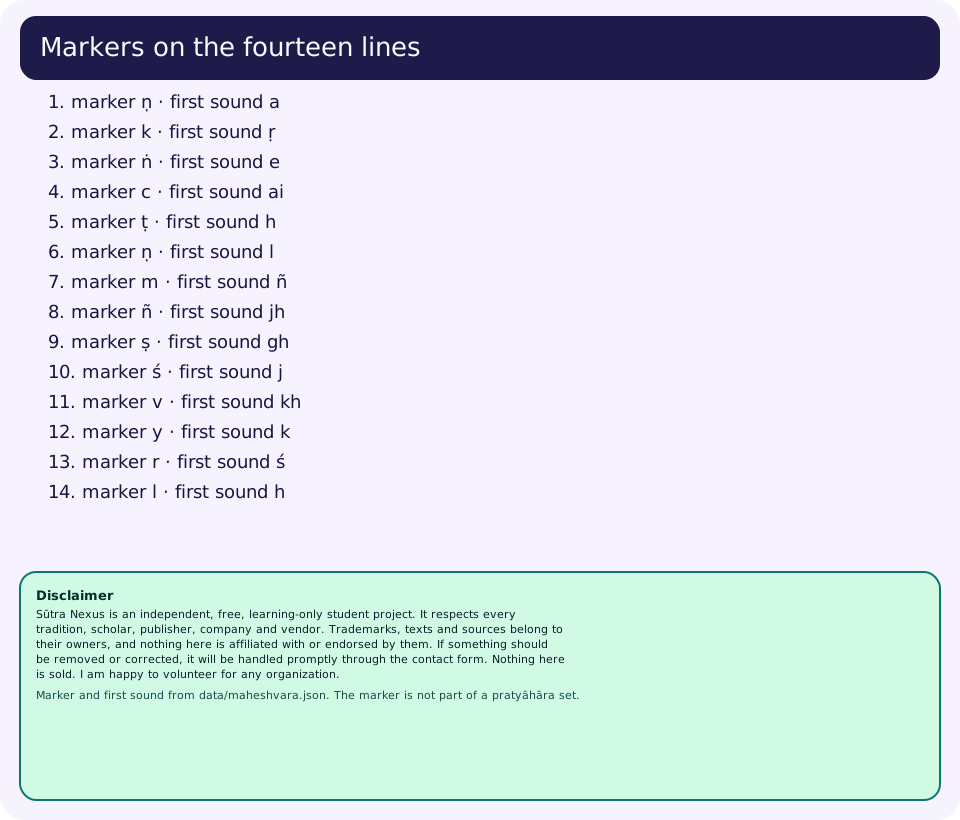
What you can trust here is the 14-line sound list in the data file, printed as the file records it.
Foundations, dependencies, history, roadmap
Dependencies. Start here.
History. The Śikṣā page calls the study Vedic-era. This app does not assign a year.
Roadmap. An opened phonetic source, then a chart with that citation.
Where the idea shows up. Speech technology uses place and manner features. Mapping those features onto this tradition needs a cited source. Confirm before relying.
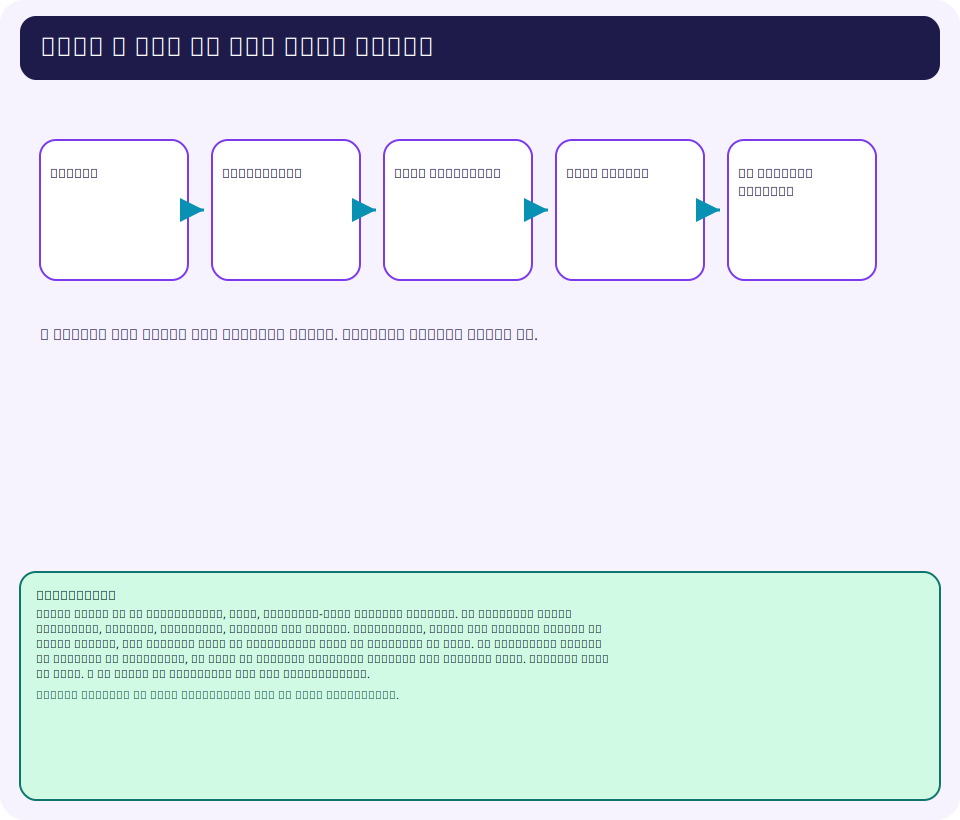
A visual
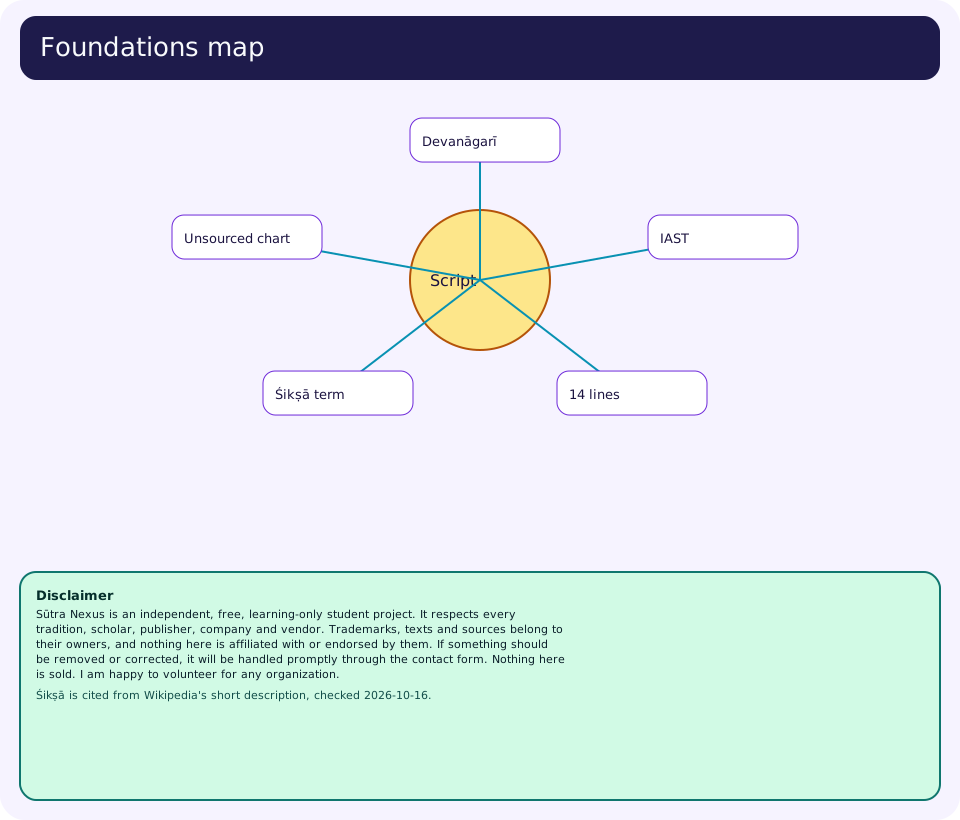
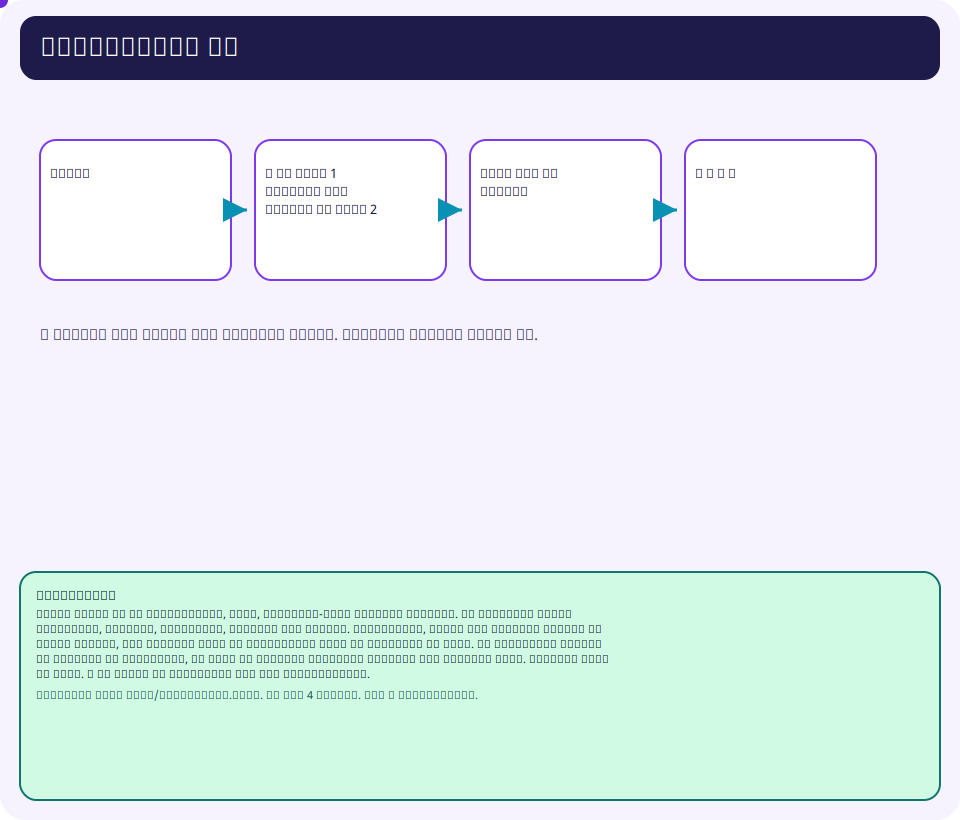
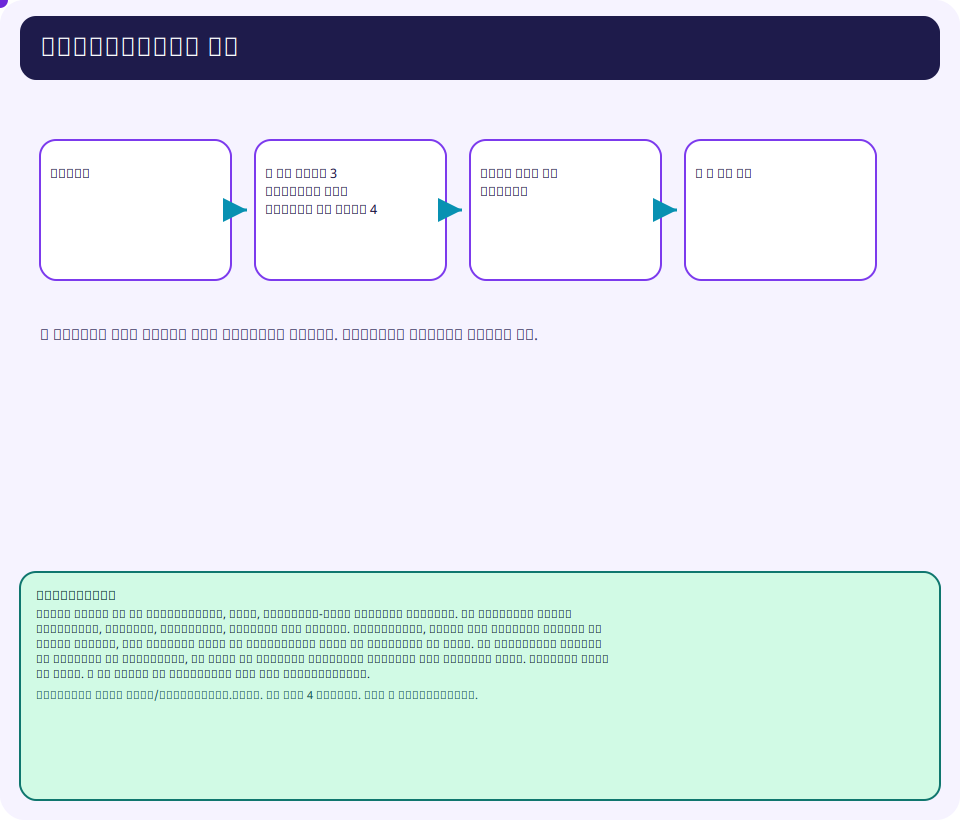
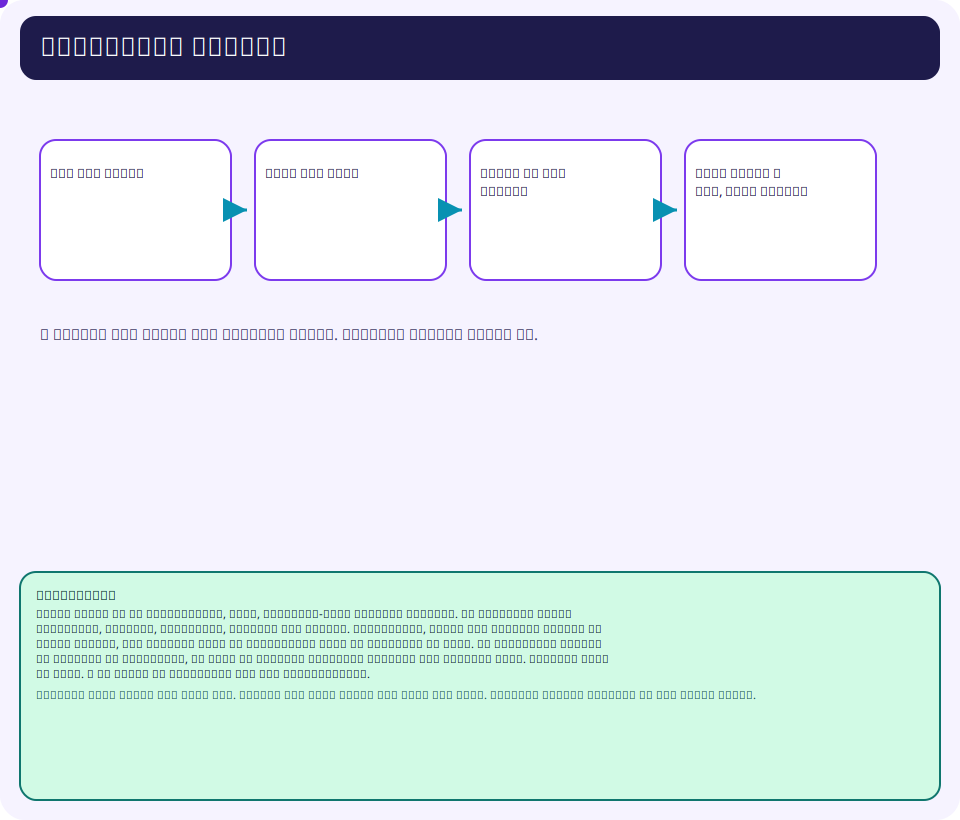
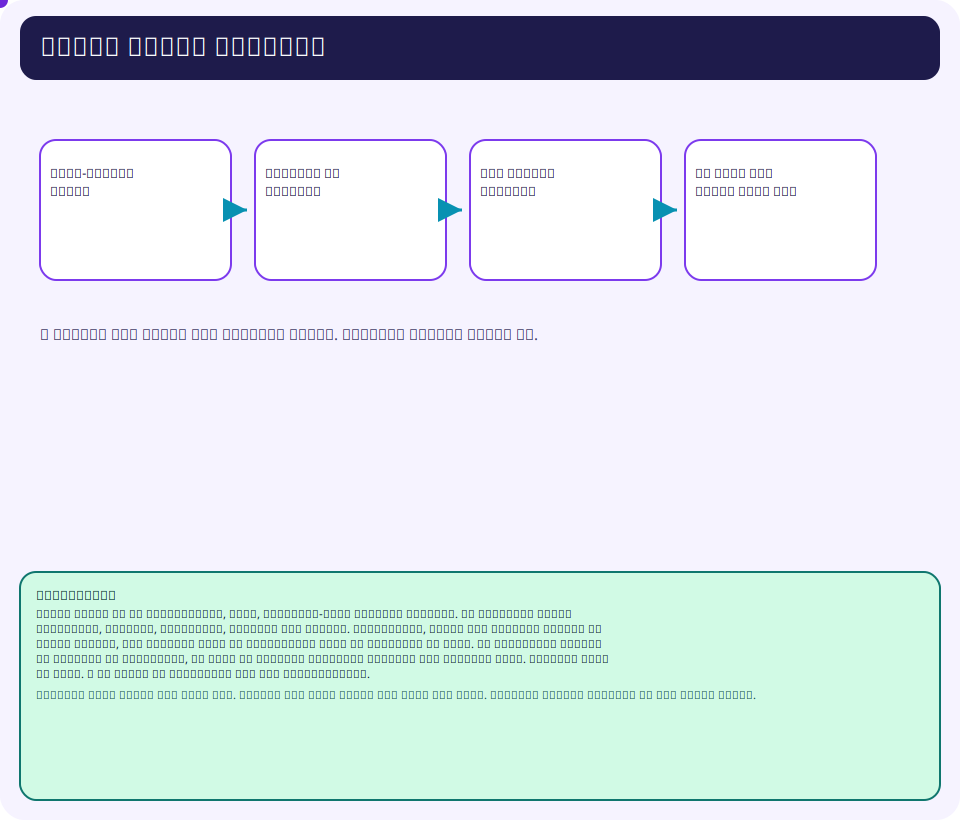
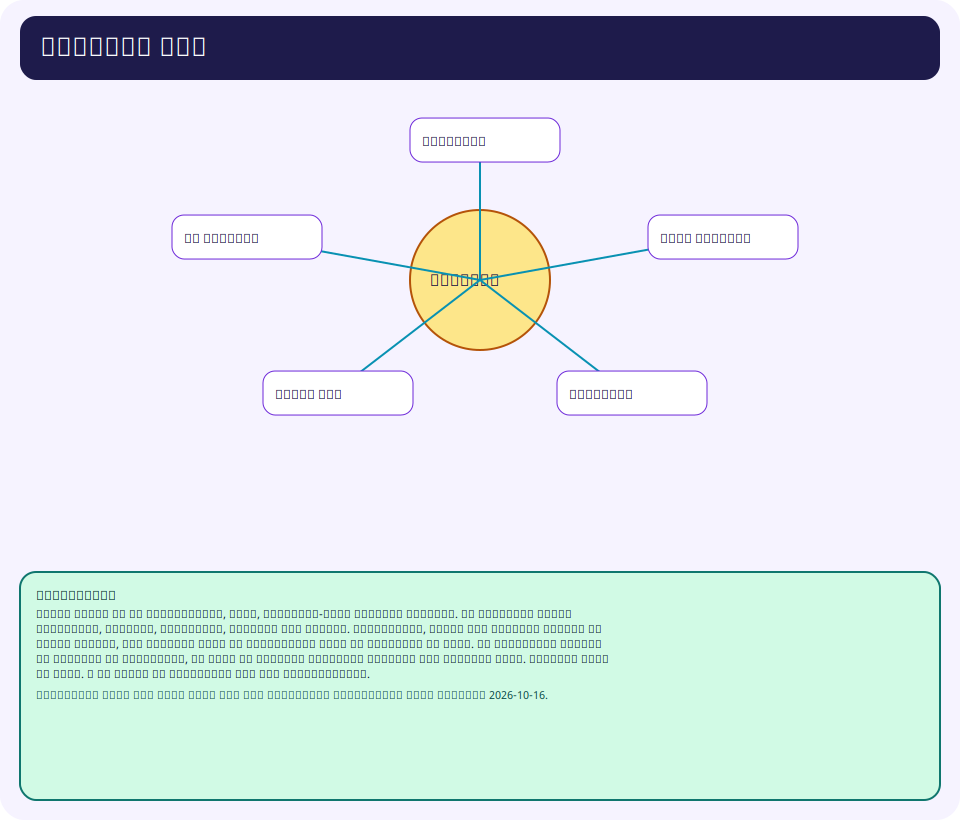
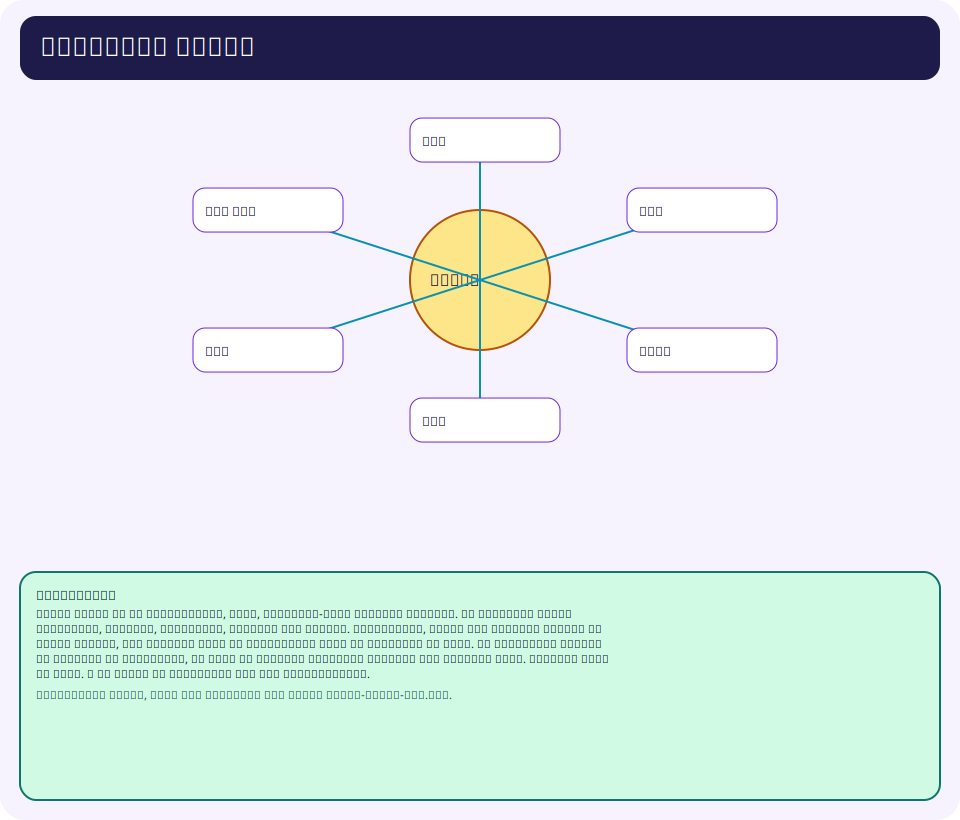
Foundations map. Śikṣā is cited from Wikipedia's short description, checked 2026-10-16.
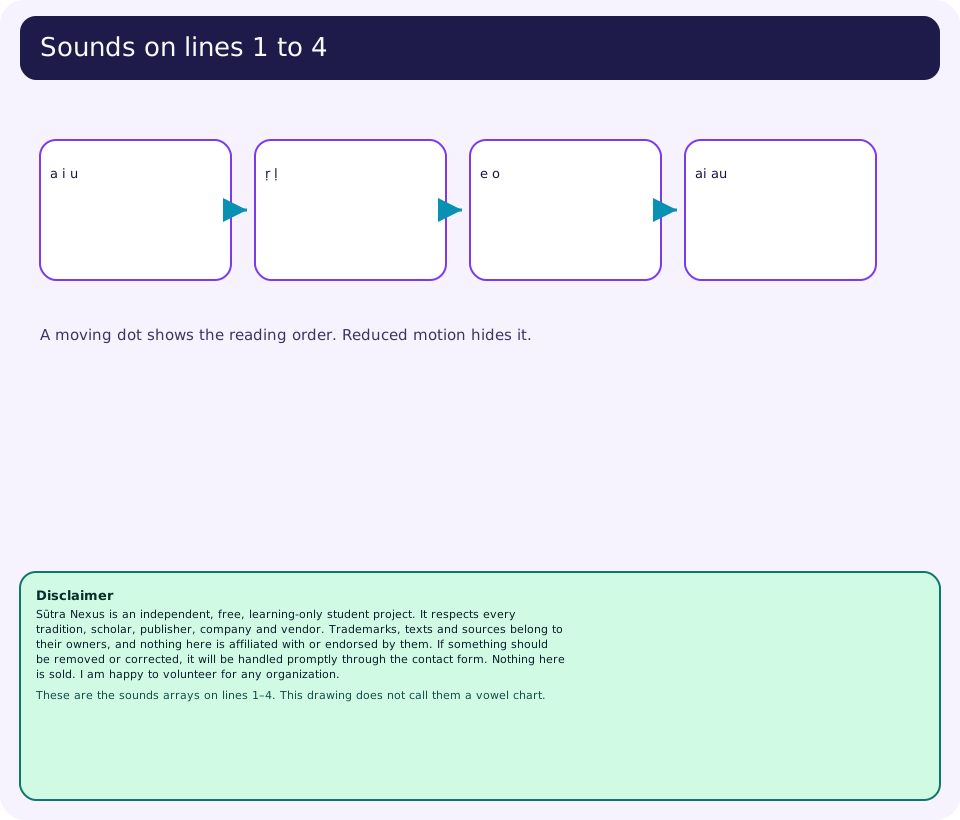
The sounds array on that line is a, i, u. The marker is ण्, stored as ṇ.
That is a parse of the file, not a translation and not a statement about where in the mouth the sounds are made.
If a chart of tongue positions is added later, it needs its own opened source.
Quiz
What does this app claim about tongue position?
How is Aṣṭādhyāyī IAST labeled?
What is Śikṣā, per the Wikipedia short description checked 2026-10-16?
Which script are the source lines in?
What should you do with an unsourced phonetic claim?
Ecosystem
Glossary
Devanāgarī — The script of the source lines in these files.
sthāna — A traditional name for place of articulation. Not charted here. Confirm before relying.
prayatna — A traditional name for articulatory effort. Not charted here. Confirm before relying.
Sister topics
Māheśvara and sandhi.
Bridges
Learner's note (not a translation): a sound list is the inventory a later rule can name. The inventory in this app is the 14-line file.
Later hooks
A subset font is already shipped so the script does not depend on a network.
Sources and go deeper
English Wikipedia, Devanagari. Short description: an Indic script used in the Indian subcontinent. last checked 2026-10. Licence: CC BY-SA 4.0.
English Wikipedia, IAST. Short description: a transliteration scheme for Indic scripts. The page names the 19th century onward. last checked 2026-10. Licence: CC BY-SA 4.0.
English Wikipedia, Shiksha. Short description on the page: a Vedic-era study of phonetics and phonology, one of six Vedangas. last checked 2026-10. Licence: CC BY-SA 4.0.
ashtadhyayi-com/data README. The raw README says you are free to use the data in your own projects if you give appropriate credit. No SPDX identifier is stated. last checked 2026-10. Licence: credit required, no formal SPDX, confirmed from the raw README.
Māheśvara lines and pratyāhāra
Fourteen lines, markers, and sets you can recompute.
Learn it in 5 minutes
The file data/maheshvara.json holds 14 lines. English Wikipedia's Shiva Sutras article, checked 2026-10-16, uses the short description "14 verses organizing the phonemes of Sanskrit" and tells readers that the Kashmir text is a different article. That Wikipedia page also says it needs more citations, so this app treats the file, not the article, as the list.
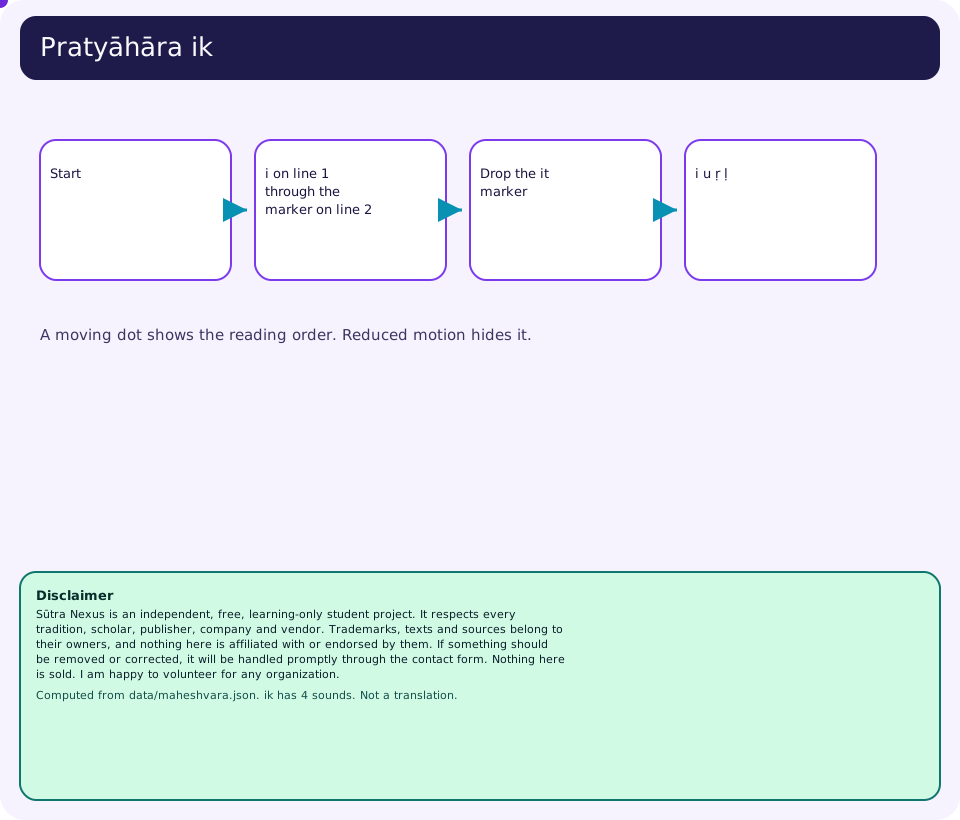
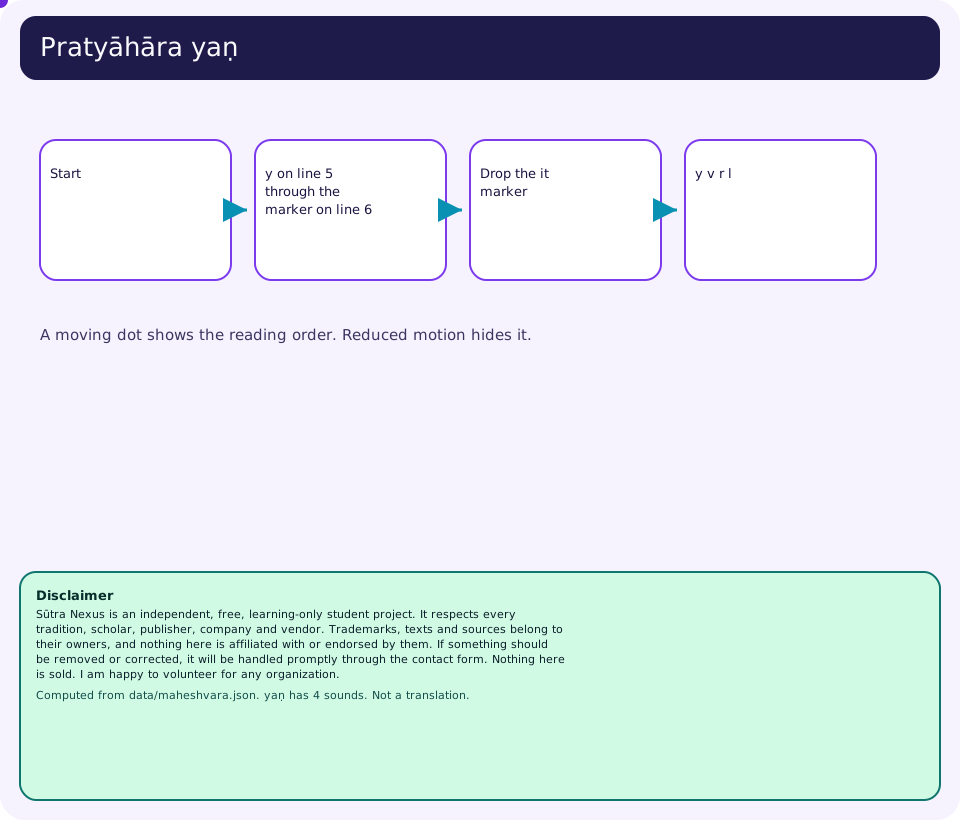
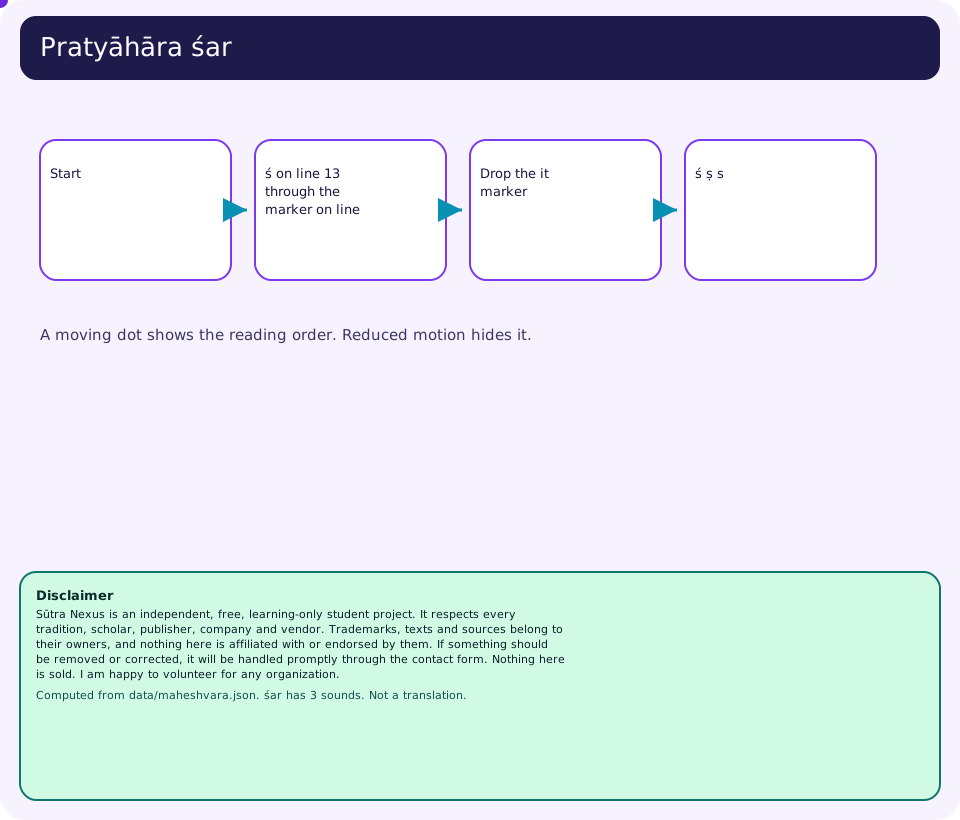
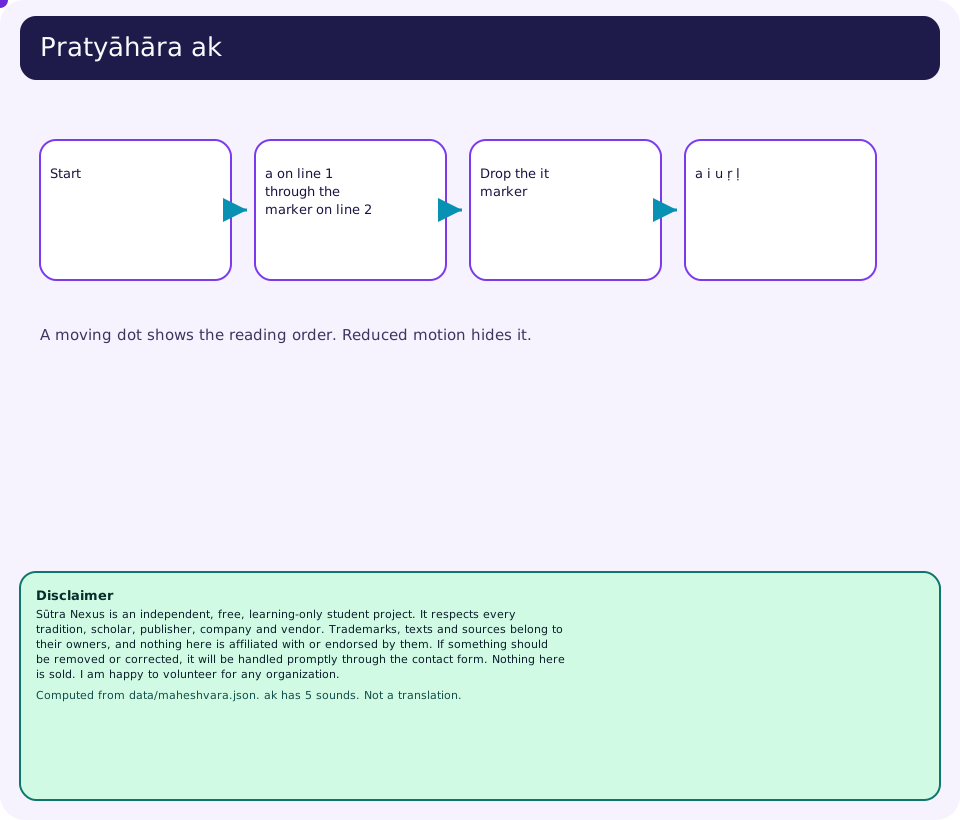
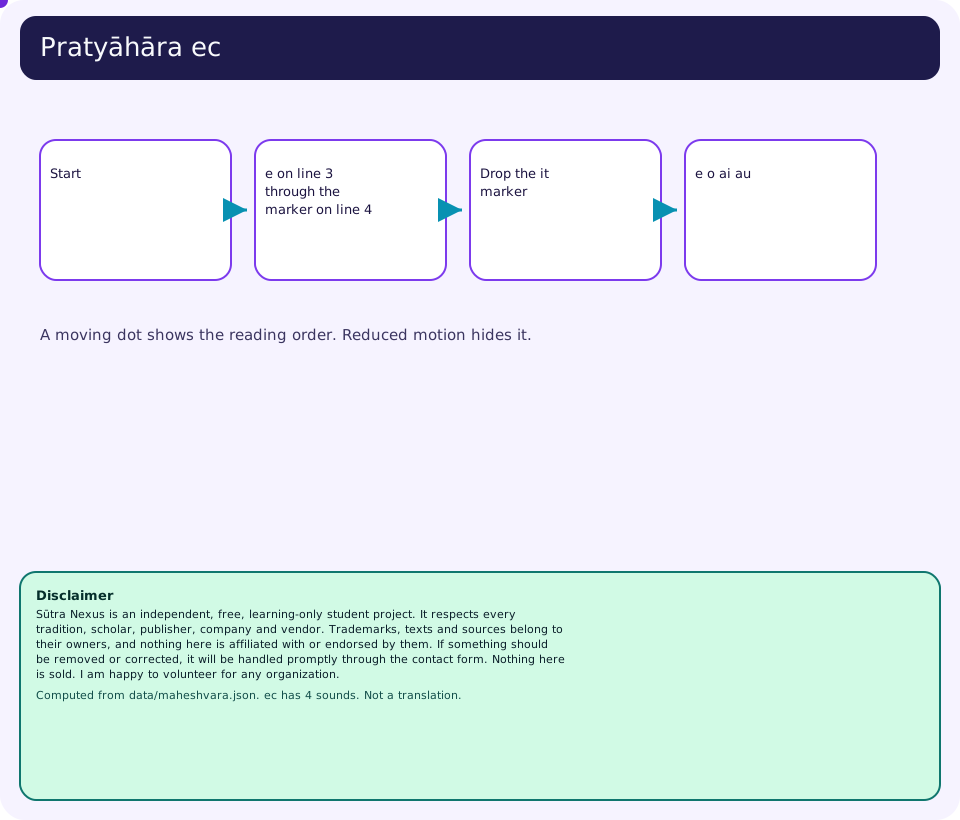
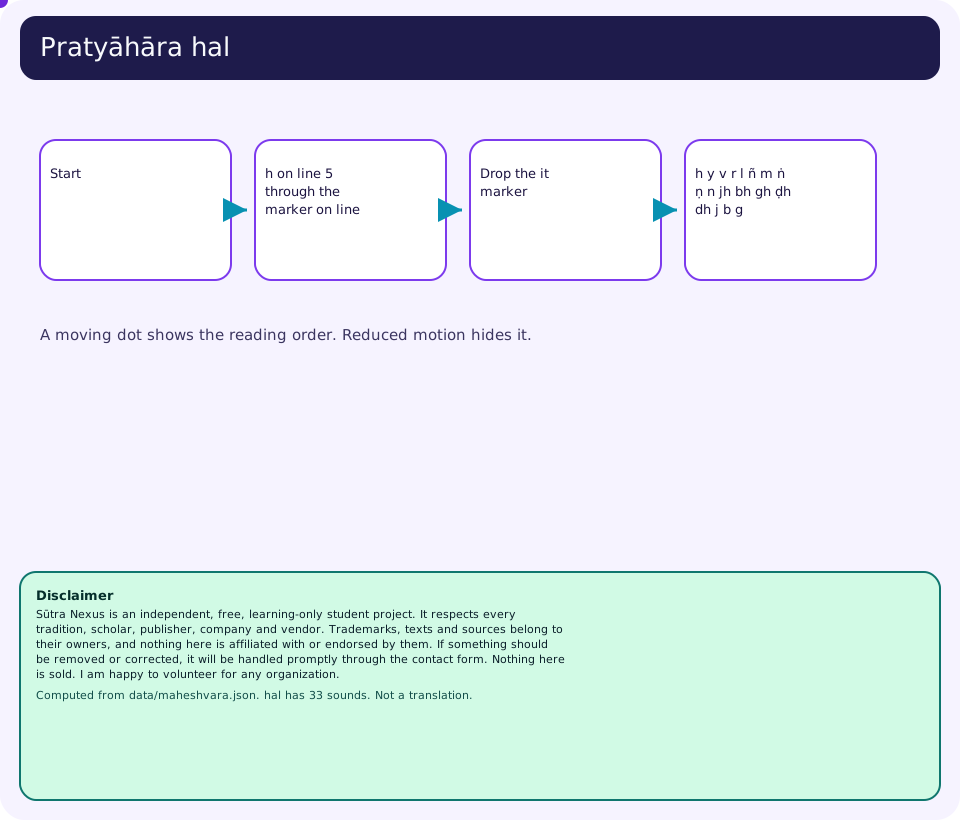
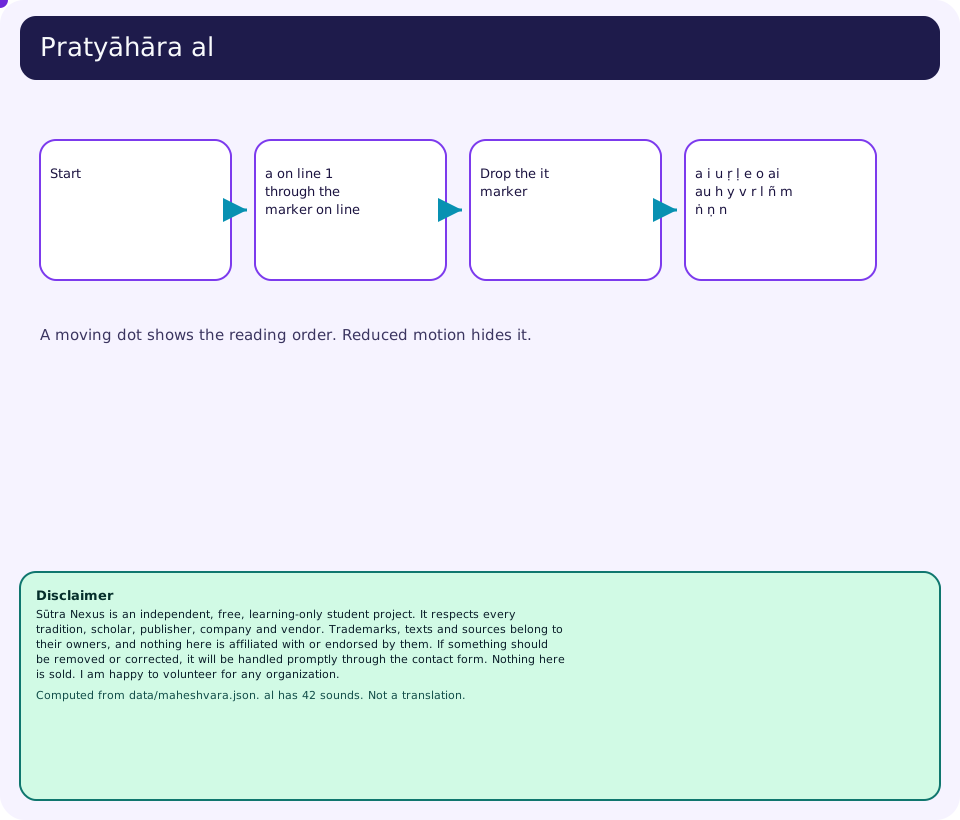
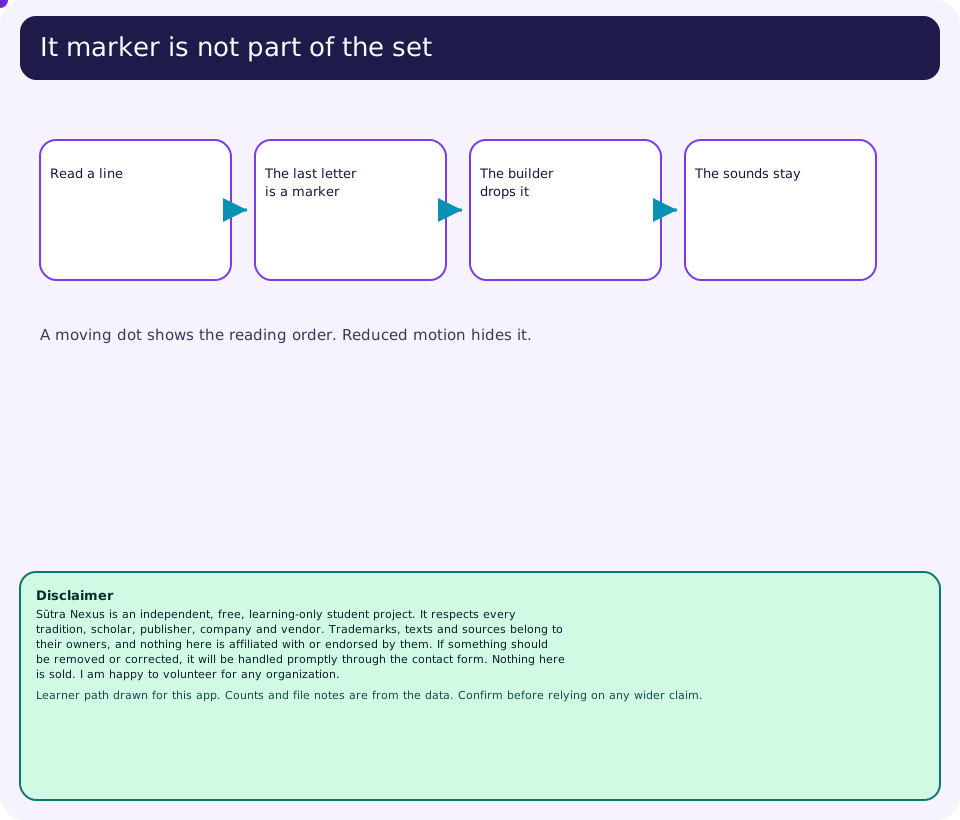
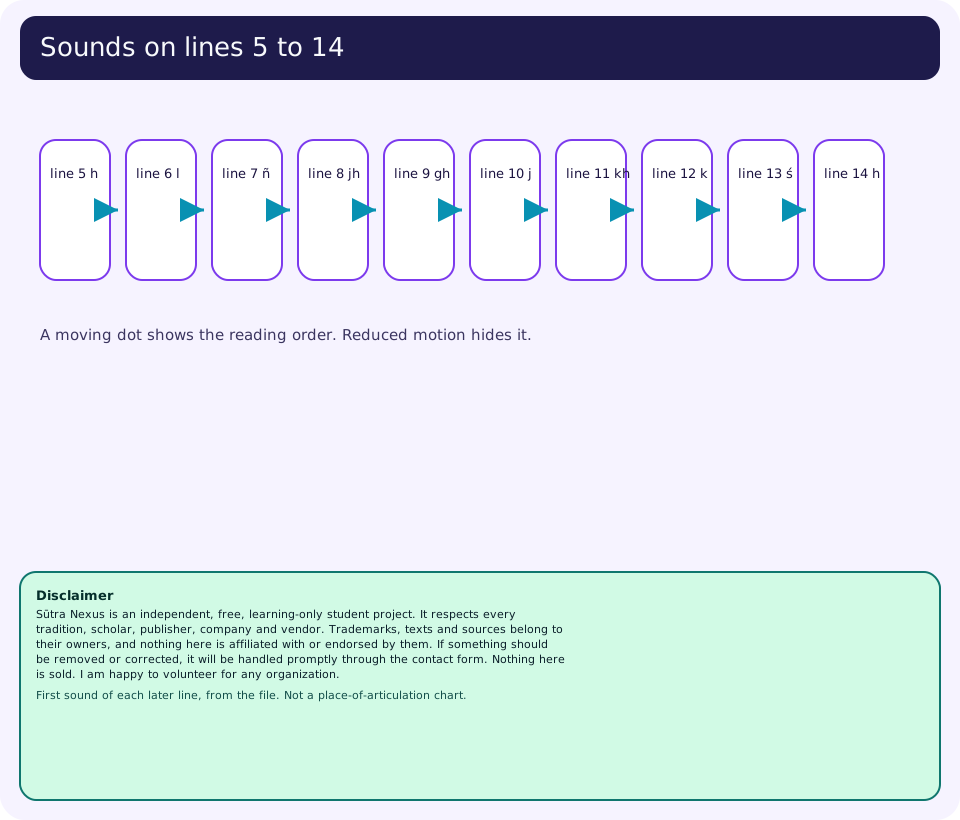
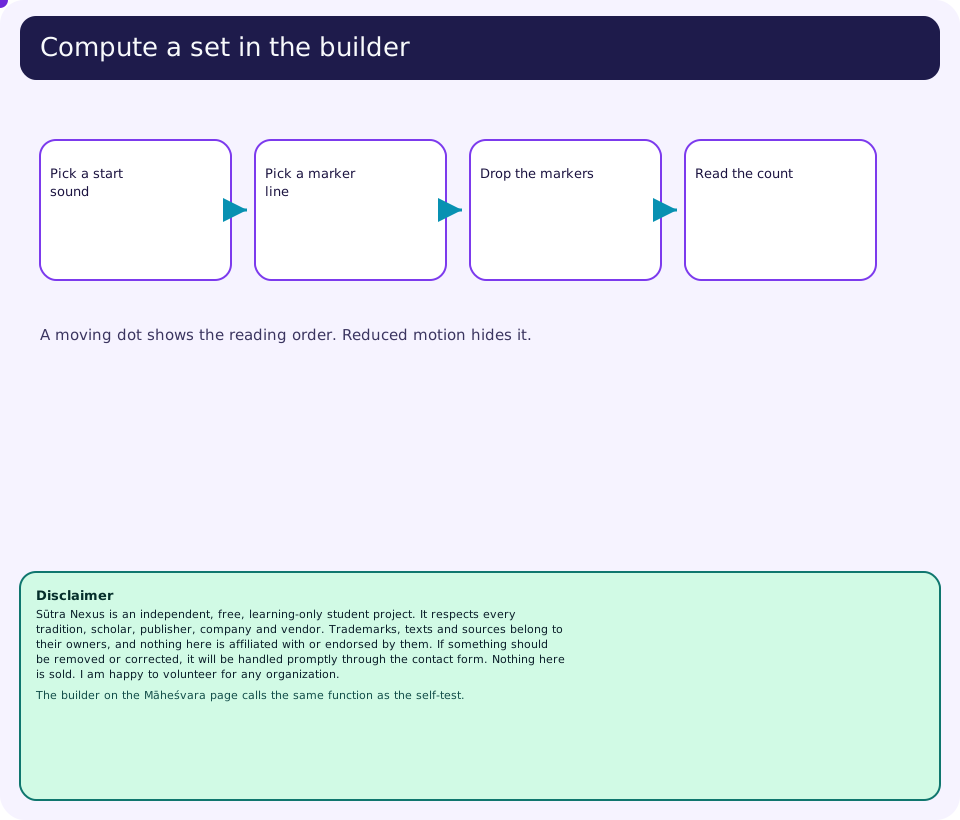
Each line has sounds and a final marker. A pratyāhāra in this app is a computed set: start at a sound, walk forward, and stop at a chosen marker line. The marker itself is not kept. This is an operation on the file, not a translation.
The self-test checks ac, ik, yaṇ, śar, ak, ec, hal (33 sounds), and al (42 sounds).
The IAST strings in that file are script-converted, not yet human-checked. The Devanāgarī and the sounds arrays are what the builder uses.
Foundations, dependencies, history, roadmap
Dependencies. Foundations, so the script and the IAST label are clear.
History. The Wikipedia phoneme article's own page asks for more citations. Confirm before relying on stories about the list's origin.
Roadmap. Show every pratyāhāra the function can build, still as computation.
Where the idea shows up. Learner's note (not a translation): naming a set with a short code is why this list gets compared to character classes in programming. The comparison is made in this app.
A visual
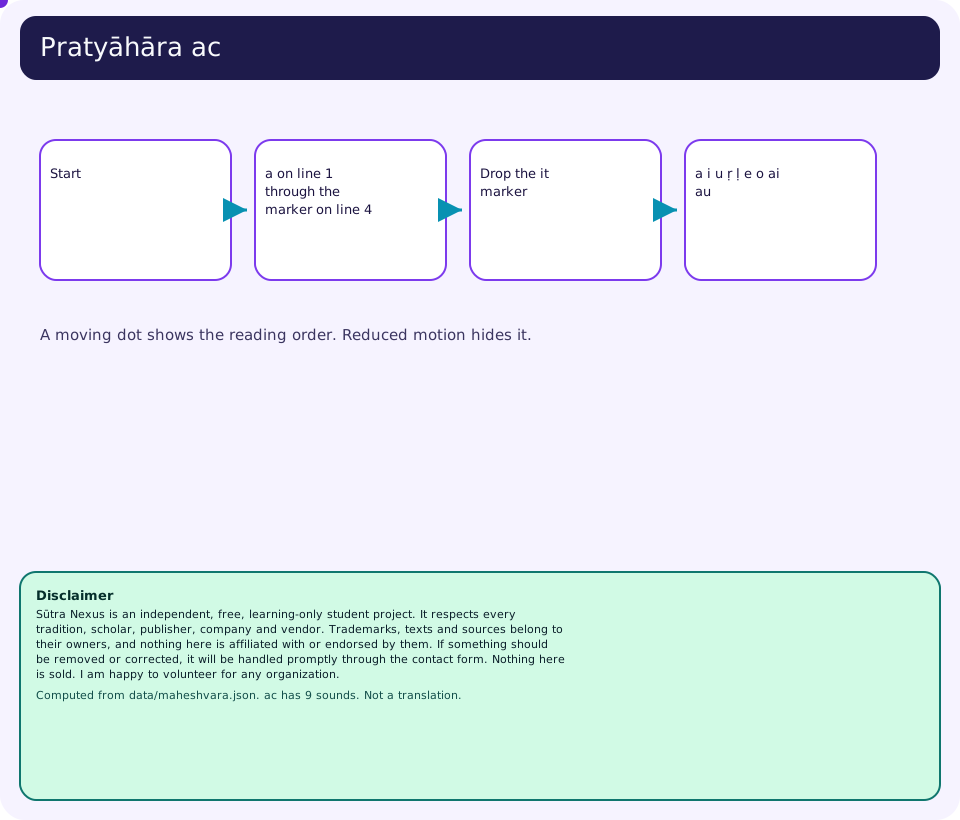
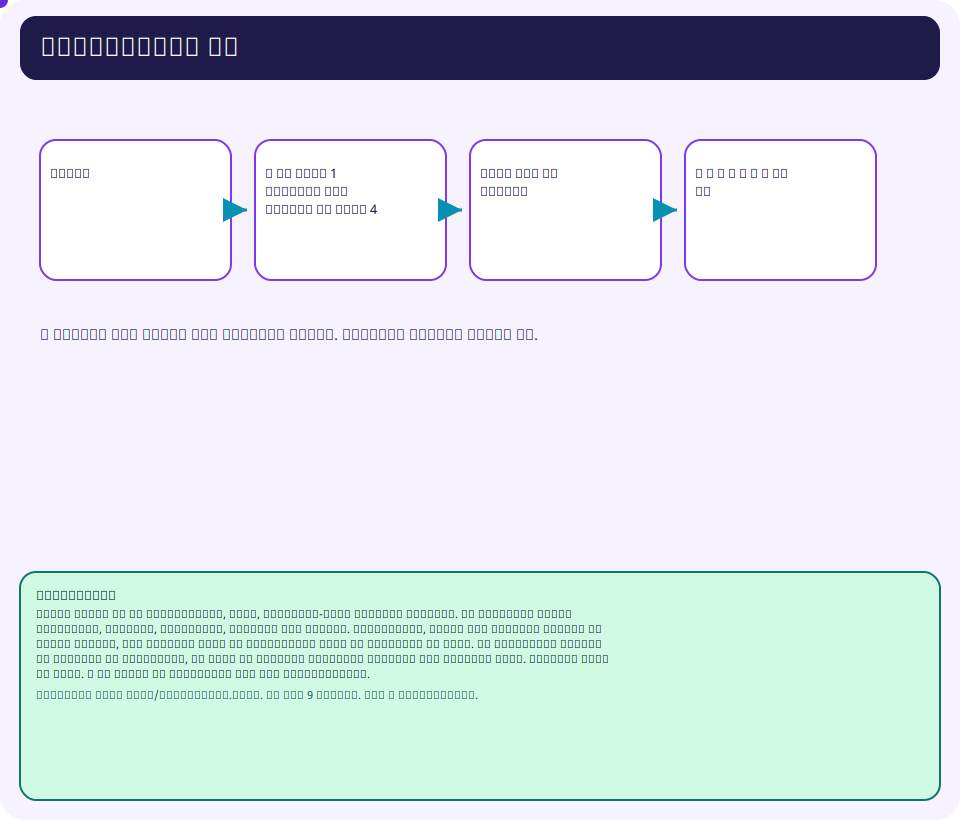
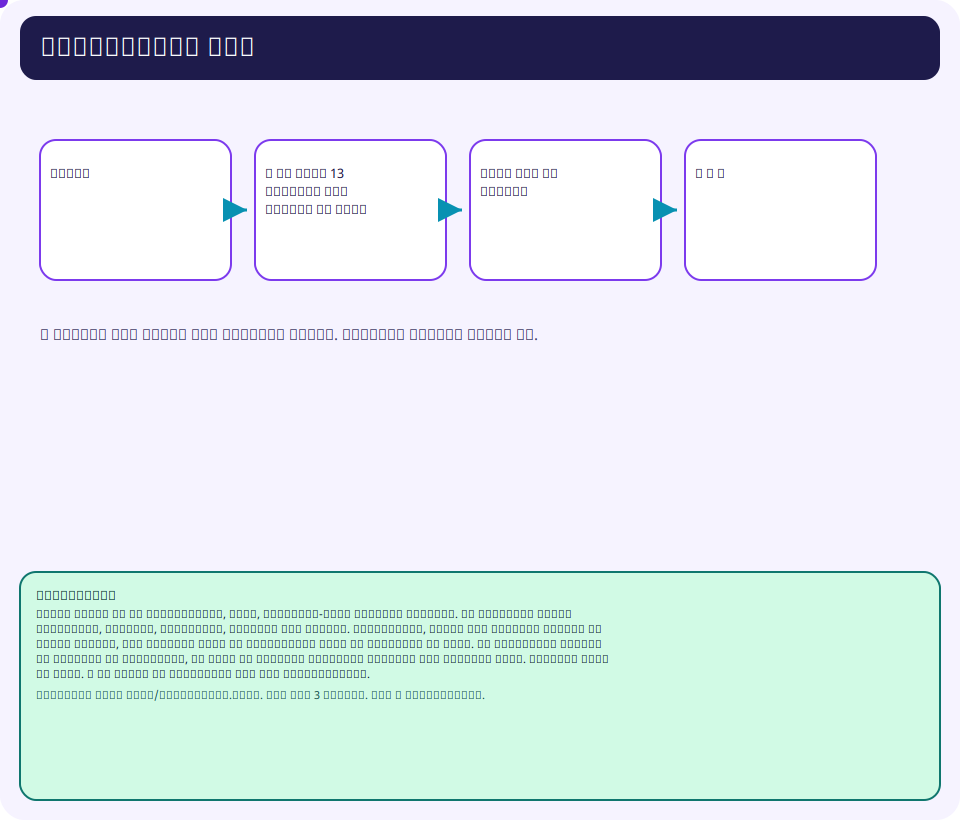
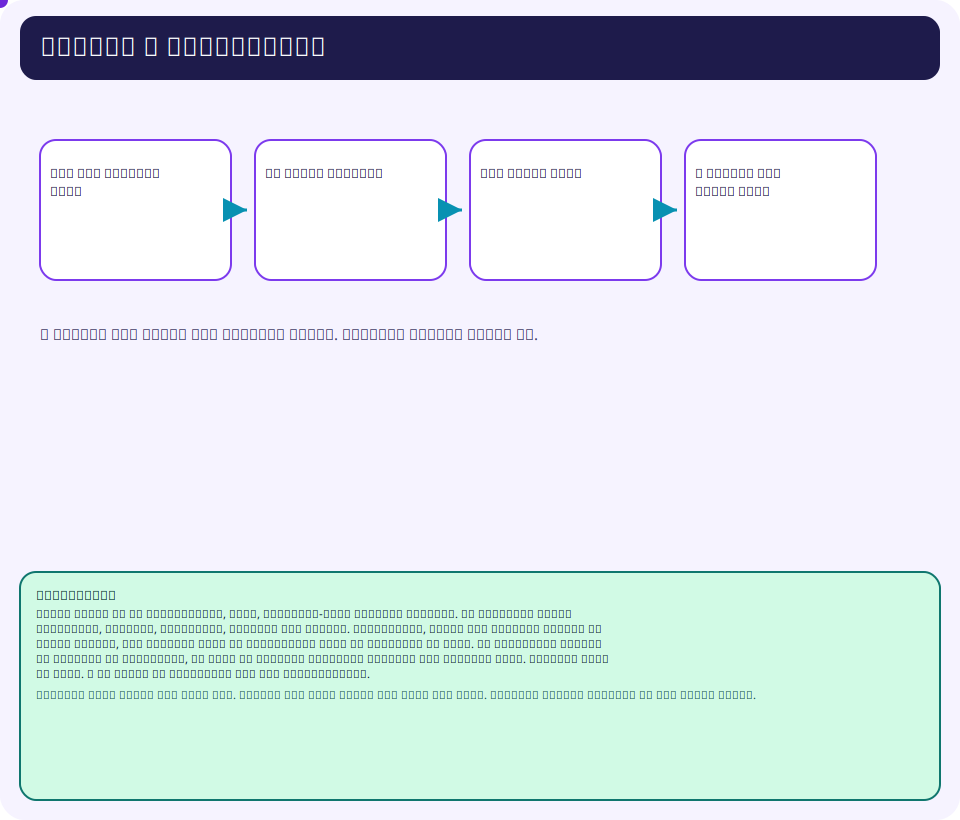
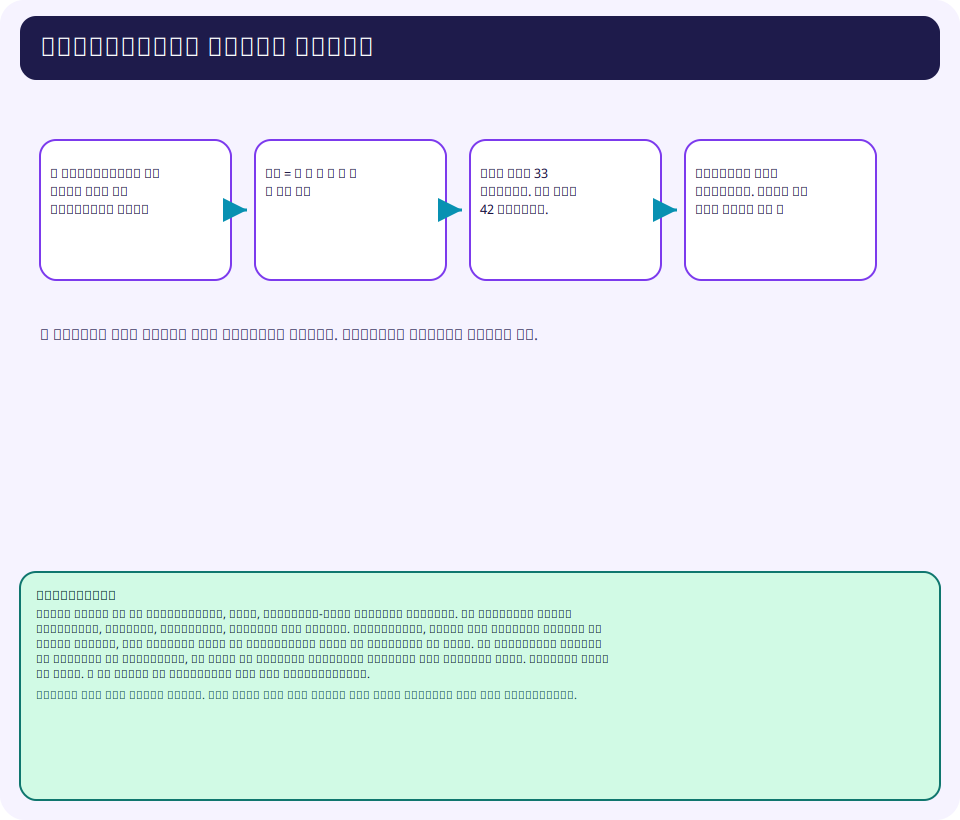
Pratyāhāra ac. Computed from data/maheshvara.json. ac has 9 sounds. Not a translation.
The same function returns 33 sounds for hal and 42 for al. You can recompute both in the builder below.
Builder
The set is computed in the browser from the 14 lines. It is not a translation.
Quiz
How many sounds does the self-test expect for hal?
How many sounds does al contain in the self-test?
Is the marker kept inside the set?
What does ac start with?
Which text is this page not?
Ecosystem
Glossary
pratyāhāra — In this app, a set computed from a start sound and a marker line.
it marker — The final marker on a line. The builder does not keep it in the set.
ac — The computed set: a i u ṛ ḷ e o ai au.
Sister topics
Sandhi, foundations, play.
Bridges
A programmer can read ac as a named set. That reading is a bridge, not a claim that the tradition described software.
Later hooks
A human check of the line IAST.
Sources and go deeper
ashtadhyayi-com/data README. The raw README says you are free to use the data in your own projects if you give appropriate credit. No SPDX identifier is stated. last checked 2026-10. Licence: credit required, no formal SPDX, confirmed from the raw README.
English Wikipedia, Shiva Sutras (phoneme list). Short description: 14 verses organizing the phonemes of Sanskrit. The page points the Kashmir text to a different article and says it needs more citations. last checked 2026-10. Licence: CC BY-SA 4.0.
Sandhi basics
Sound-joining as an idea, without an invented example join.
Learn it in 5 minutes
English Wikipedia's Sandhi page, checked 2026-10-16, uses the short description "type of sound change at morpheme or syllable boundaries." This app uses that as the plain name of the topic.
A sandhi rule in the Aṣṭādhyāyī tradition is often taught as naming a set of sounds with a pratyāhāra, then stating what happens when those sounds meet. This app can show the set, because the set is computed from the 14 lines. It cannot show the operation of a particular rule, because the English of that rule is not yet sourced from an open text.
There is no sample join such as a textbook word pair on this page. Adding one would be writing a result this project has not cited.
Learner's note (not a translation): when you are ready to study a real rule, open a sourced edition, find the pratyāhāra it names, and check that set in the builder. Confirm before relying.
Foundations, dependencies, history, roadmap
Dependencies. Māheśvara lines, because the sets come from them.
History. This page does not date the rules.
Roadmap. Quote one open-licensed sandhi rule, then show only what that quotation says.
Where the idea shows up. Tokenizer and phonology textbooks also talk about boundary changes. A mapping needs its own citation. Confirm before relying.
A visual
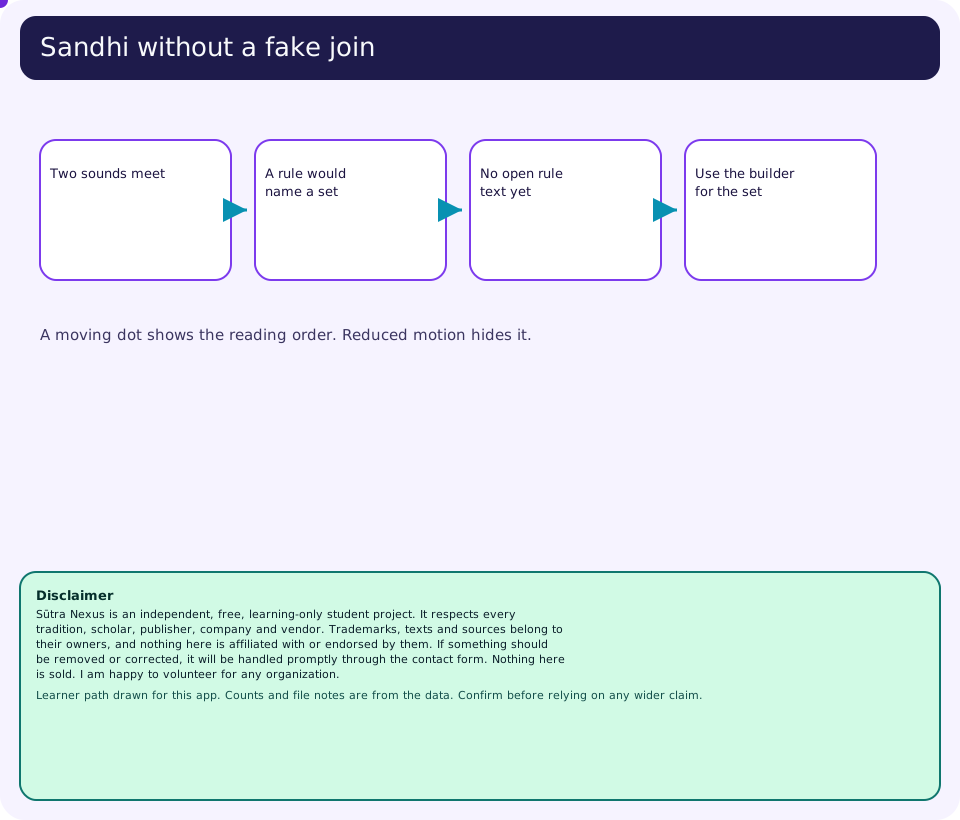
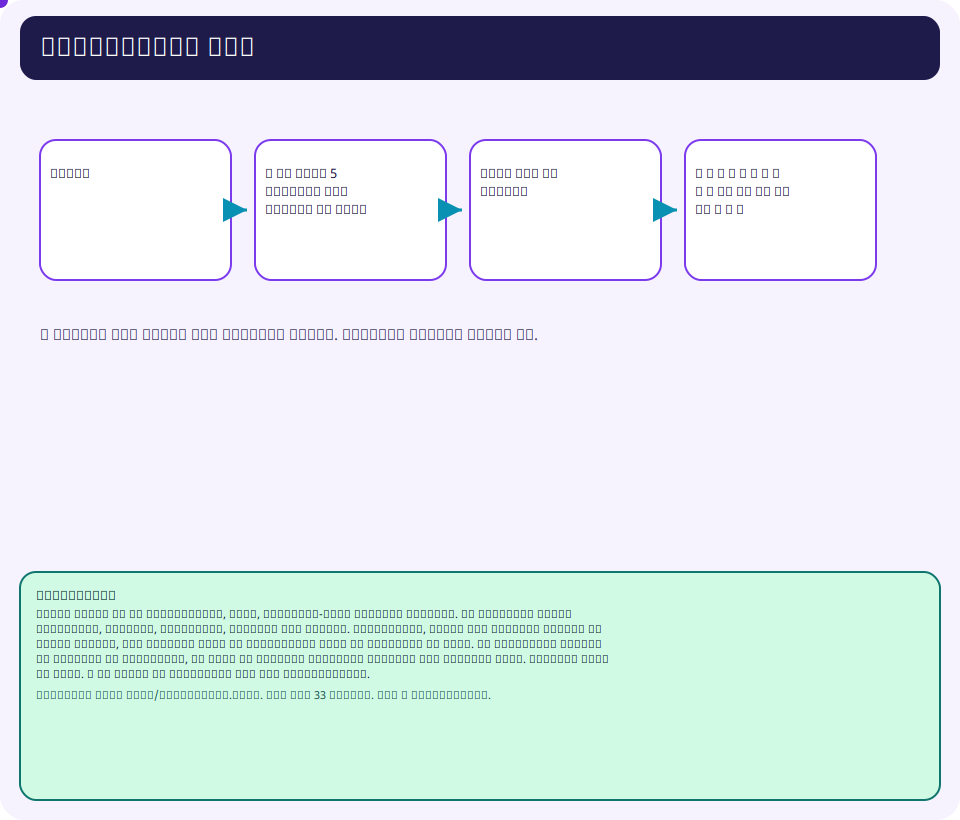
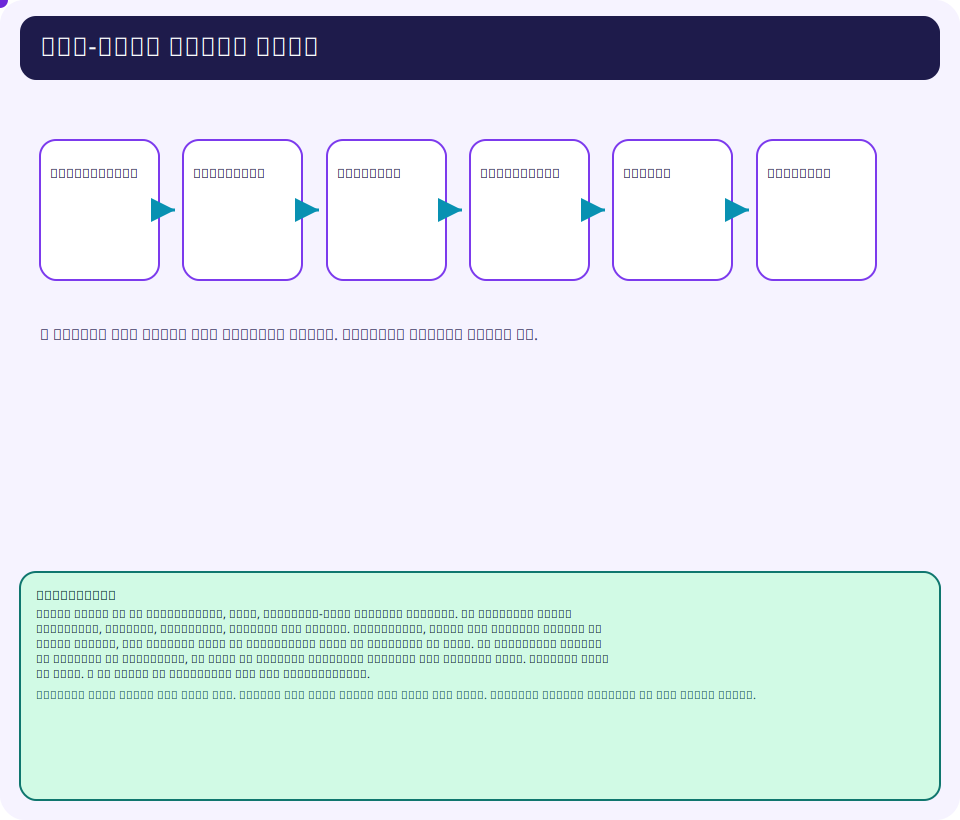
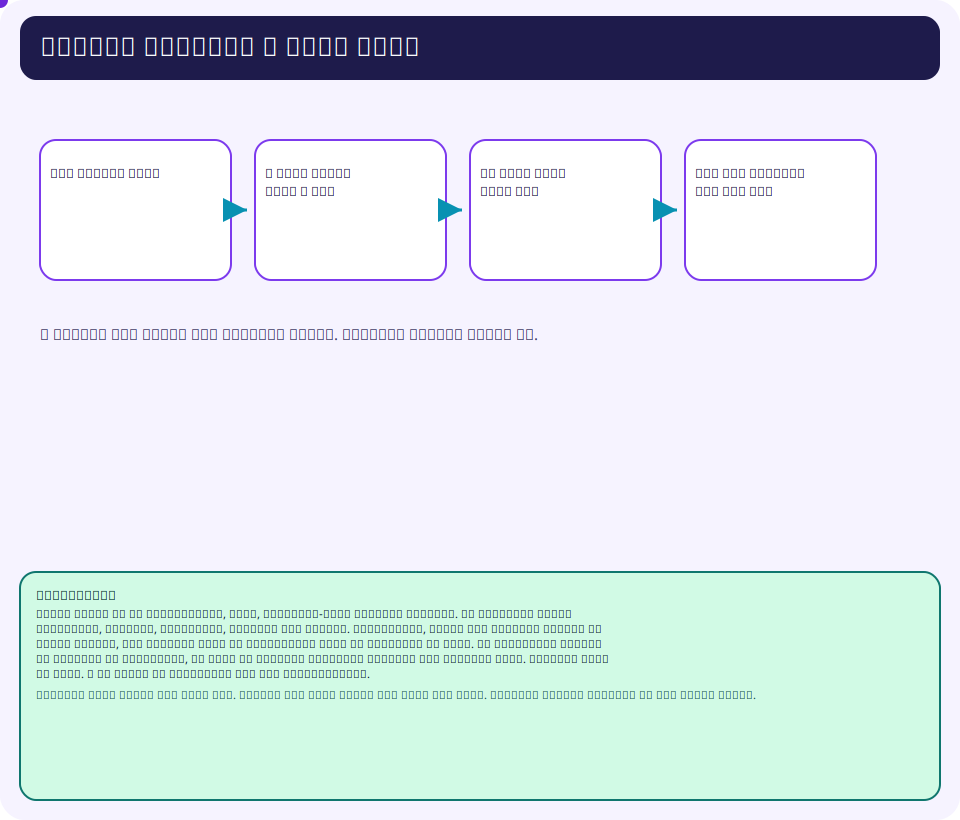
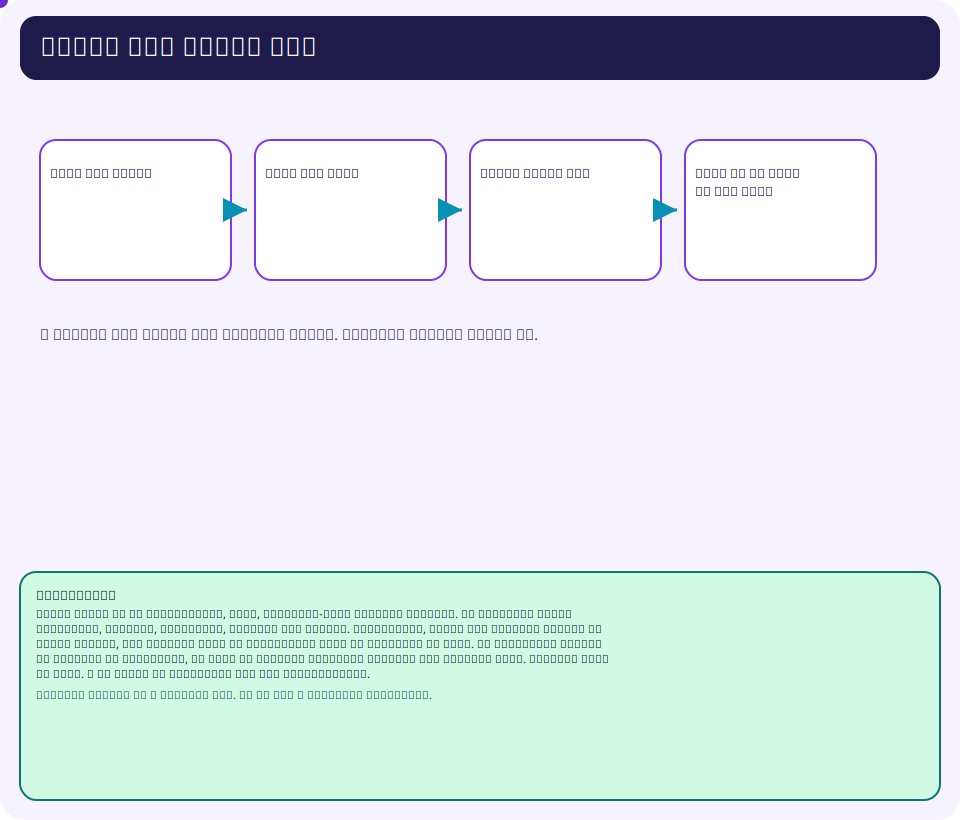
Sandhi without a fake join. Learner path drawn for this app. Counts and file notes are from the data. Confirm before relying on any wider claim.
Suppose a classroom says a rule applies inside ac.
Compute ac. The sounds are a i u ṛ ḷ e o ai au.
Stop. The app does not apply a change to an example word.
The meaning of the rule that would name ac is not yet sourced from an open text.
Quiz
What does the Sandhi Wikipedia short description say?
Why is there no example word join?
What can you compute today?
What label covers a plain-English hint on this page?
Where do you go to recompute ac?
Ecosystem
Glossary
sandhi — Sound change where pieces meet, per the Wikipedia short description cited here.
set — The sounds a pratyāhāra names in this app's computation.
Sister topics
Māheśvara and anuvṛtti.
Bridges
Learner's note (not a translation): a boundary rule is easier to see once the set has a name. The name here is the pratyāhāra.
Later hooks
One cited rule, with the edition's page.
Sources and go deeper
English Wikipedia, Sandhi. Short description on the page: a type of sound change at morpheme or syllable boundaries. last checked 2026-10. Licence: CC BY-SA 4.0.
ashtadhyayi-com/data README. The raw README says you are free to use the data in your own projects if you give appropriate credit. No SPDX identifier is stated. last checked 2026-10. Licence: credit required, no formal SPDX, confirmed from the raw README.
Aṣṭādhyāyī structure
Eight chapters, the type letters in the file, and a lazy line search.
Learn it in 5 minutes
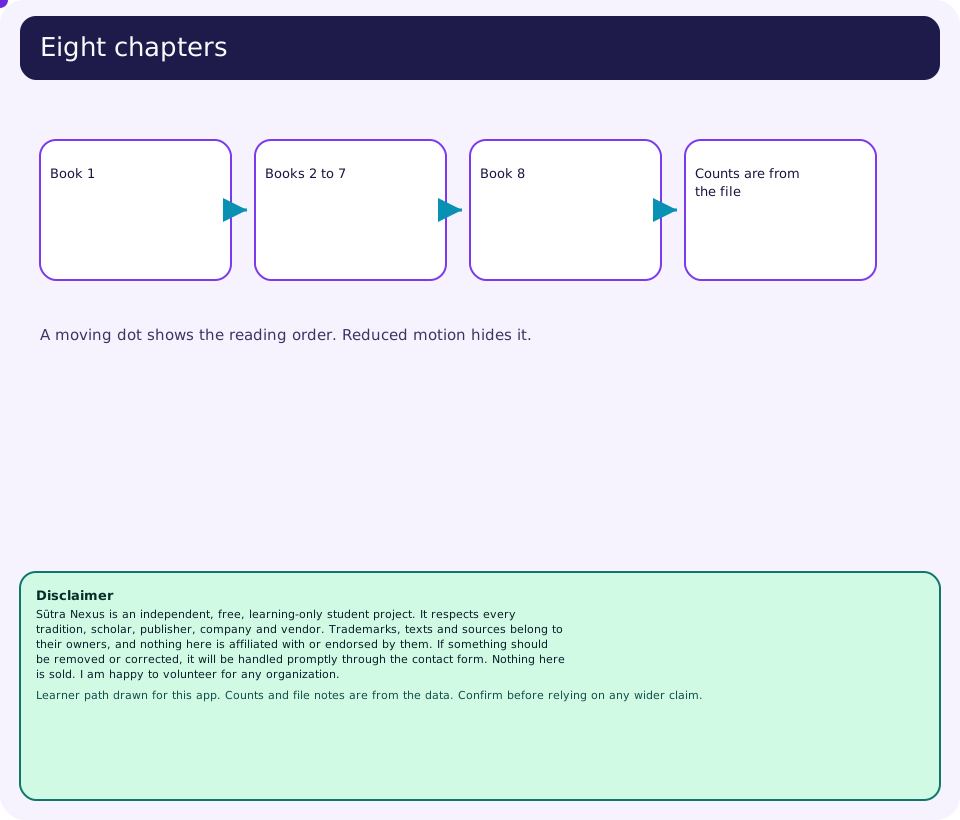
The file holds 3,983 rows. English Wikipedia's Aṣṭādhyāyī page, checked 2026-10-16, also says 3,983 sūtras in eight chapters, each subdivided into four pādas.
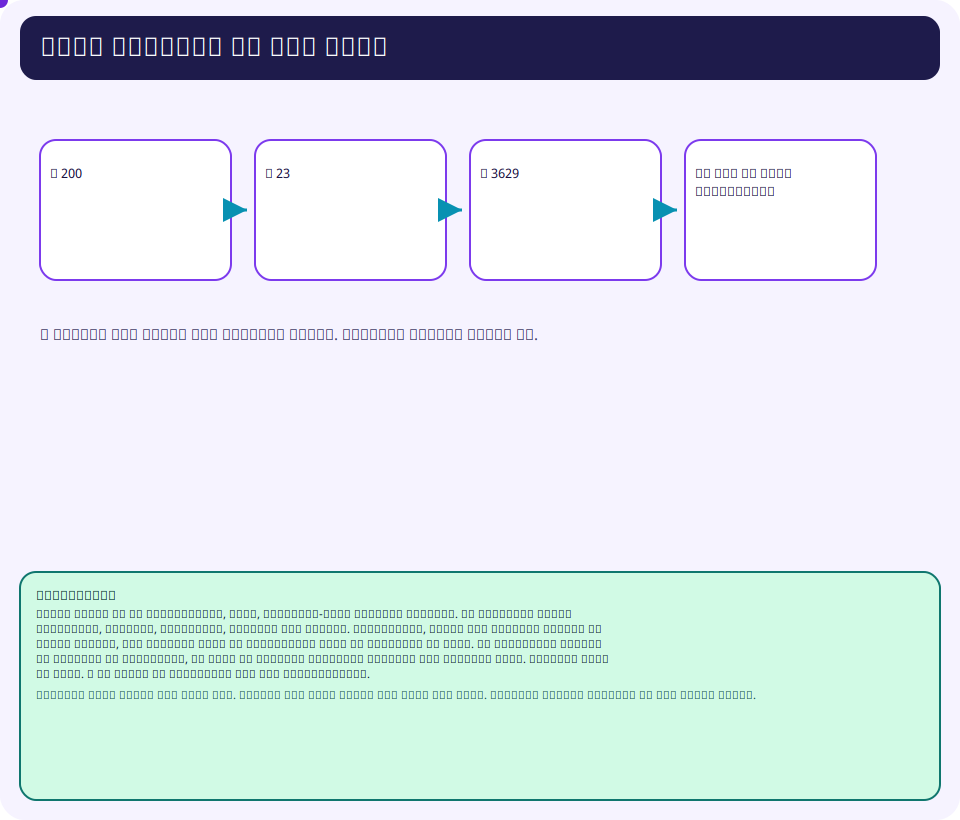
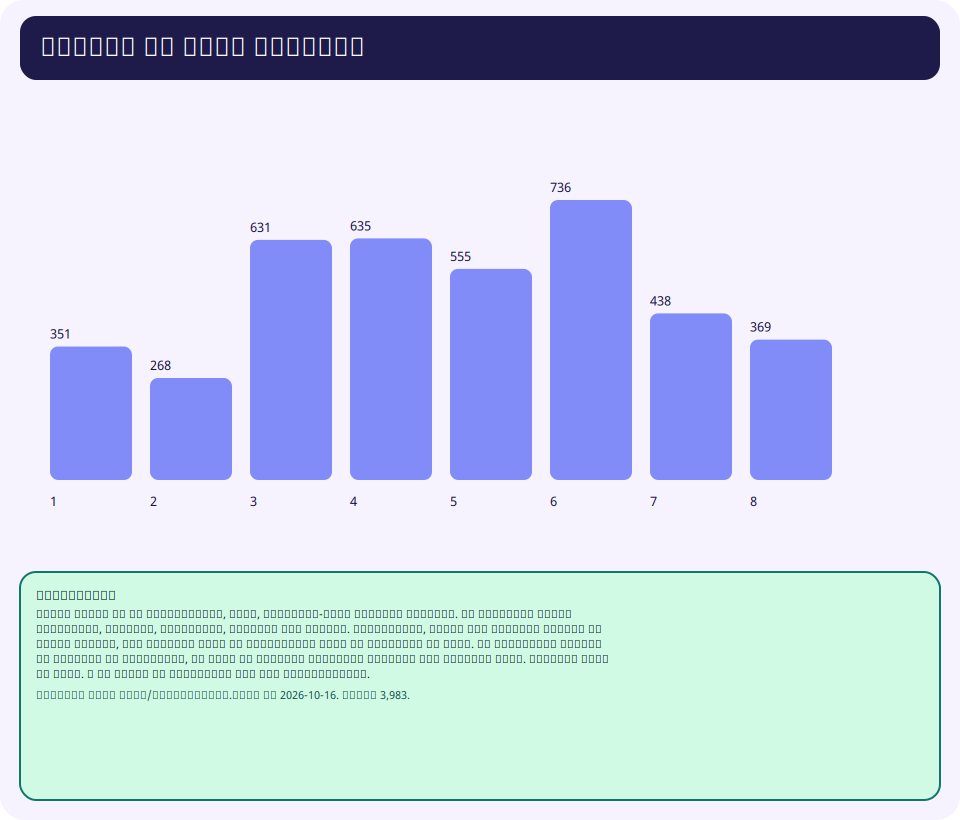
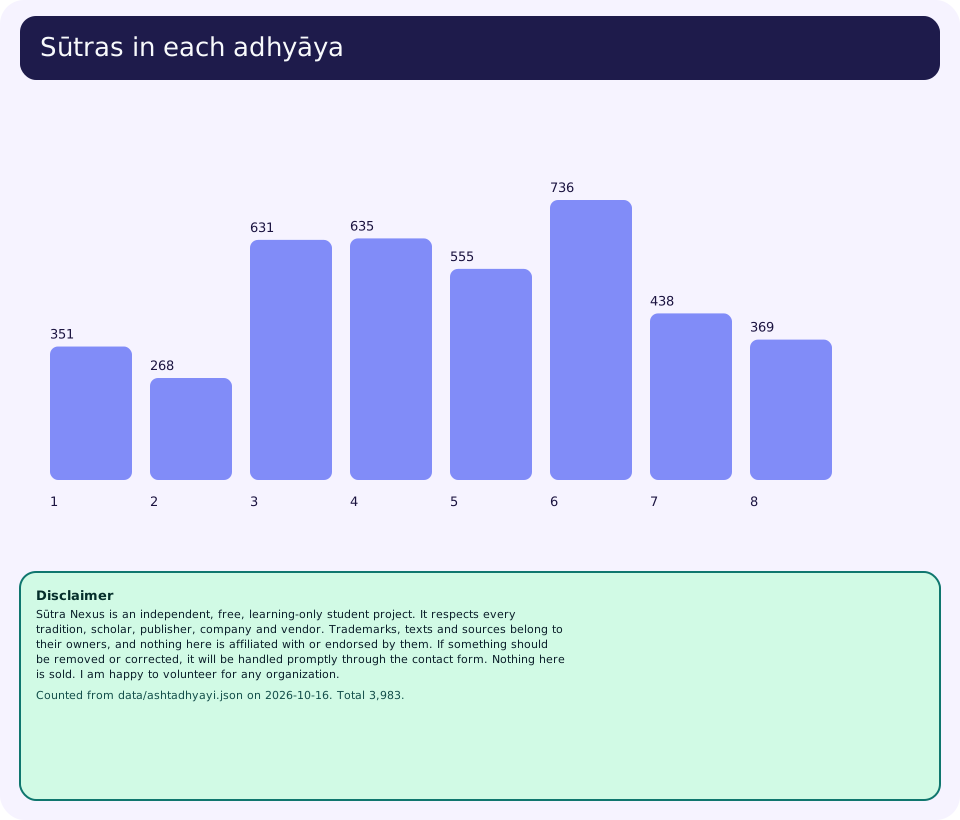
Chapter counts in this file are 351, 268, 631, 635, 555, 736, 438, 369. They sum to 3,983.
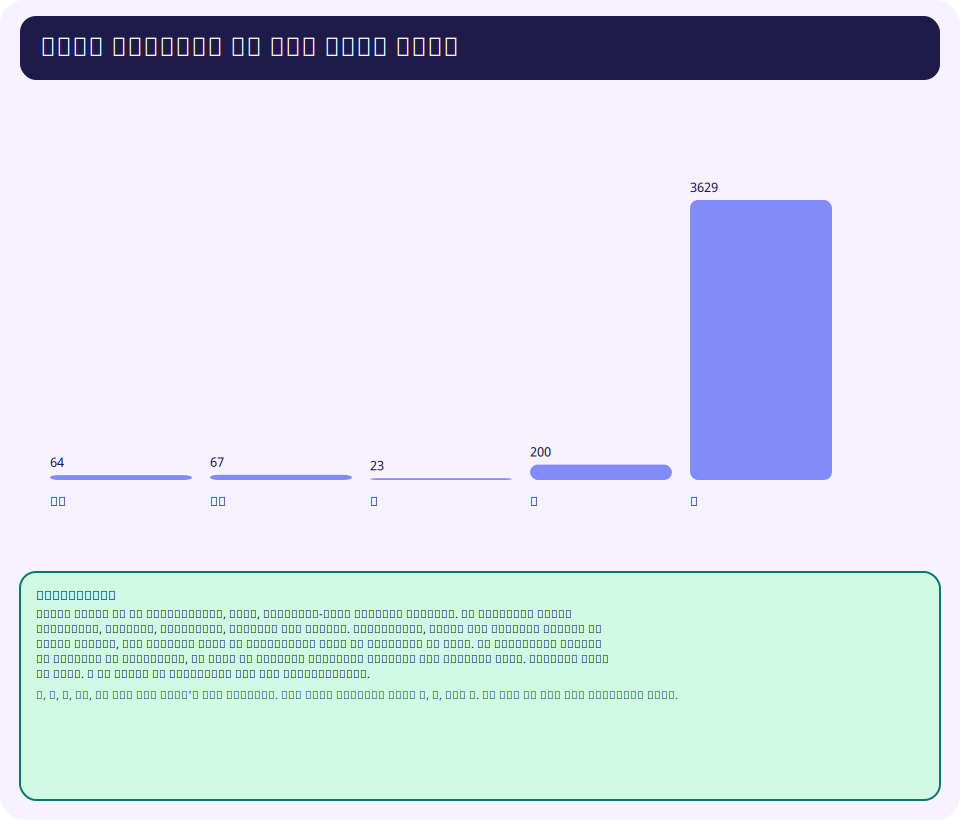
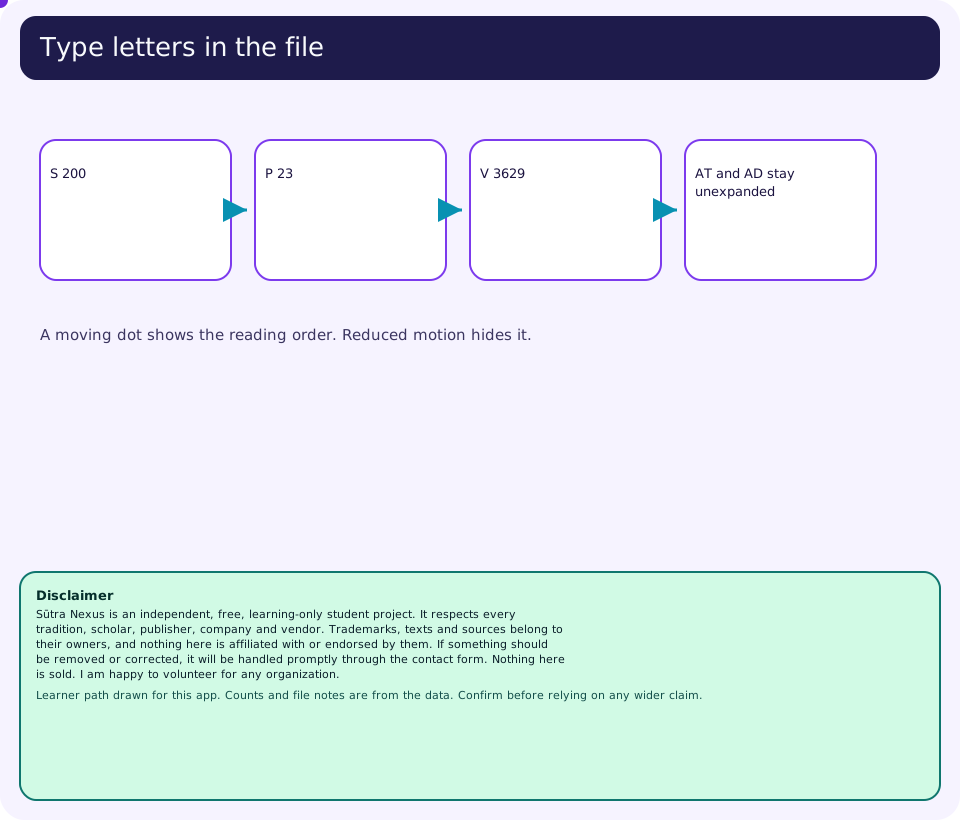
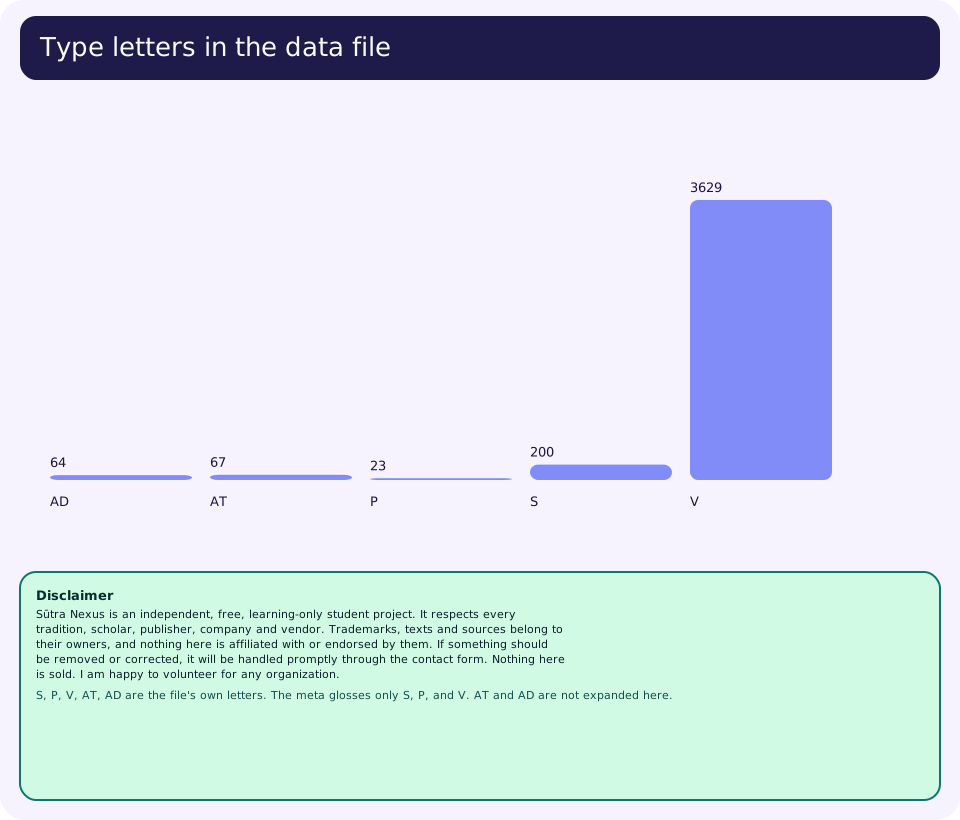
The file's type letters are AD 64, AT 67, P 23, S 200, V 3629. The file meta glosses S as saṃjñā, P as paribhāṣā, and V as vidhi. It does not gloss AT or AD. This app does not expand those two letters. Confirm before relying.
Wikipedia's list of ancillary types, on the page checked the same day, names paribhāṣā as metarules, adhikāra as headings, atideśa as extension rules, niyama as restrictive rules, and pratiṣedha and niṣedha as negation rules, beside vidhi as the operational rules. This app does not assert that the file's AT or AD letters are those words.
Every row's meaning is not yet sourced from an open text.
Foundations, dependencies, history, roadmap
Dependencies. The start page, and anuvṛtti if you want to read a carried word.
History. See the history page for the dating dispute.
Roadmap. Meanings only after an open text is checked into licences.json as confirmed.
Where the idea shows up. Computational linguistics papers discuss this rule list. This app does not summarize a paper it has not opened. Confirm before relying.
A visual
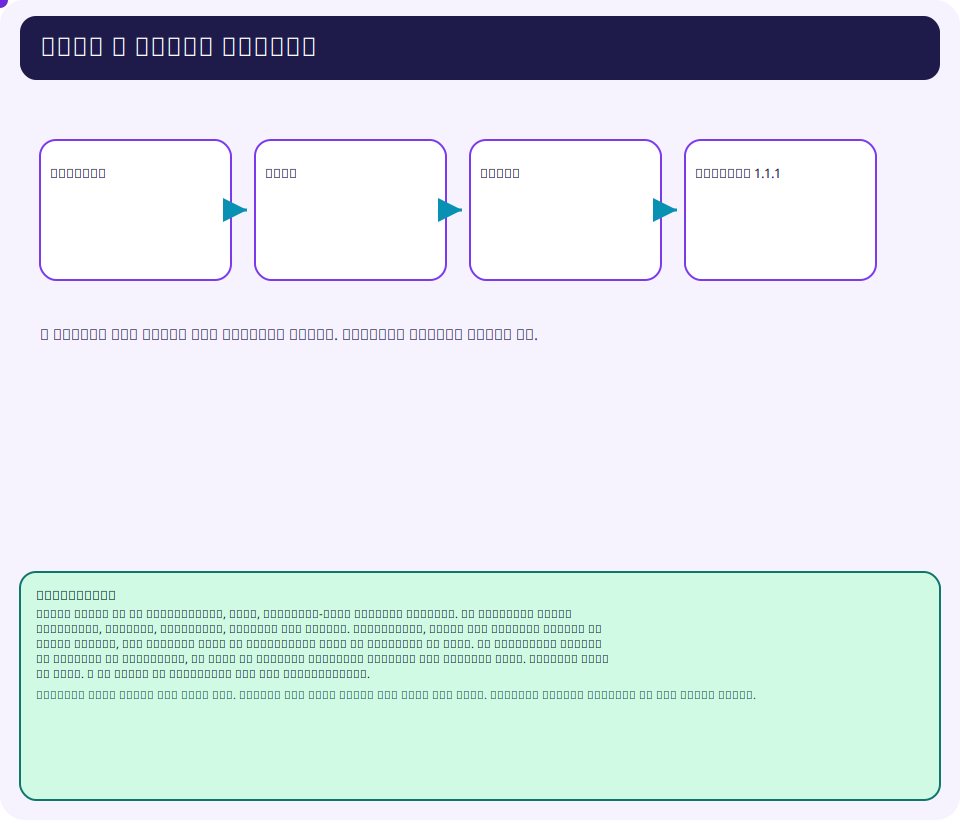
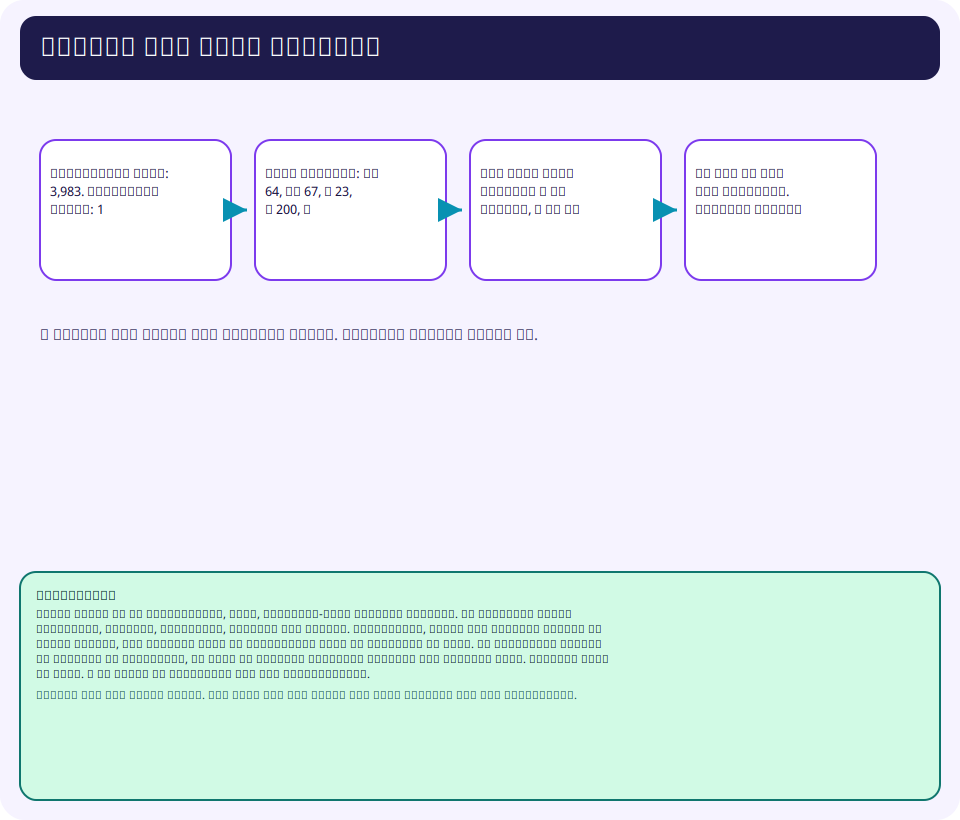
Read a sūtra number. Learner path drawn for this app. Counts and file notes are from the data. Confirm before relying on any wider claim.
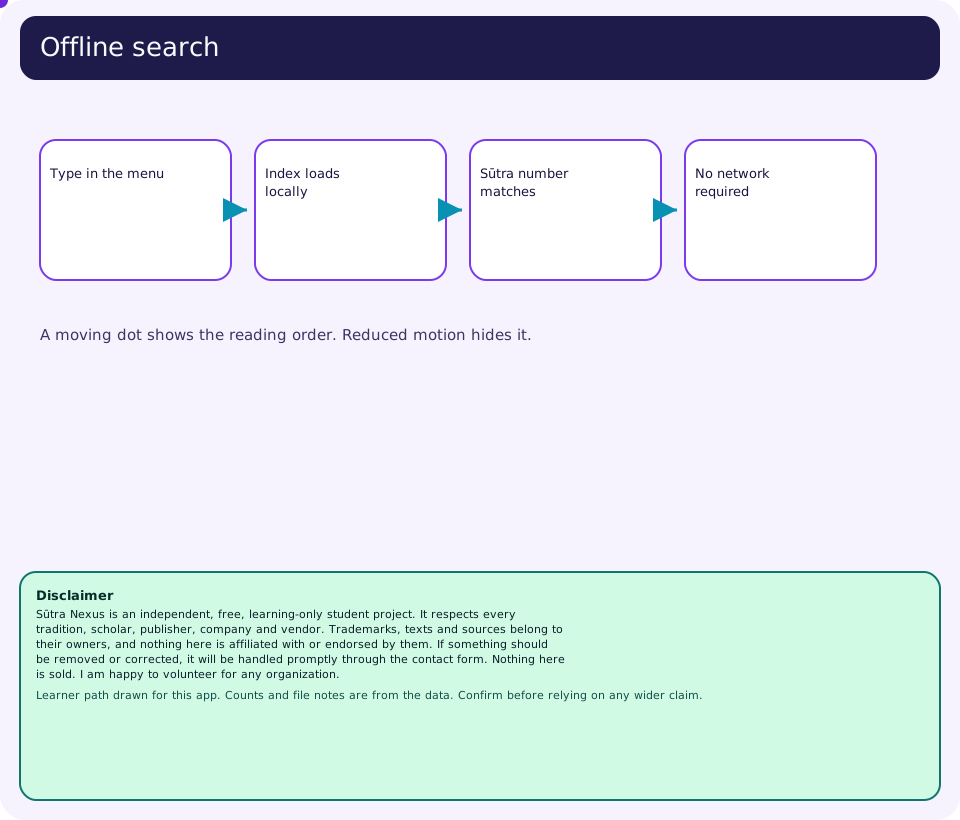
Type 1.1.1 in the browser below. The index loads when you type.
You should see the Devanāgarī वृद्धिरादैच् and the IAST vṛddhirādaic.
Read the label under it: the meaning is not sourced, and the IAST is not human-checked.
The type letter on that row in the file is S. The file meta calls S saṃjñā.
Look up a line
The index loads after you type, so the first paint stays light.
Quiz
How many chapters does the Wikipedia page name?
What does the file meta call type letter V?
Does this app equate AT with atideśa?
How many rows have type V?
What appears under a looked-up line?
Ecosystem
Glossary
adhyāya — A chapter. The file numbers them 1 through 8.
pāda — A section of a chapter. Wikipedia's page says four per chapter.
saṃjñā — The file meta's gloss for type letter S. Not a translation of a sūtra.
vidhi — The file meta's gloss for type letter V, and Wikipedia's name for an operational rule.
Sister topics
Anuvṛtti, dhātu, charts.
Bridges
Learner's note (not a translation): a type letter is metadata about a row, similar to a tag on a record. The tags here are the file's letters.
Later hooks
A per-chapter browser that still lazy-loads.
Sources and go deeper
ashtadhyayi-com/data README. The raw README says you are free to use the data in your own projects if you give appropriate credit. No SPDX identifier is stated. last checked 2026-10. Licence: credit required, no formal SPDX, confirmed from the raw README.
English Wikipedia, Aṣṭādhyāyī. The page says the work has 3,983 sūtras in eight chapters, each subdivided into four pādas, and lists vidhi, paribhāṣā, adhikāra, atideśa, niyama, and negation rules. CC BY-SA. last checked 2026-10. Licence: CC BY-SA 4.0.
Anuvṛtti
Carried words as the file records them on 1.1.3.
Learn it in 5 minutes
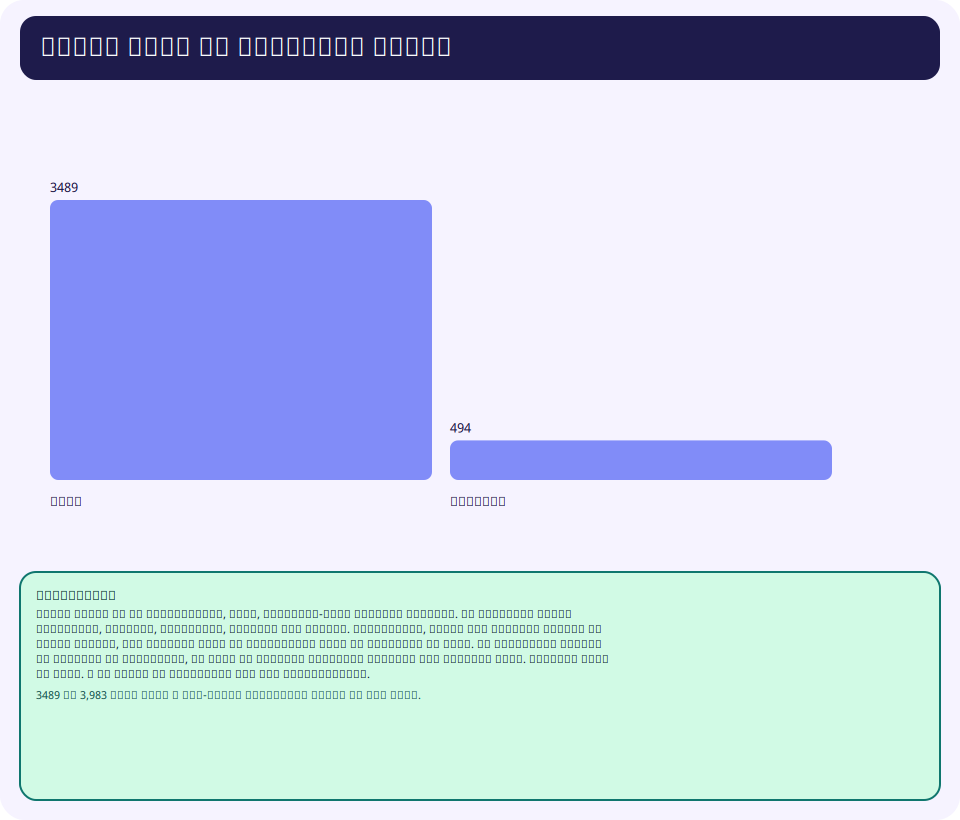
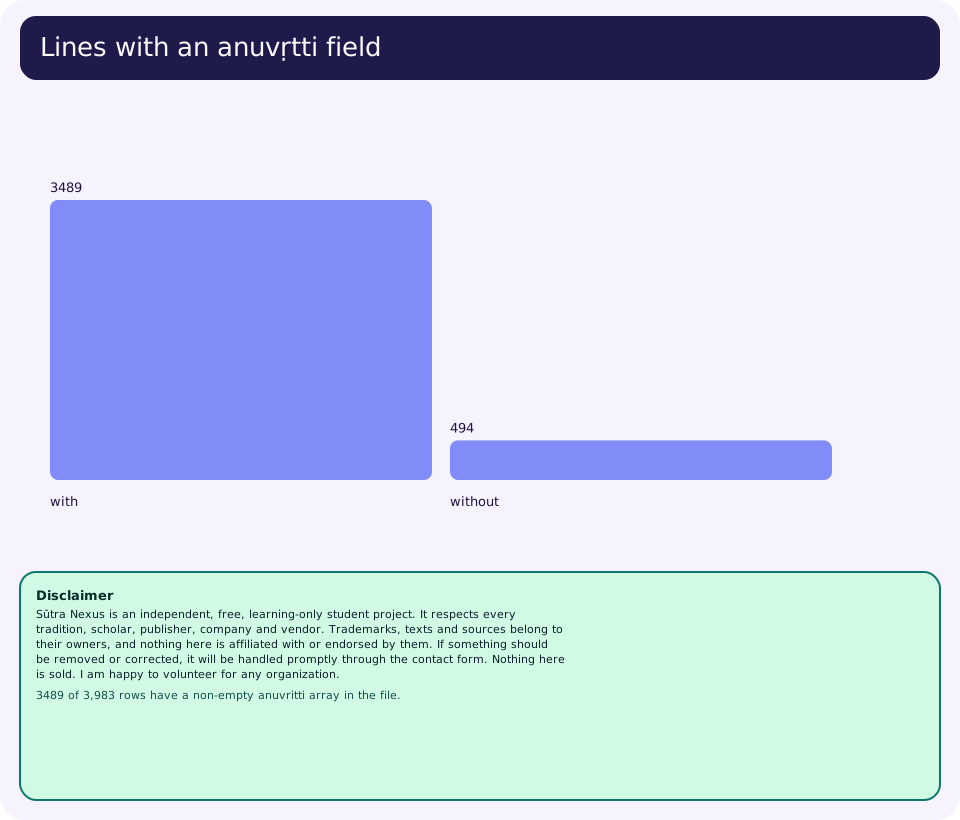
3489 of the 3,983 rows have a non-empty anuvritti array. The other rows have an empty array. That is a count, not a theory.
Learner's note (not a translation): classrooms use anuvṛtti for words that carry forward from an earlier line so the later line can stay short. This app shows the strings the file stored. It does not decide whether a string was carried correctly.
On 1.1.3 the Devanāgarī is इको गुणवृद्धी. The file's IAST is iko guṇavṛddhī and is script-converted, not yet human-checked. The anuvritti field lists: वृद्धिः, गुणः.
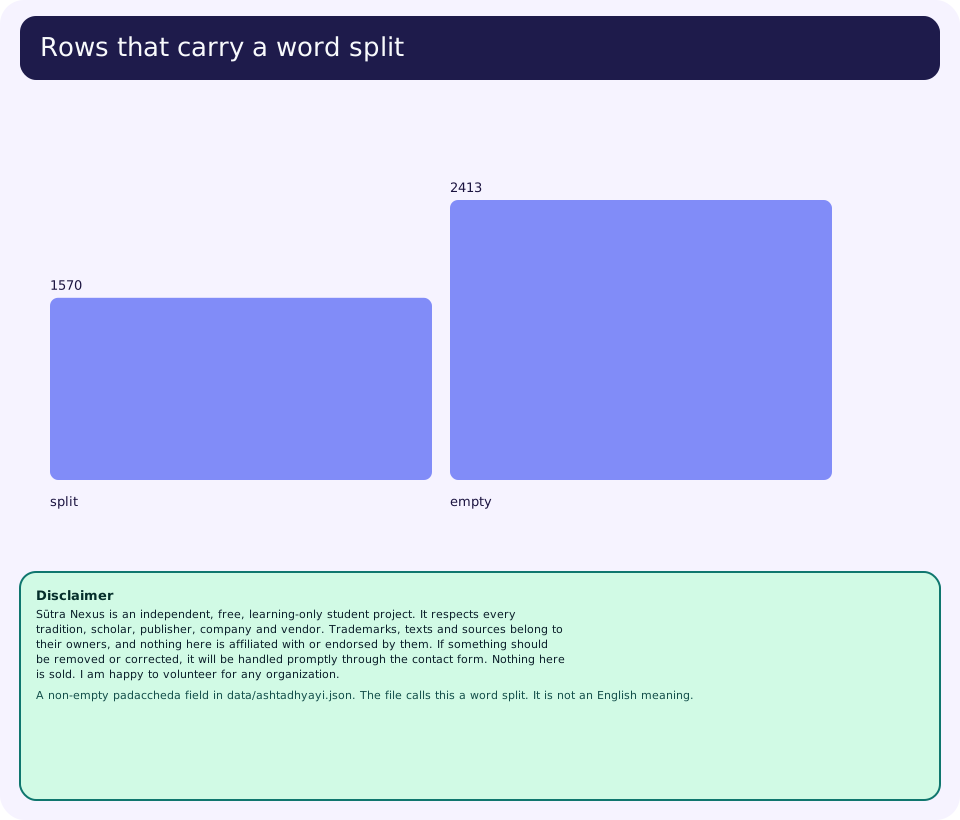
The padaccheda field on that row is also stored in the file. It is shown as file data, not as this project's analysis. Meaning: not yet sourced from an open text.
Foundations, dependencies, history, roadmap
Dependencies. Aṣṭādhyāyī structure, so the number 1.1.3 is meaningful.
History. No date is added on this page.
Roadmap. Show a chain of carried strings across several rows, still without translating them.
Where the idea shows up. Compression in a rule list is interesting to programming-language people. Calling anuvṛtti a macro is a learner's bridge. Confirm before relying if you say it in an interview as history.
A visual
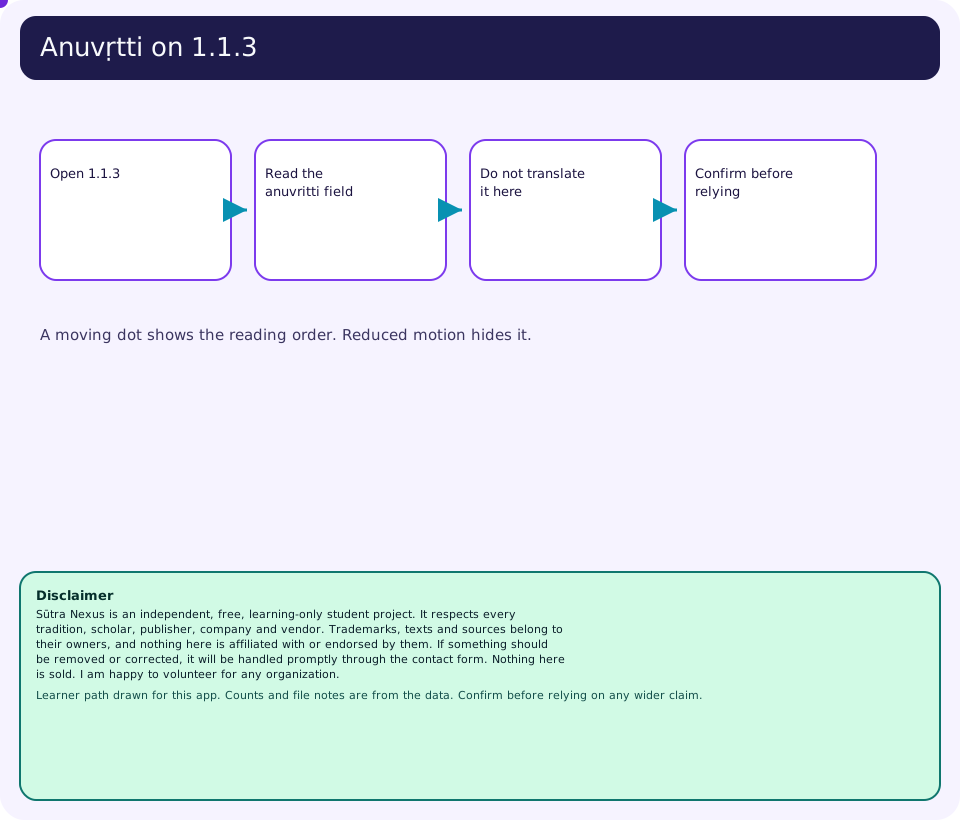
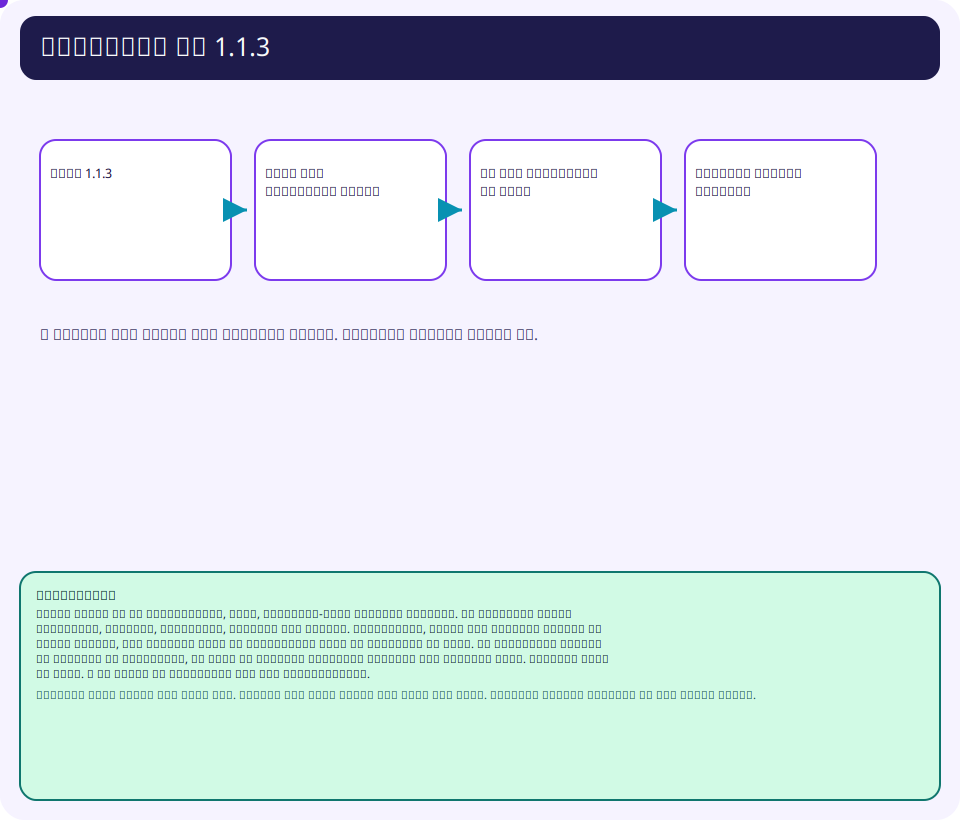
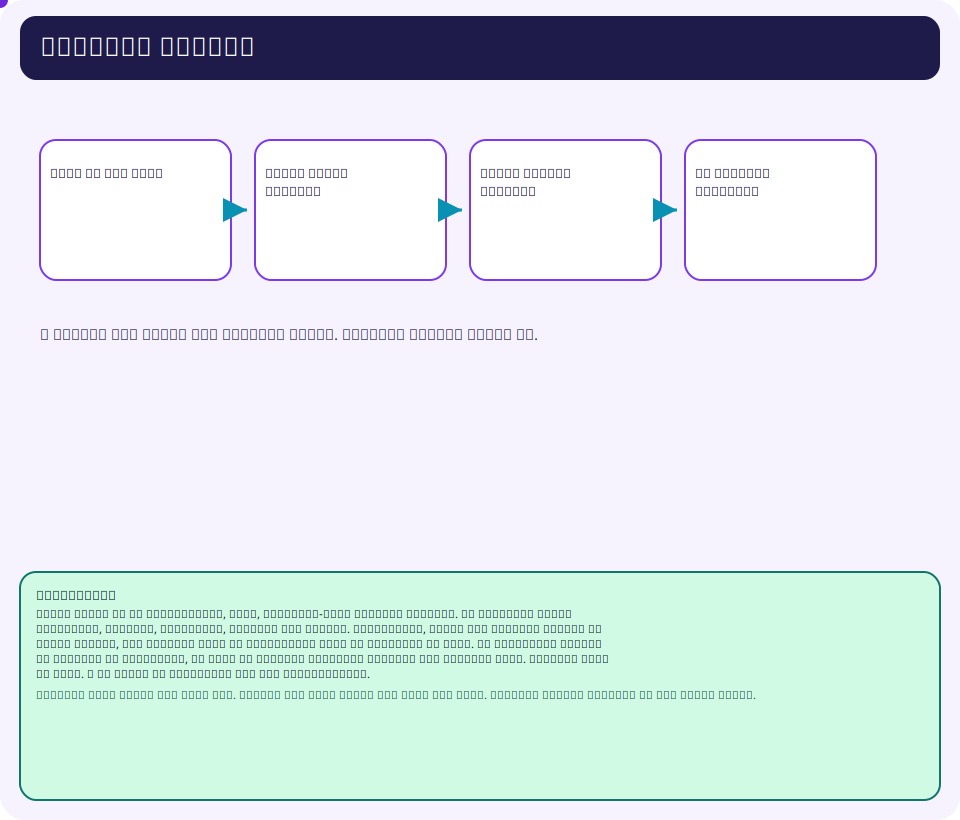
Anuvṛtti on 1.1.3. Learner path drawn for this app. Counts and file notes are from the data. Confirm before relying on any wider claim.
Number: 1.1.3. Type letter: P. The meta calls P paribhāṣā.
Devanāgarī: इको गुणवृद्धी.
anuvritti array: वृद्धिः, गुणः.
padaccheda from the file: गुणः, वृद्धिः (इत्येताभ्यां निर्दिष्टौ) गुण-वृद्धी इकः.
Stop before an English rendering. There isn't a confirmed open one in this project.
Quiz
How many rows have a non-empty anuvritti array?
What does 1.1.3's anuvritti field contain?
Is the padaccheda this project's parsing?
What is the learner's note allowed to do?
What is the type letter on 1.1.3?
Ecosystem
Glossary
anuvṛtti — The classroom name for words understood from earlier lines. The file field is anuvritti.
padaccheda — The file's word-split field. Not re-analyzed here.
Sister topics
Aṣṭādhyāyī and dhātu.
Bridges
Learner's note (not a translation): a later line can be short because an earlier line still applies. The evidence in this app is the array on the row.
Later hooks
A view that highlights the carried strings in Devanāgarī only.
Sources and go deeper
ashtadhyayi-com/data README. The raw README says you are free to use the data in your own projects if you give appropriate credit. No SPDX identifier is stated. last checked 2026-10. Licence: credit required, no formal SPDX, confirmed from the raw README.
English Wikipedia, Aṣṭādhyāyī. The page says the work has 3,983 sūtras in eight chapters, each subdivided into four pādas, and lists vidhi, paribhāṣā, adhikāra, atideśa, niyama, and negation rules. CC BY-SA. last checked 2026-10. Licence: CC BY-SA 4.0.
Dhātu and pada basics
Names for verb roots and word classes, and the list this app does not have.
Learn it in 5 minutes
Learner's note (not a translation): dhātu is the classroom name for a verb root, and a pada is a finished word. People also meet tiṅ (verb endings) and sup (nominal endings) as names of ending sets. This page does not quote a sūtra that defines them, because that would be a translation.
The Aṣṭādhyāyī data file has no dhātu inventory. The repository README of ashtadhyayi-com/data, opened 2026-10-16, mentions dhātu forms as data the website edits, but those forms are not in the three JSON files shipped here.
So this room teaches the gap. You can learn the words as labels. You cannot look up a root's forms in this app yet.
Confirm before relying on any root list you remember from a class until it is tied to an opened edition.
Foundations, dependencies, history, roadmap
Dependencies. Aṣṭādhyāyī structure.
History. No century is assigned to the root lists.
Roadmap. If an open dhātu file is confirmed, add it as its own dataset with the licence recorded.
Where the idea shows up. Morphological analyzers store roots and endings. Pointing at a specific analyzer needs a citation this page does not have. Confirm before relying.
A visual
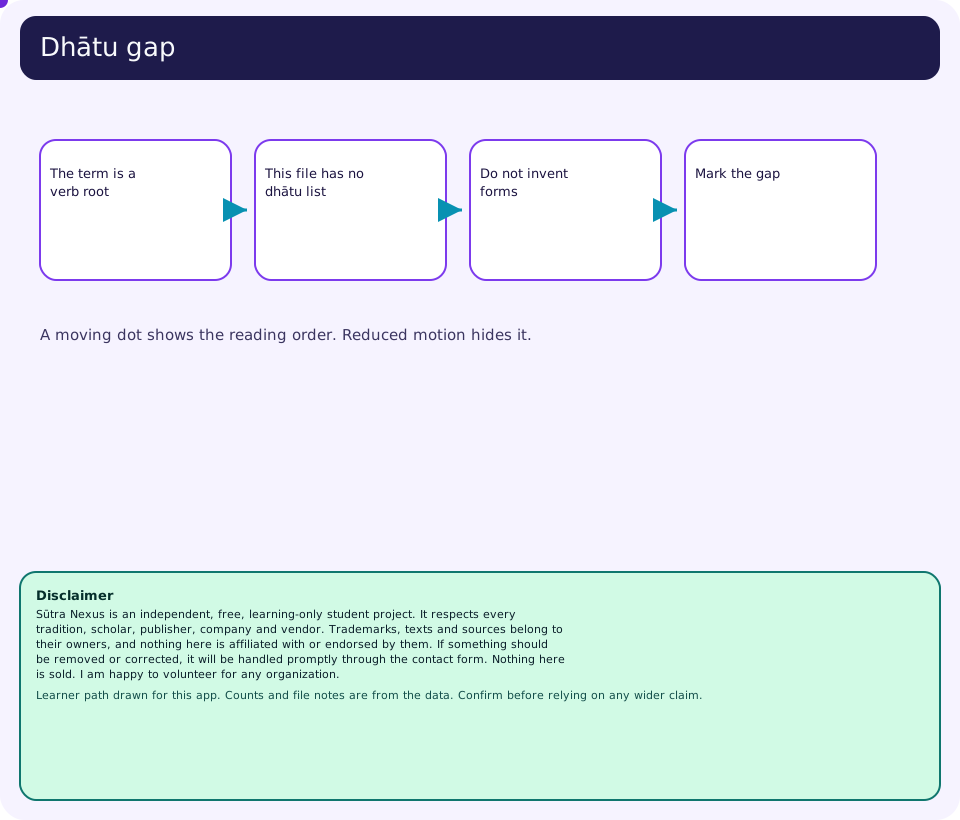
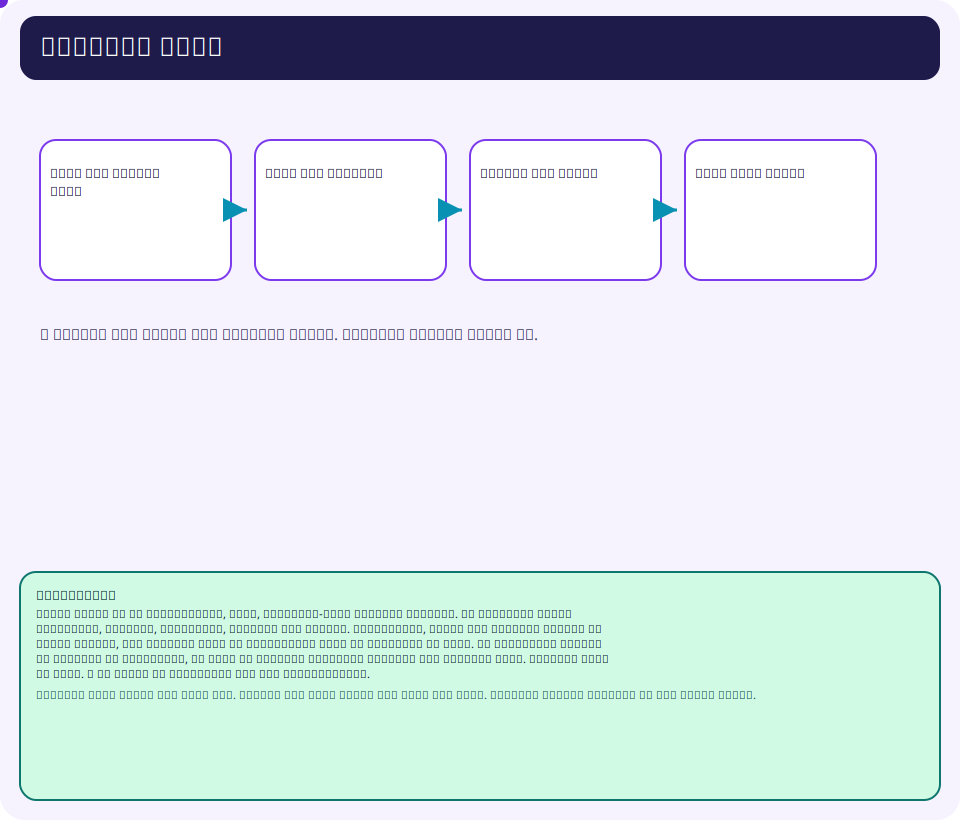
Dhātu gap. Learner path drawn for this app. Counts and file notes are from the data. Confirm before relying on any wider claim.
Search this site's downloads for a dhātu table. There isn't one.
The three JSON files are the sūtra rows, the 14 lines, and the 75 Kashmir lines.
A worksheet in the downloads asks you to record a root only when you have a source in hand.
Leave the meaning column as not yet sourced.
Quiz
Does this app ship a dhātu inventory?
What is a learner's note allowed to say a dhātu is?
Where would a future root list have to come from?
What endings are named, without a quotation?
Which file would you open for the 14 lines?
Ecosystem
Glossary
dhātu — Classroom name for a verb root. No inventory in this app. Confirm before relying.
pada — Classroom name for a finished word.
tiṅ — Classroom name for a set of verb endings. Not quoted from a sūtra here.
sup — Classroom name for a set of nominal endings. Not quoted from a sūtra here.
Sister topics
Anuvṛtti and play.
Bridges
Learner's note (not a translation): a root plus an ending is a familiar shape in computing. The shape is an analogy until a text is cited.
Later hooks
A worksheet that refuses a blank source line.
Sources and go deeper
ashtadhyayi-com/data README. The raw README says you are free to use the data in your own projects if you give appropriate credit. No SPDX identifier is stated. last checked 2026-10. Licence: credit required, no formal SPDX, confirmed from the raw README.
Śiva Sūtras, Kashmir text
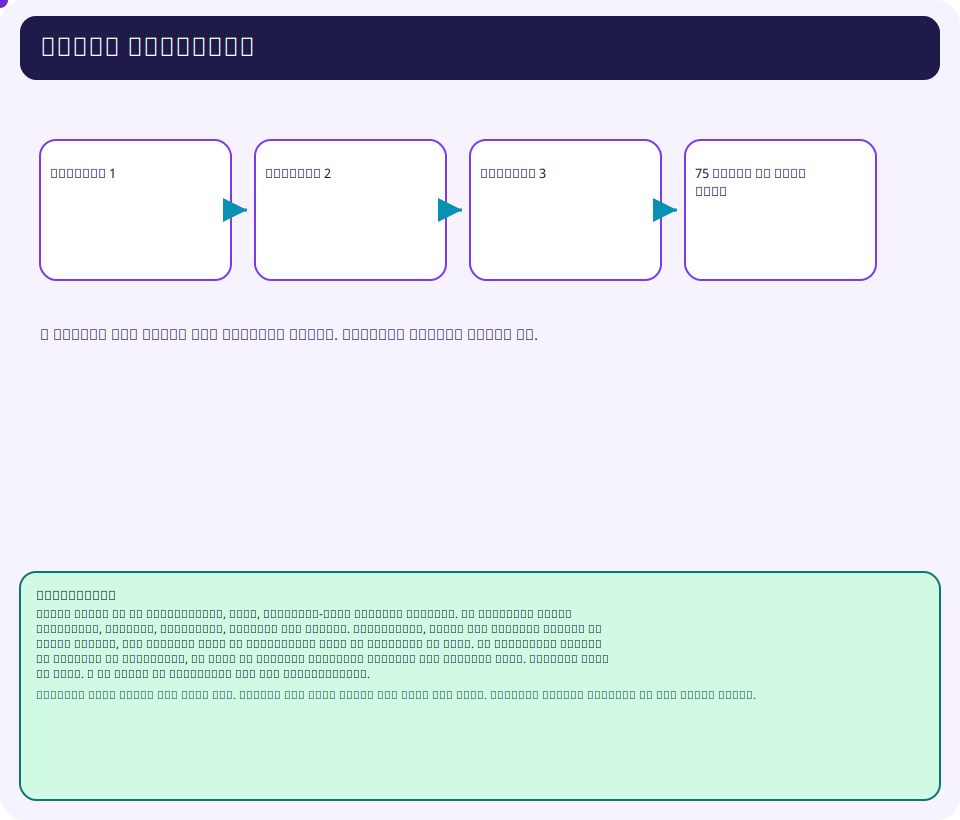
Seventy-five lines from the GRETIL e-text, with no English added.
Learn it in 5 minutes
This page is not the 14 Māheśvara lines. English Wikipedia's Shiva Sutras of Vasugupta page, checked 2026-10-16, calls that work a collection of aphorisms from Kashmir Shaivism in its short description.
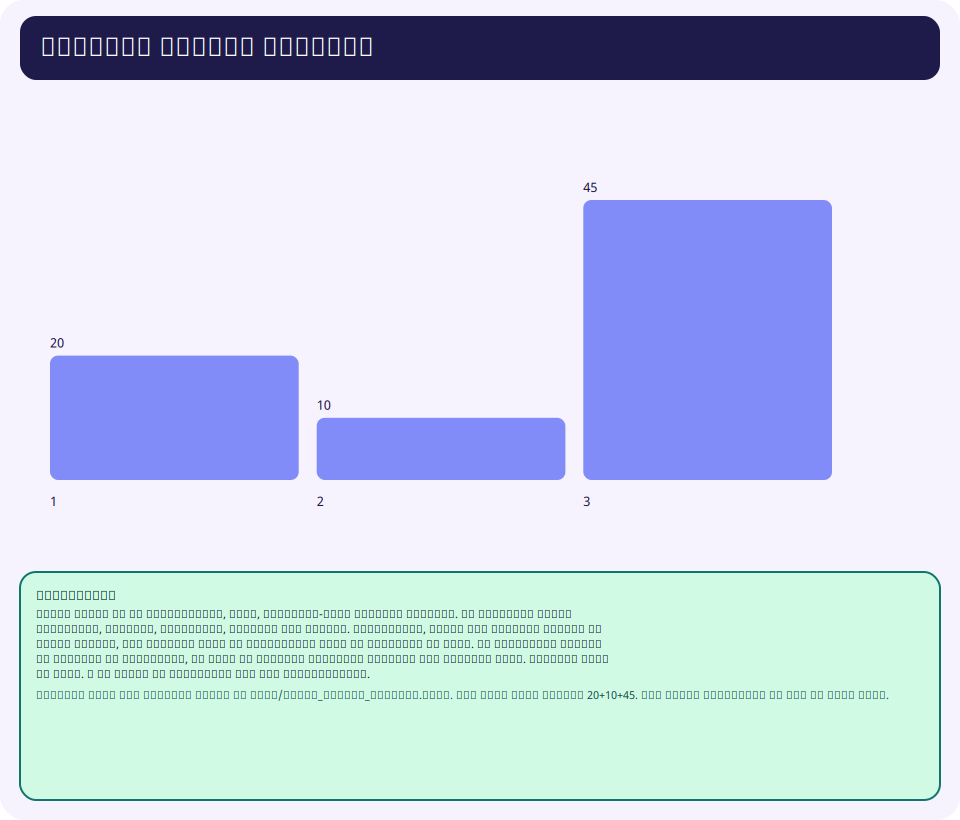
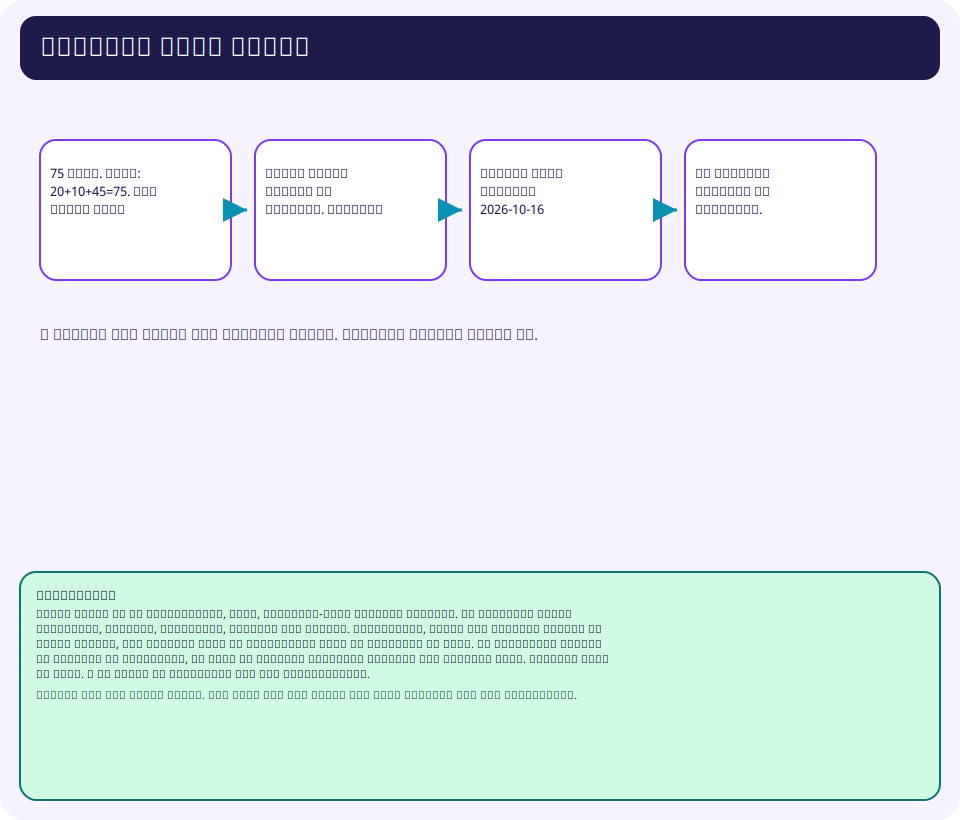
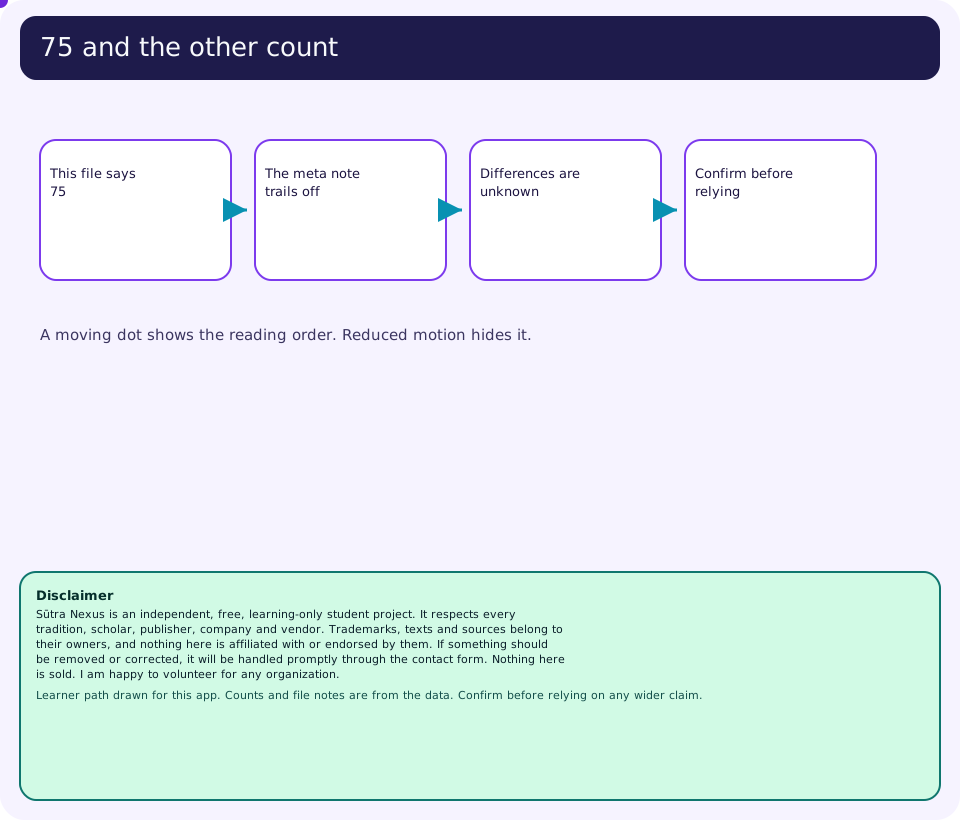
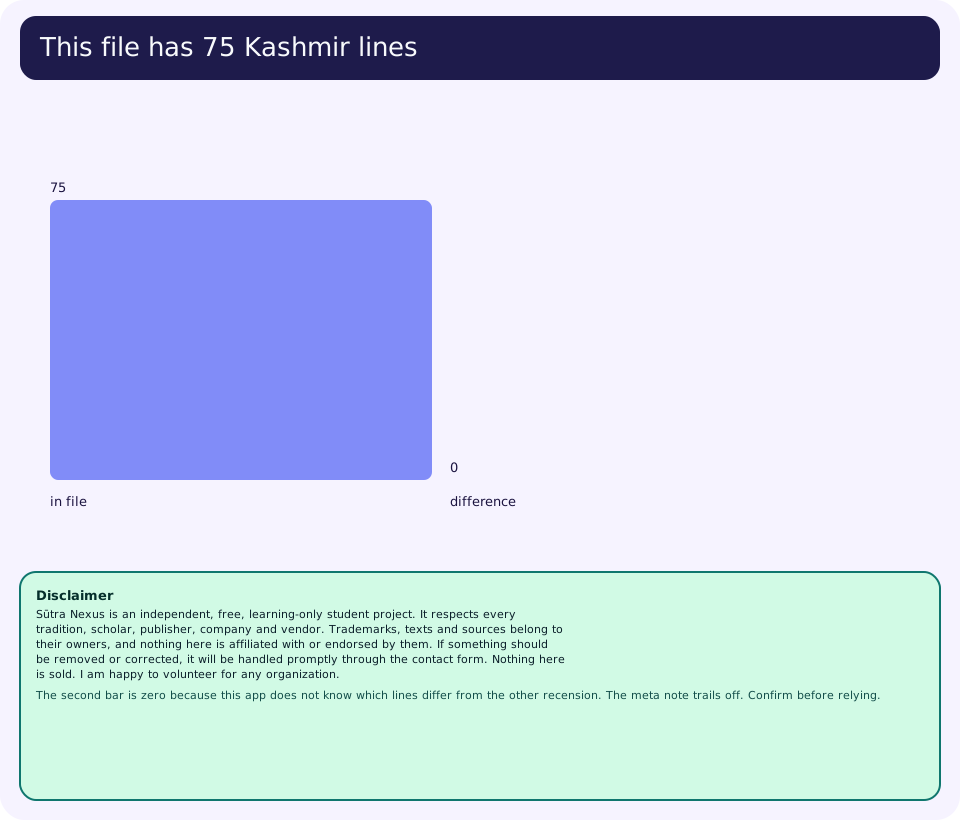
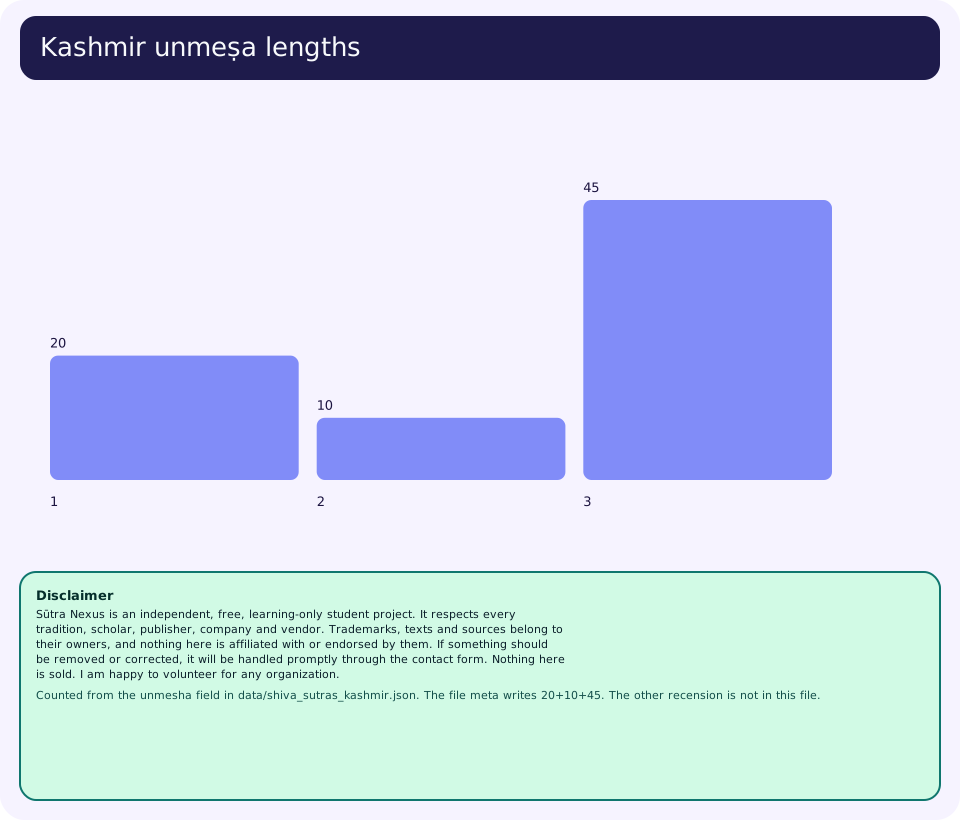
The file has 75 rows. Its meta note says this recension counts 20+10+45=75, and that the common Kṣemarāja recension counts 22+10+45, then the note trails off. Which lines differ is unknown beyond that note. Confirm before relying.
The file says its IAST comes from the GRETIL source and that the Devanāgarī was machine-converted and is unverified. The GRETIL page, opened 2026-10-16, distributes the e-text under CC BY-NC-SA 4.0. Those non-commercial and share-alike terms stay with the e-text. Nothing here is sold.
No English meaning is included. A translation was not confirmed as open.
Foundations, dependencies, history, roadmap
Dependencies. Know that the 14-line list is a different page.
History. This app does not assign the Kashmir text a century from a category label.
Roadmap. If an open translation is confirmed, add it with the translator, year, and URL.
Where the idea shows up. Do not mix this text into a grammar exercise. They are different works.
A visual
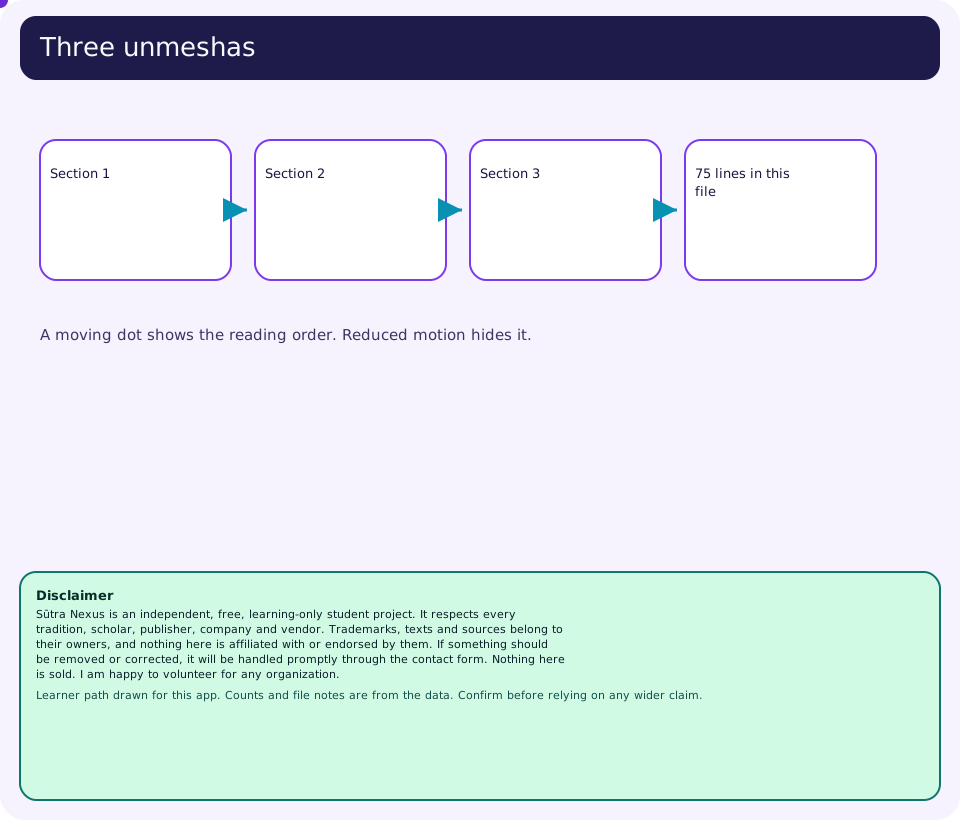
Three unmeshas. Learner path drawn for this app. Counts and file notes are from the data. Confirm before relying on any wider claim.
The file's Devanāgarī is चैतन्यम् आत्मा, marked machine-converted from the IAST.
Do not add an English sentence and call it the sūtra.
If you cite the e-text, keep the CC BY-NC-SA credit and the GRETIL URL.
Quiz
How many rows are in the Kashmir file?
Does this app list the lines that differ from the other recension?
What licence does the opened GRETIL page state?
Is an English meaning shown?
Which Wikipedia short description fits this page?
Ecosystem
Glossary
unmeṣa — The file groups lines into sections numbered on each row. This app does not translate the word.
recension — A version of a text. This file describes its own count and trails off on the other.
Sister topics
Māheśvara, for the contrast, and resources.
Bridges
The only bridge is bibliographic: two works share a Sanskrit name in English articles and are easy to confuse. This app keeps them on separate pages.
Later hooks
A side-by-side that still refuses to invent the missing lines.
Sources and go deeper
GRETIL Śivasūtra with vārttika. The page distributes the e-text under CC BY-NC-SA 4.0. Non-commercial and share-alike terms apply to that e-text. No English translation is copied here. last checked 2026-10. Licence: CC BY-NC-SA 4.0, confirmed on the page.
English Wikipedia, Shiva Sutras of Vasugupta. Short description: a collection of aphorisms from Kashmir Shaivism. This app did not find a clear 75-versus-77 sentence to quote. last checked 2026-10. Licence: CC BY-SA 4.0.
ashtadhyayi-com/data README. The raw README says you are free to use the data in your own projects if you give appropriate credit. No SPDX identifier is stated. last checked 2026-10. Licence: credit required, no formal SPDX, confirmed from the raw README.
History and timeline
Only the dating sentences that were on the page opened 2026-10-16.
Learn it in 5 minutes
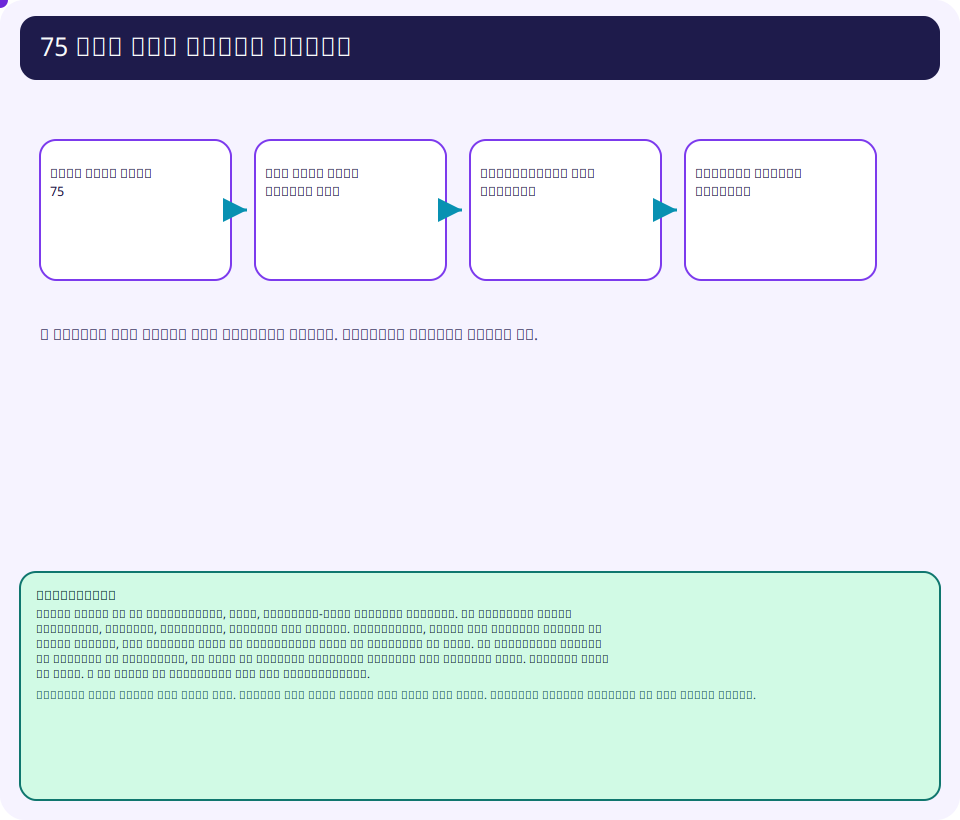
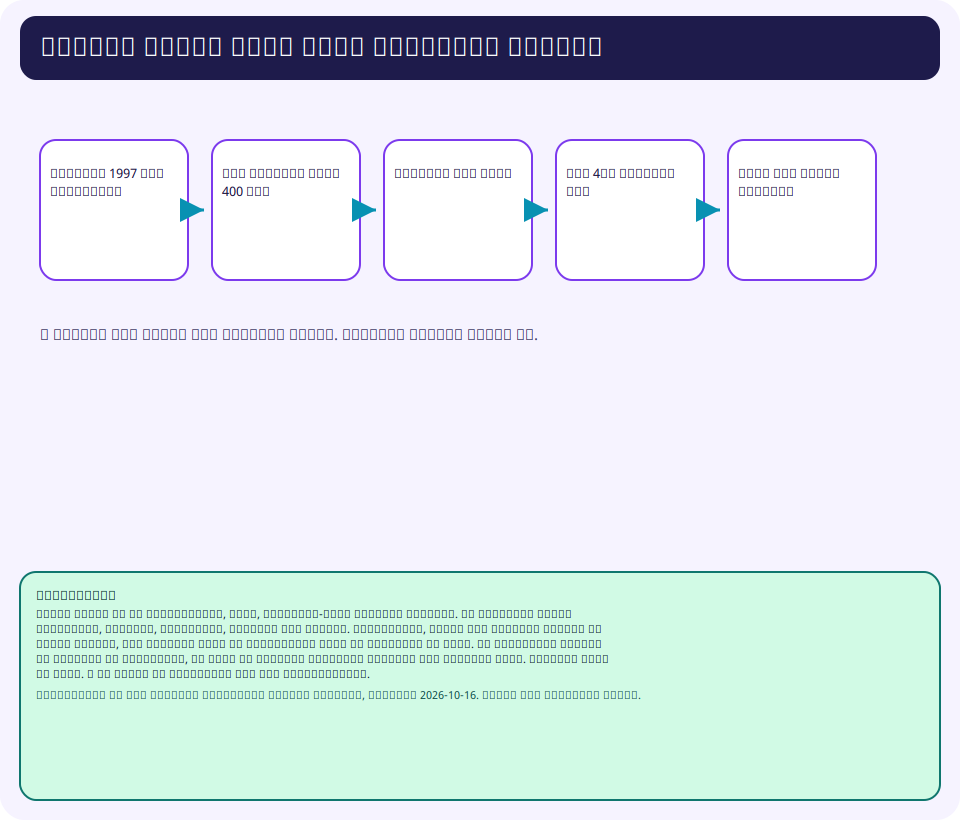
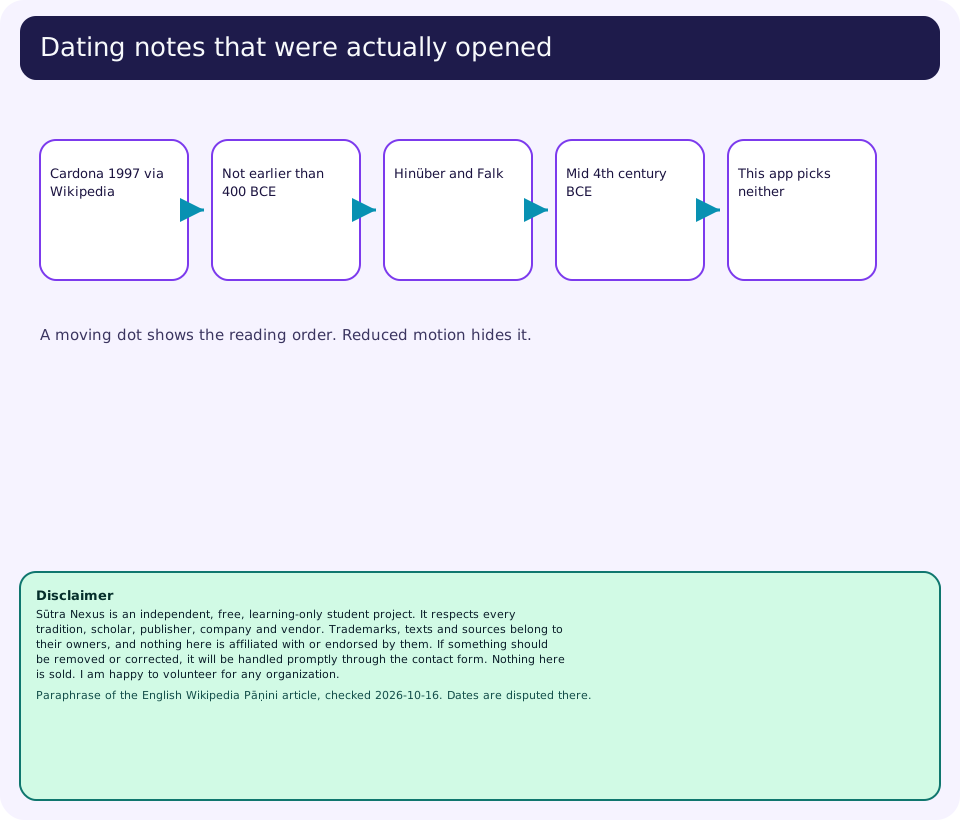
English Wikipedia's Pāṇini article, checked 2026-10-16, treats the dates as disputed. It reports that George Cardona (1997) says the available evidence strongly supports a date no earlier than 400 BCE, and that earlier dates rely on interpretations that are not probative.
The same article reports that Oskar von Hinüber (1989) and Harry Falk (1993) place Pāṇini in the mid-4th century BCE. This app does not choose between those reports.
The article mentions Kātyāyana and Patañjali inside that dating discussion. This page does not assign either of them a century, because that sentence was not the one copied into the notes.
All of these years are approximate scholarly estimates as reported by that encyclopedia page. Confirm before relying. Nothing here is a primary source.
Foundations, dependencies, history, roadmap
Dependencies. None, but the Aṣṭādhyāyī page explains the work being dated.
History. This page is the history room.
Roadmap. Add a later grammarian only when a page that states the date has been opened and quoted narrowly.
Where the idea shows up. Histories of linguistics mention this tradition. A specific modern book needs its own citation. Confirm before relying.
A visual
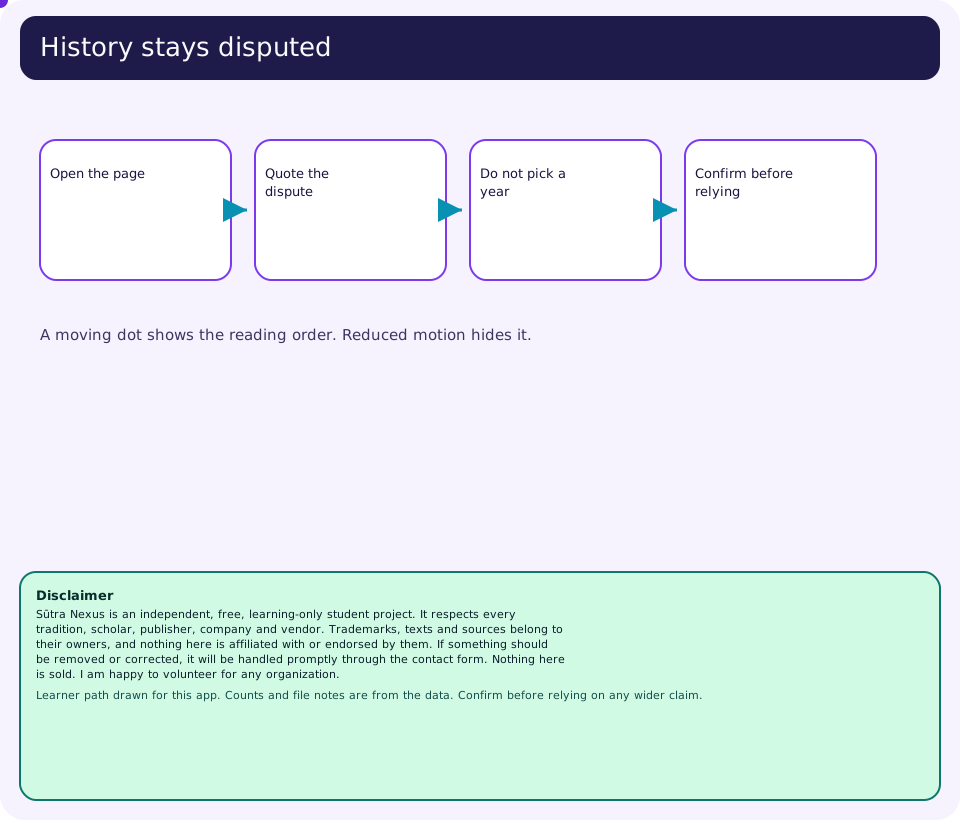
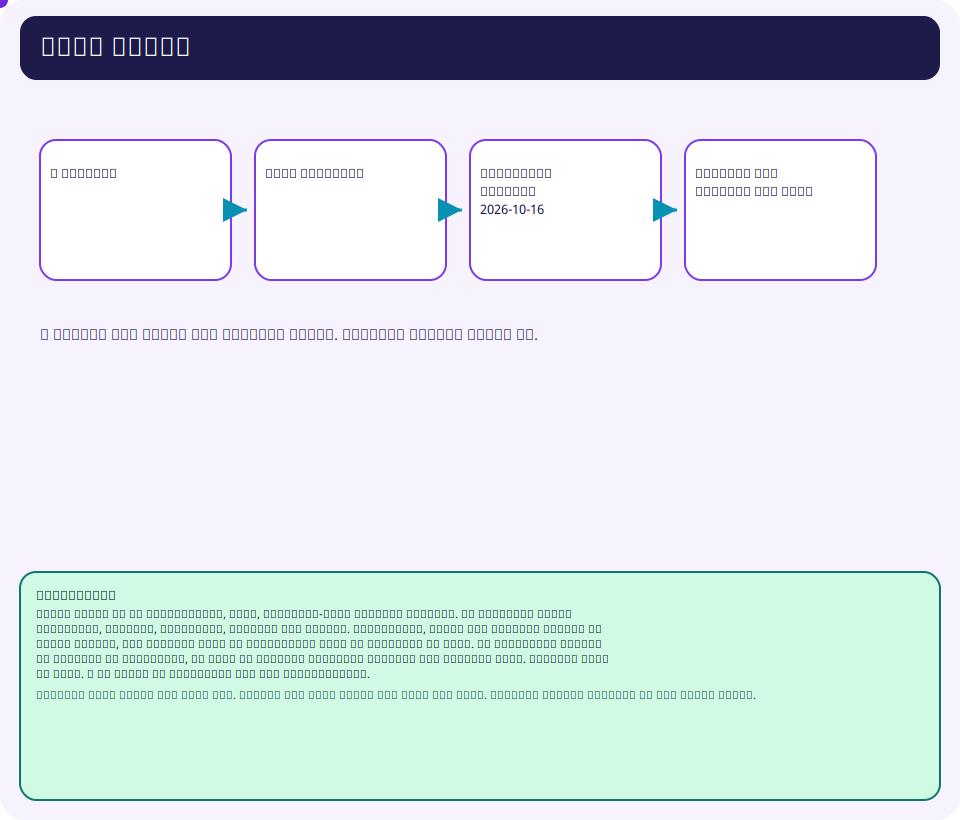
History stays disputed. Learner path drawn for this app. Counts and file notes are from the data. Confirm before relying on any wider claim.
Do not say the true year is 350, or 500, or any single year.
If you need a date for a citation, go back to the article and to the books it names.
Quiz
What does the page report from Cardona 1997?
Who does the article say place Pāṇini in the mid-4th century BCE?
Does this app pick one year?
Are Kātyāyana and Patañjali given centuries here?
What should a reader do before quoting a year?
Ecosystem
Glossary
approximate — The article's dates are scholarly estimates. This app marks them that way.
Sister topics
Aṣṭādhyāyī and credits.
Bridges
The bridge to computing history is not claimed here. The metalanguage idea is discussed on the Wikipedia page; this room does not expand it beyond the dating sentences.
Later hooks
A timeline that stays empty where a date was not opened.
Sources and go deeper
English Wikipedia, Pāṇini. The page reports Cardona (1997) that evidence supports a date no earlier than 400 BCE, and that Hinüber (1989) and Falk (1993) place him in the mid-4th century BCE. The dates are disputed on that page. last checked 2026-10. Licence: CC BY-SA 4.0.
Diagrams
58 drawings. 36 include a moving dot. Reduced motion hides the dot.
Learn it in 5 minutes
Each drawing has three files: an SVG, a PNG of that SVG, and a standalone HTML page. The disclaimer is inside all three.
A moving dot means reading order. If you asked the browser to reduce motion, the dot is hidden and the boxes stay.
Counts on a chart are from the JSON files. A mind map is a map of this app, not a claim about history.
A visual
Pratyāhāra ac. Computed from data/maheshvara.json. ac has 9 sounds. Not a translation.
ashtadhyayi-com/data README. The raw README says you are free to use the data in your own projects if you give appropriate credit. No SPDX identifier is stated. last checked 2026-10. Licence: credit required, no formal SPDX, confirmed from the raw README.
English Wikipedia, Aṣṭādhyāyī. The page says the work has 3,983 sūtras in eight chapters, each subdivided into four pādas, and lists vidhi, paribhāṣā, adhikāra, atideśa, niyama, and negation rules. CC BY-SA. last checked 2026-10. Licence: CC BY-SA 4.0.
Charts
These numbers are counts from the JSON files, not traffic or adoption.
Learn it in 5 minutes
A bar is a count of rows in a file in this repository. It is not a survey and not a popularity rank.
Chapter bars add up to 3,983. The type-letter bars use the letters stored on each row.
AT and AD stay unexpanded. The file meta glosses S, P, and V only.
A visual
Sūtras in each adhyāya. Counted from data/ashtadhyayi.json on 2026-10-16. Total 3,983.
The sum is 3,983, the length of data/ashtadhyayi.json.
Quiz
What does a bar count?
What do the eight chapter bars add up to?
Which type letters does the file meta gloss?
Should AT be read as a named rule class here?
Are these charts traffic?
Ecosystem
Glossary
bar — A count from a JSON file, named in the caption.
Sister topics
Sister rooms are the chips in the section banner.
Bridges
Learner's note (not a translation): this page explains the app. It does not add a rule of the grammar.
Later hooks
An open meaning, and a human check of the IAST. Confirm before relying.
Sūtras in each adhyāya
Counted from data/ashtadhyayi.json on 2026-10-16. Total 3,983.
Type letters in the data file
S, P, V, AT, AD are the file's own letters. The meta glosses only S, P, and V. AT and AD are not expanded here.
Lines with an anuvṛtti field
3489 of 3,983 rows have a non-empty anuvritti array in the file.
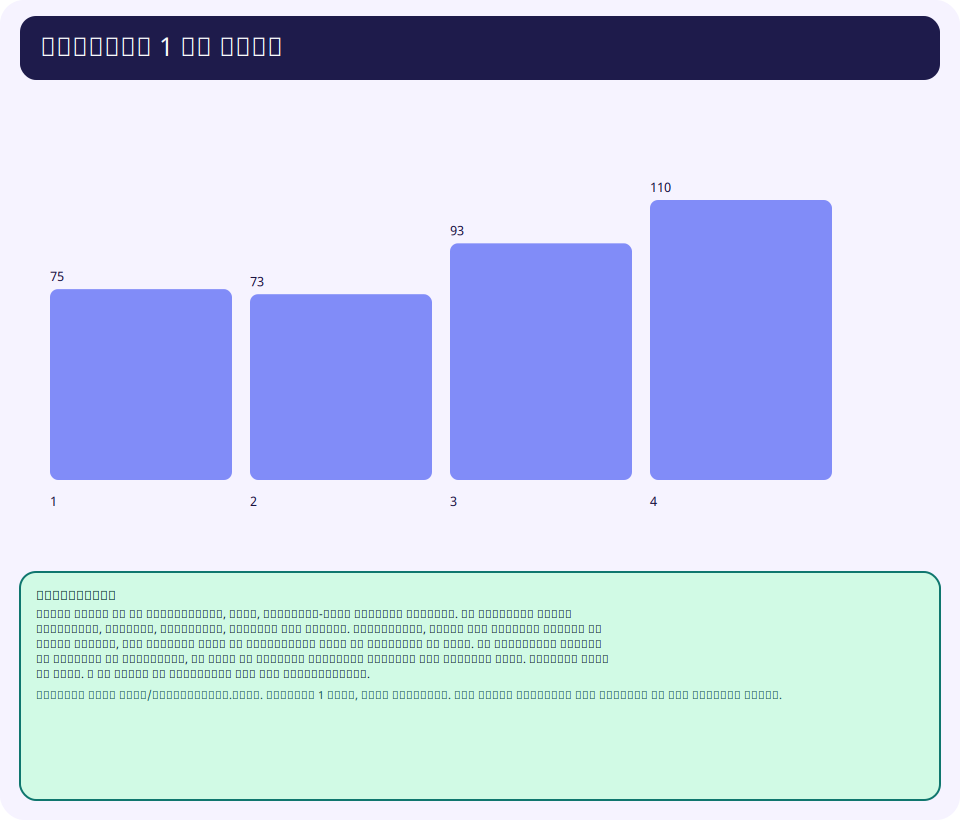
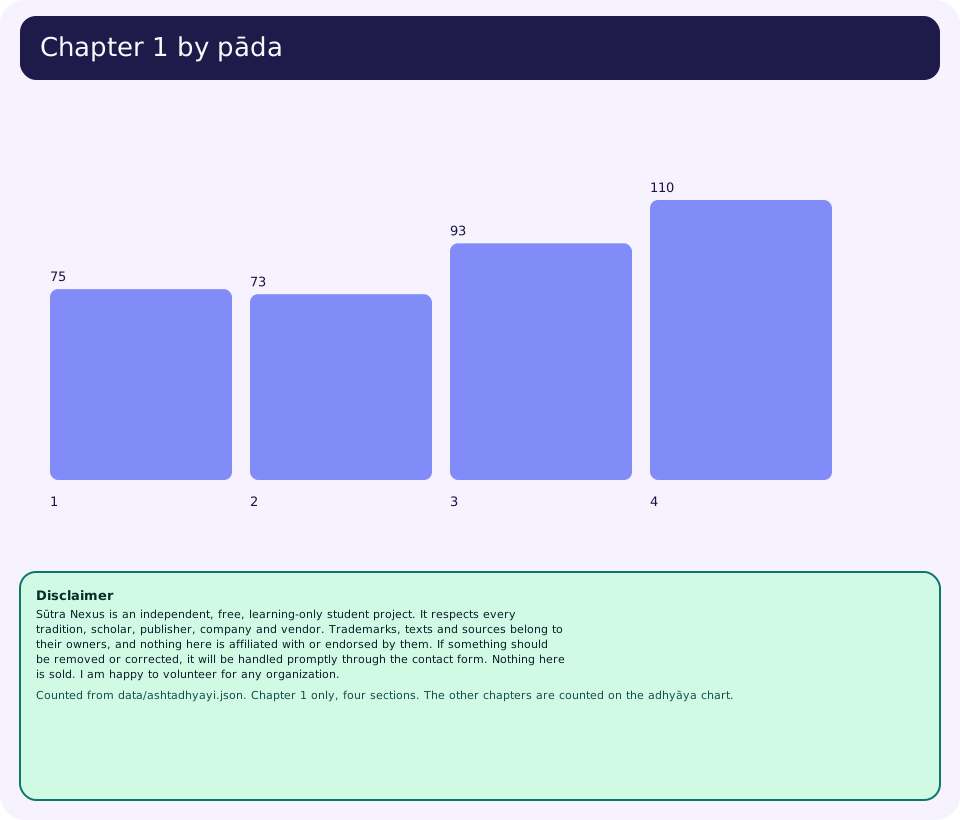
Chapter 1 by pāda
Counted from data/ashtadhyayi.json. Chapter 1 only, four sections. The other chapters are counted on the adhyāya chart.
Kashmir unmeṣa lengths
Counted from the unmesha field in data/shiva_sutras_kashmir.json. The file meta writes 20+10+45. The other recension is not in this file.
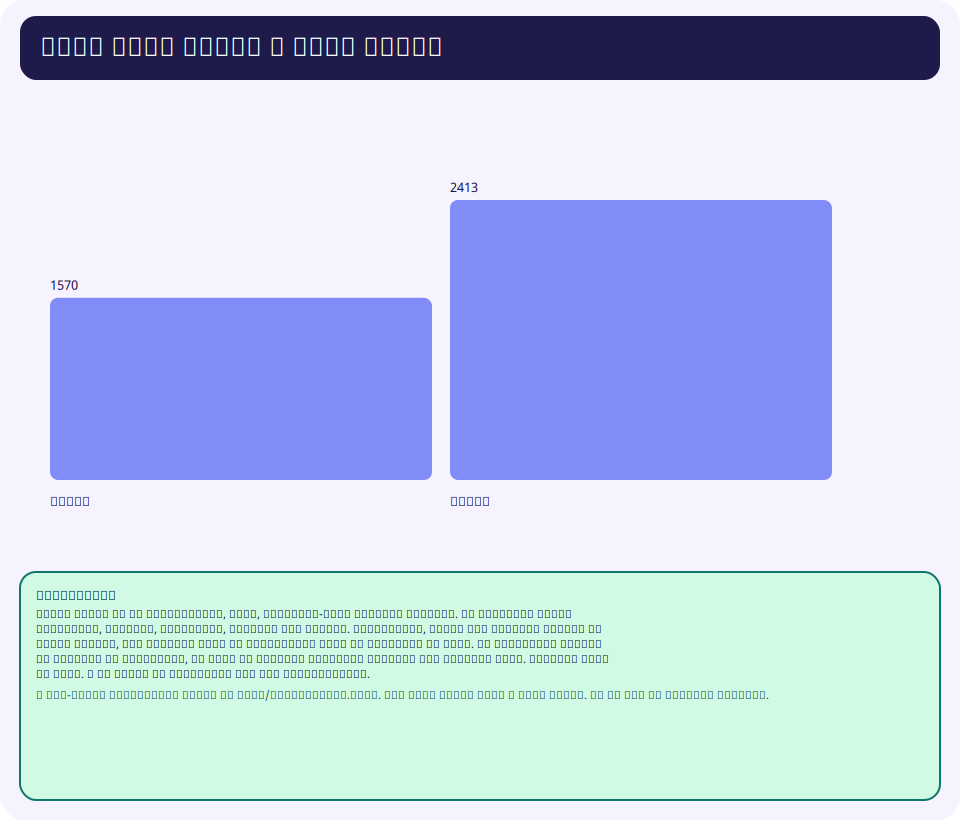
Rows that carry a word split
A non-empty padaccheda field in data/ashtadhyayi.json. The file calls this a word split. It is not an English meaning.
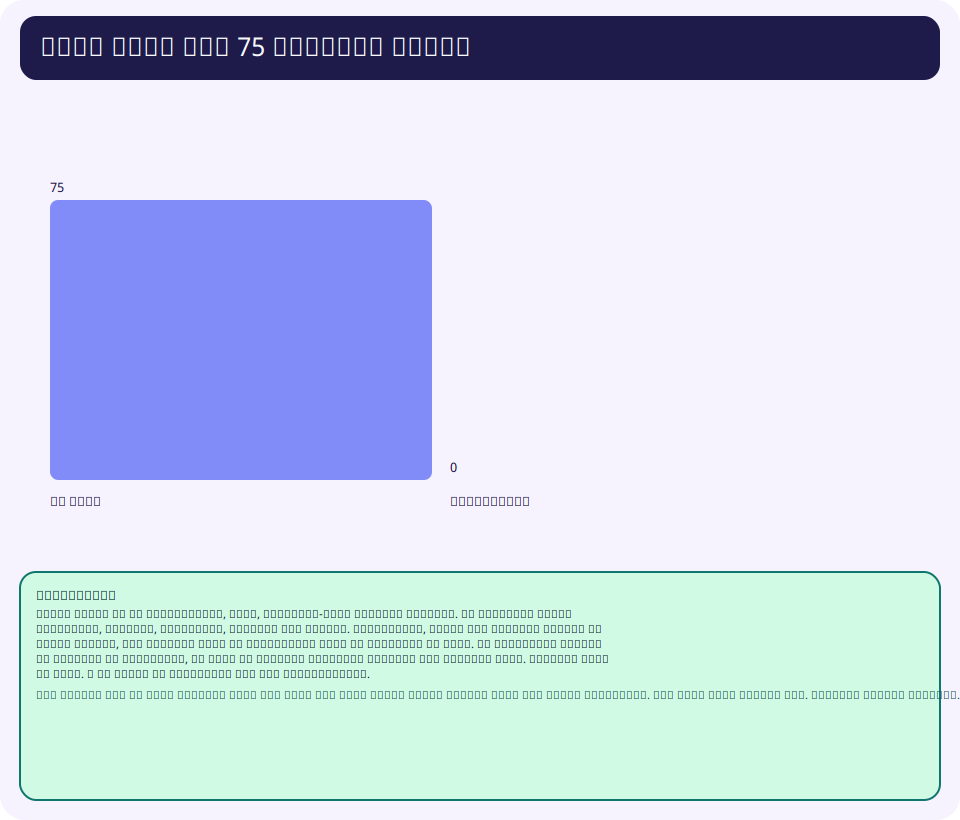
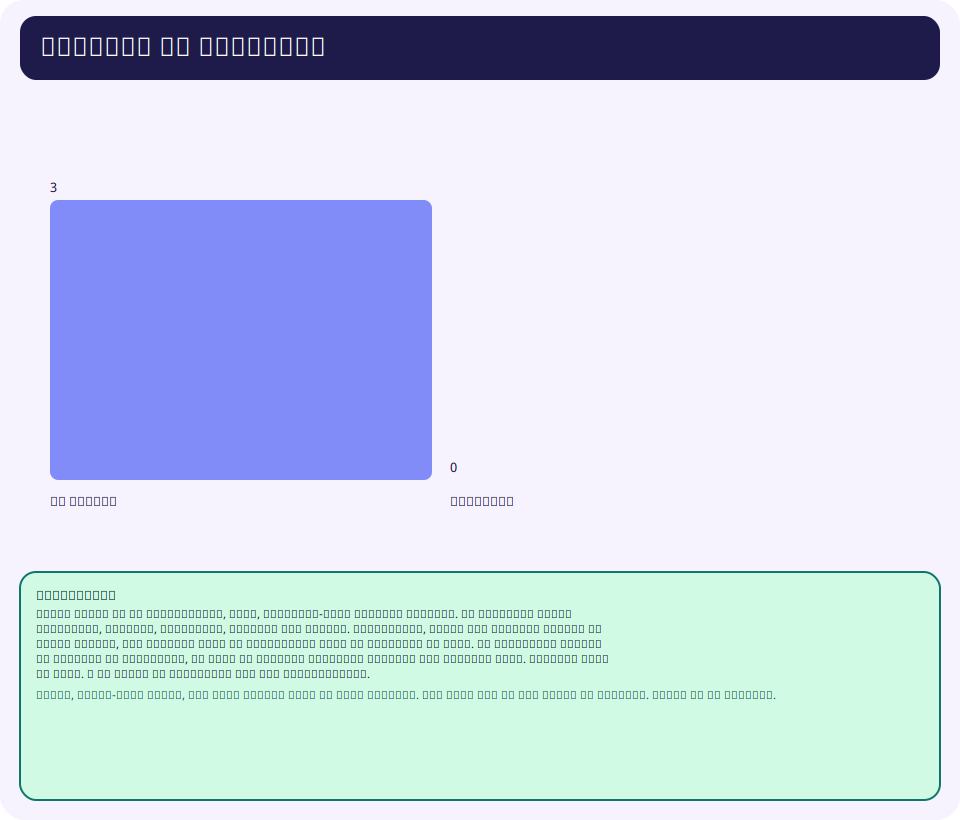
Nothing is uploaded
Theme, start-path marks, and card timing stay in this browser. The zero bar is the count of uploads. There is no account.
Sources and go deeper
ashtadhyayi-com/data README. The raw README says you are free to use the data in your own projects if you give appropriate credit. No SPDX identifier is stated. last checked 2026-10. Licence: credit required, no formal SPDX, confirmed from the raw README.
English Wikipedia, Aṣṭādhyāyī. The page says the work has 3,983 sūtras in eight chapters, each subdivided into four pādas, and lists vidhi, paribhāṣā, adhikāra, atideśa, niyama, and negation rules. CC BY-SA. last checked 2026-10. Licence: CC BY-SA 4.0.
Play
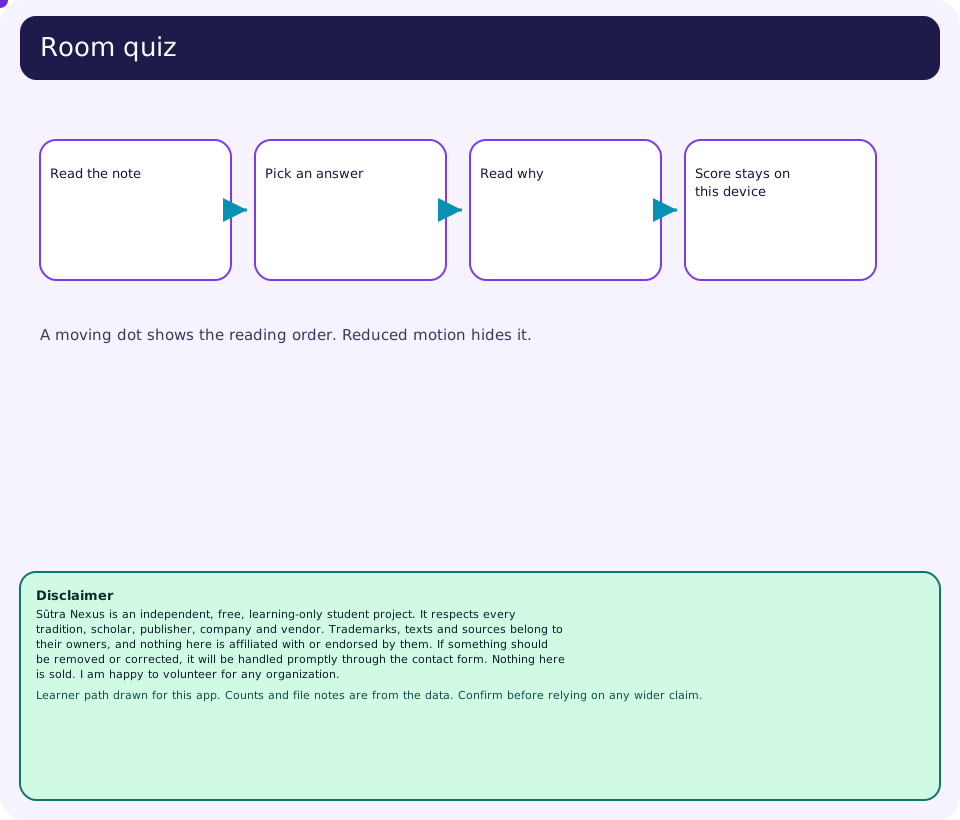
Touch and keyboard both work. Scores stay in this browser.
Build a pratyāhāra
The same builder as the Māheśvara page. Marker lines are 1 through 14.
Open the Māheśvara page for the full control. Here is a quick check.
Sort the glossed type letters
Match a marker
Flashcards
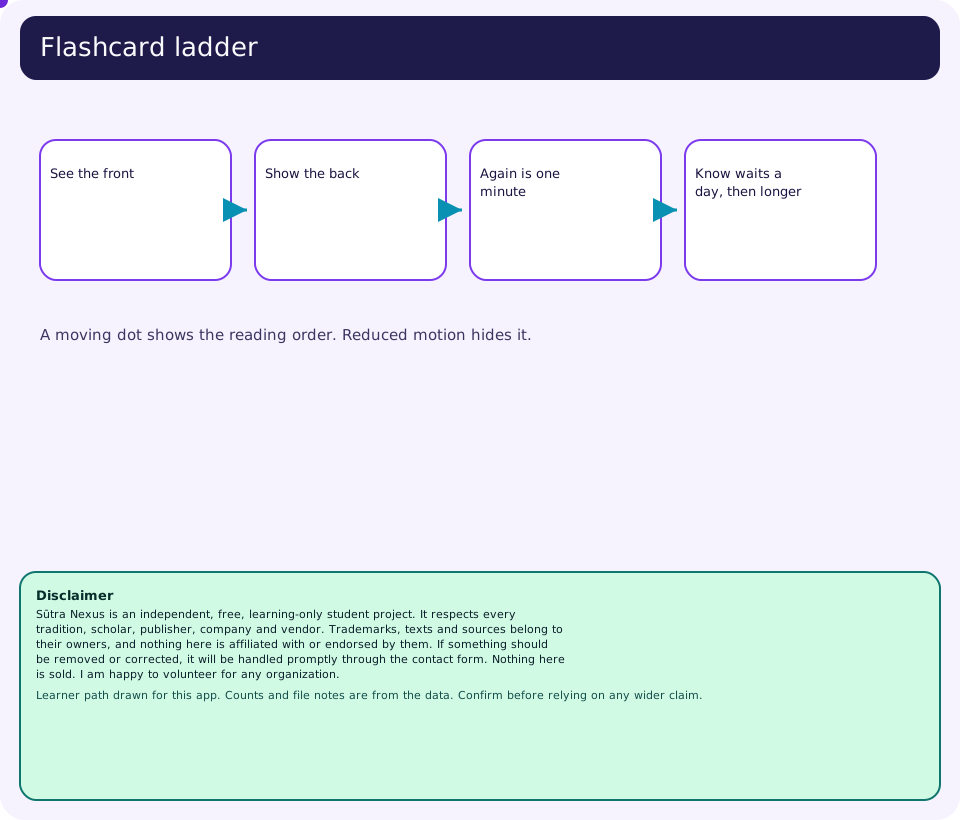
Again waits about a minute. Know waits a day, then three, then seven. This is a simple ladder, not a medical schedule.
Interview bank
Generic questions. Sample answers cite this app's sources. They are not a personal résumé and not a claim about a job.
How is a pratyāhāra like a character class?
Learner's note (not a translation): both name a set. In this app, ac is the computed list a i u ṛ ḷ e o ai au. The analogy is made here. Confirm before relying if you present it as Pāṇini's own comparison.
What would you refuse to invent in an interview?
An English meaning, a sandhi join, a century for Kātyāyana, and which Kashmir lines differ. The pages say confirm before relying.
How does anuvṛtti resemble a carried variable?
Learner's note (not a translation): 1.1.3's file field lists two earlier strings. Calling that a variable is a bridge for programmers, not a translation of the line.
Learn it in 5 minutes
Games check a number or a gloss that this app already states. They do not score you on a translation.
Flashcards use a simple ladder on this device: again is about a minute, then a day, three days, and seven.
Interview answers are generic and cited. They are not a résumé and not someone's job story.
A visual
Pratyāhāra ac. Computed from data/maheshvara.json. ac has 9 sounds. Not a translation.
pratyāhāra — A set computed from a start sound and a marker line.
Sister topics
Sister rooms are the chips in the section banner.
Bridges
Learner's note (not a translation): this page explains the app. It does not add a rule of the grammar.
Later hooks
An open meaning, and a human check of the IAST. Confirm before relying.
Full builder
The set is computed in the browser from the 14 lines. It is not a translation.
Sources and go deeper
ashtadhyayi-com/data README. The raw README says you are free to use the data in your own projects if you give appropriate credit. No SPDX identifier is stated. last checked 2026-10. Licence: credit required, no formal SPDX, confirmed from the raw README.
English Wikipedia, Aṣṭādhyāyī. The page says the work has 3,983 sūtras in eight chapters, each subdivided into four pādas, and lists vidhi, paribhāṣā, adhikāra, atideśa, niyama, and negation rules. CC BY-SA. last checked 2026-10. Licence: CC BY-SA 4.0.
Listen
These are scripted reads run on the page and in the guide. There is no audio file and no recited Sanskrit recording.
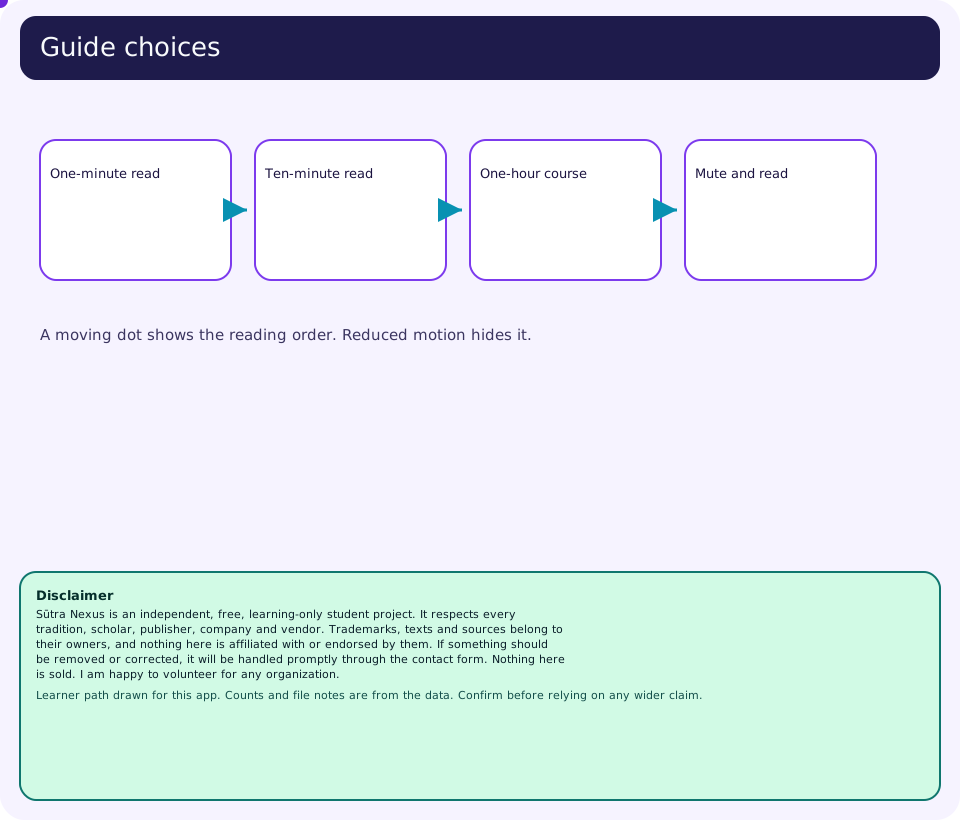
1-minute clip
Three files: 3,983, 14, and 75.
Meanings are not sourced yet.
IAST in the grammar file is script-converted.
The builder can recompute ac.
About one minute if you read slowly. Not a video.
10-minute trailer
Read Start, then Foundations.
Compute ac, hal, and al.
Open 1.1.3 and look at the anuvritti field without translating it.
Read the type-letter chart and leave AT and AD unexpanded.
Read the dating dispute and do not pick a year.
Remember the Kashmir file is a different text, under CC BY-NC-SA 4.0.
Take one quiz.
Open the guide and leave the voice off.
1-hour guided walk
The guide's one-hour course walks the rooms in order and asks a checkpoint from each room's quiz. It only repeats sentences written in the app. Stay with it and the reading is about an hour. It is not a recording.
Learn it in 5 minutes
The 1-minute clip, the 10-minute trailer, and the 1-hour walk are scripts you read. There is no video file and no Sanskrit recording.
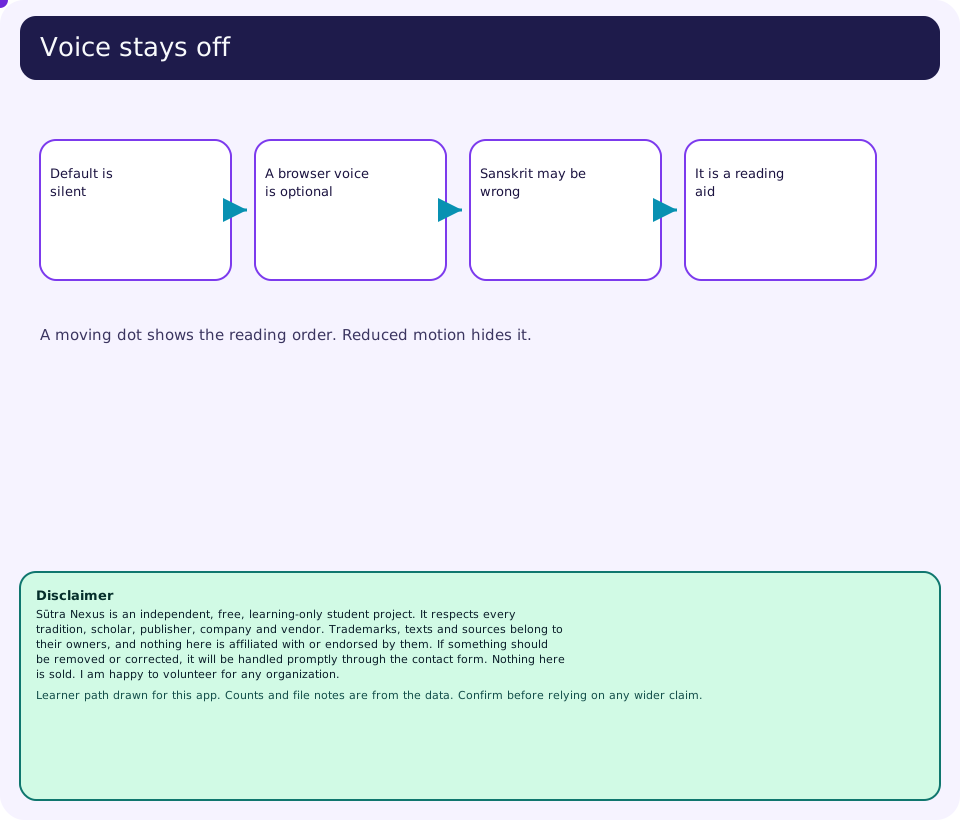
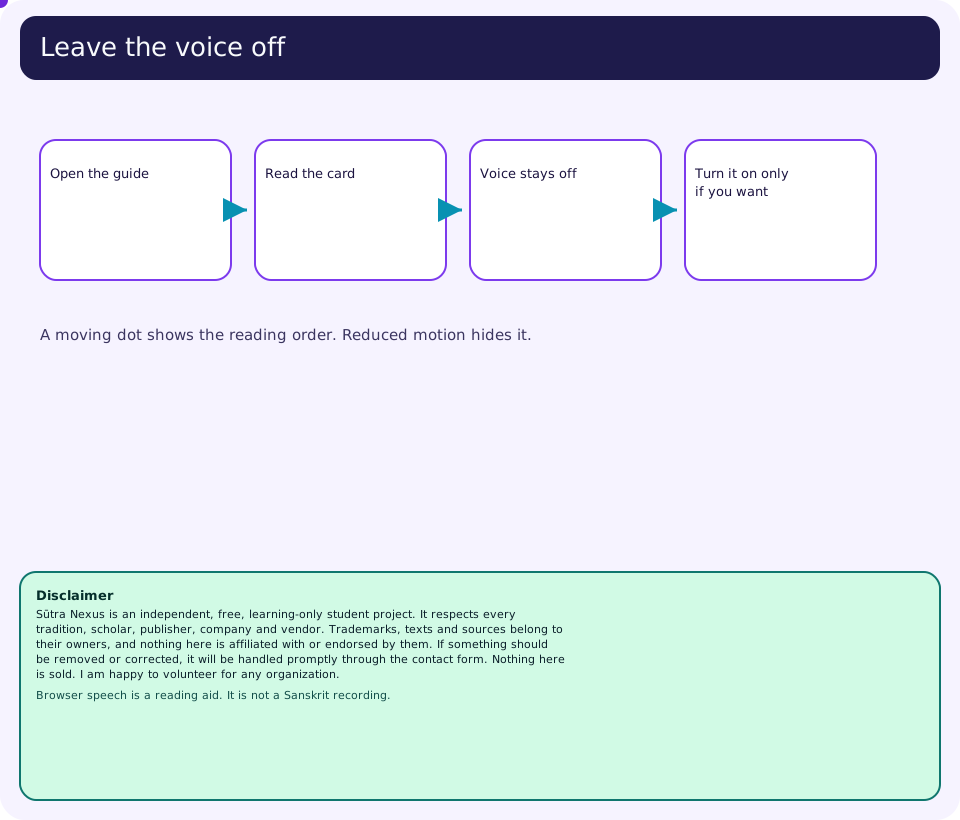
Voice in the guide is off until you turn it on. A browser voice may mispronounce Sanskrit. It is a reading aid.
The one-hour course repeats sentences already written in the rooms and then asks a checkpoint.
A visual
Pratyāhāra ac. Computed from data/maheshvara.json. ac has 9 sounds. Not a translation.
scripted read — Text you read on the page. Not an audio file.
Sister topics
Sister rooms are the chips in the section banner.
Bridges
Learner's note (not a translation): this page explains the app. It does not add a rule of the grammar.
Later hooks
An open meaning, and a human check of the IAST. Confirm before relying.
Sources and go deeper
ashtadhyayi-com/data README. The raw README says you are free to use the data in your own projects if you give appropriate credit. No SPDX identifier is stated. last checked 2026-10. Licence: credit required, no formal SPDX, confirmed from the raw README.
English Wikipedia, Aṣṭādhyāyī. The page says the work has 3,983 sūtras in eight chapters, each subdivided into four pādas, and lists vidhi, paribhāṣā, adhikāra, atideśa, niyama, and negation rules. CC BY-SA. last checked 2026-10. Licence: CC BY-SA 4.0.
Ecosystem
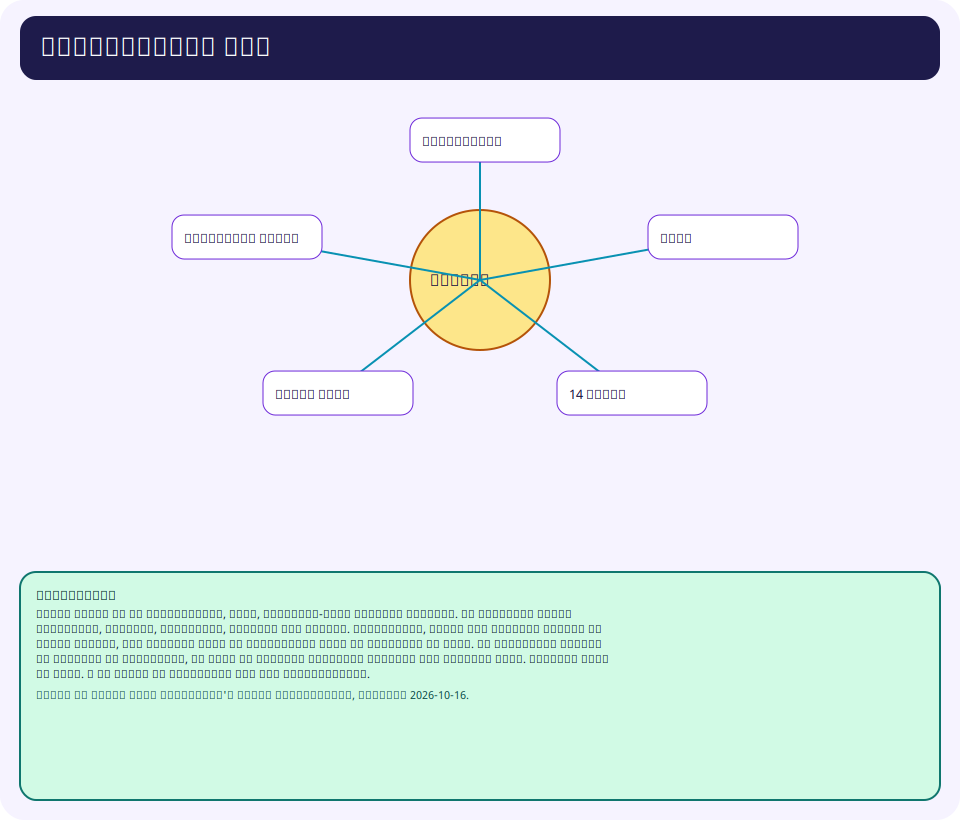
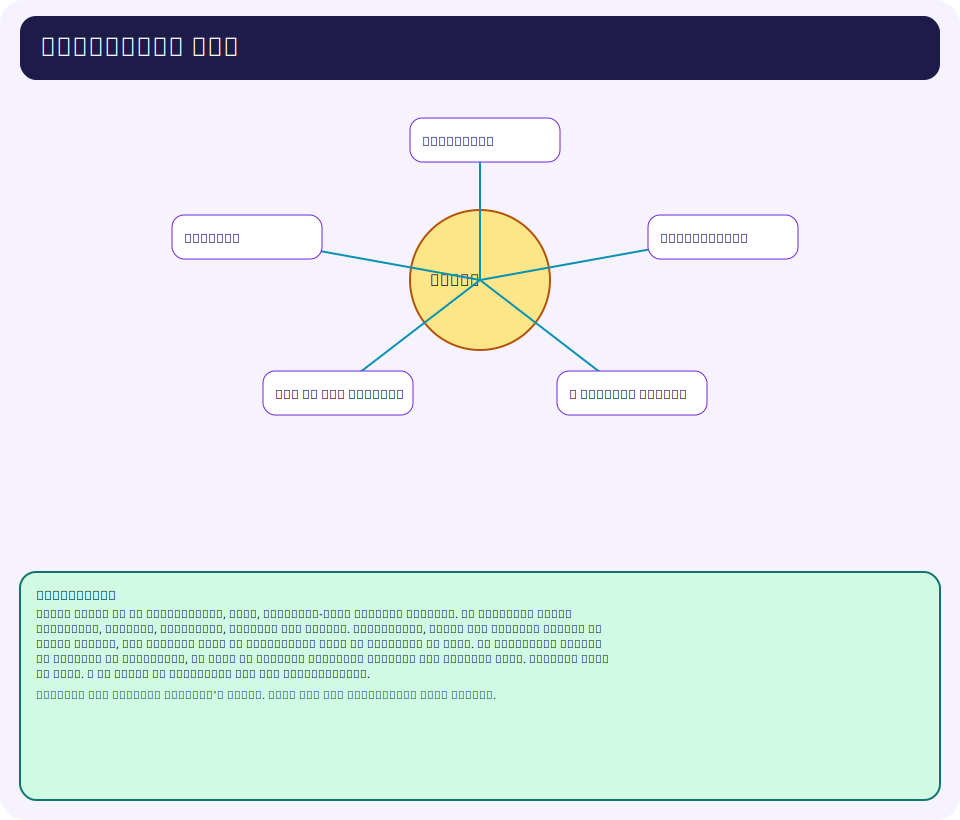
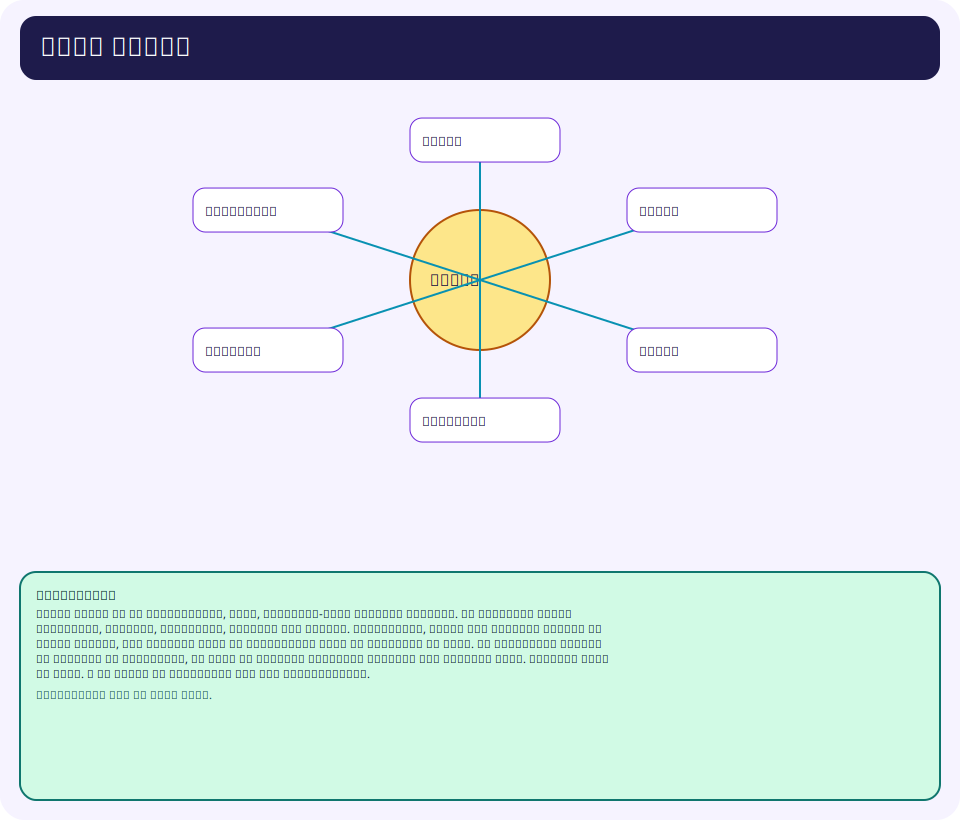
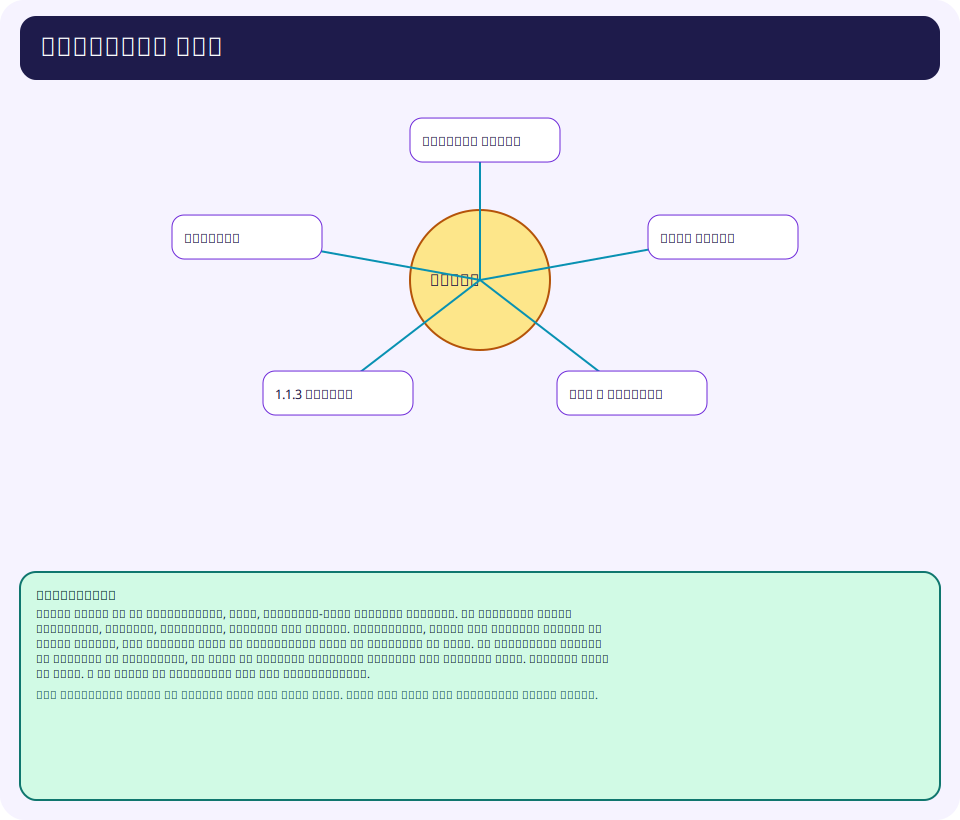
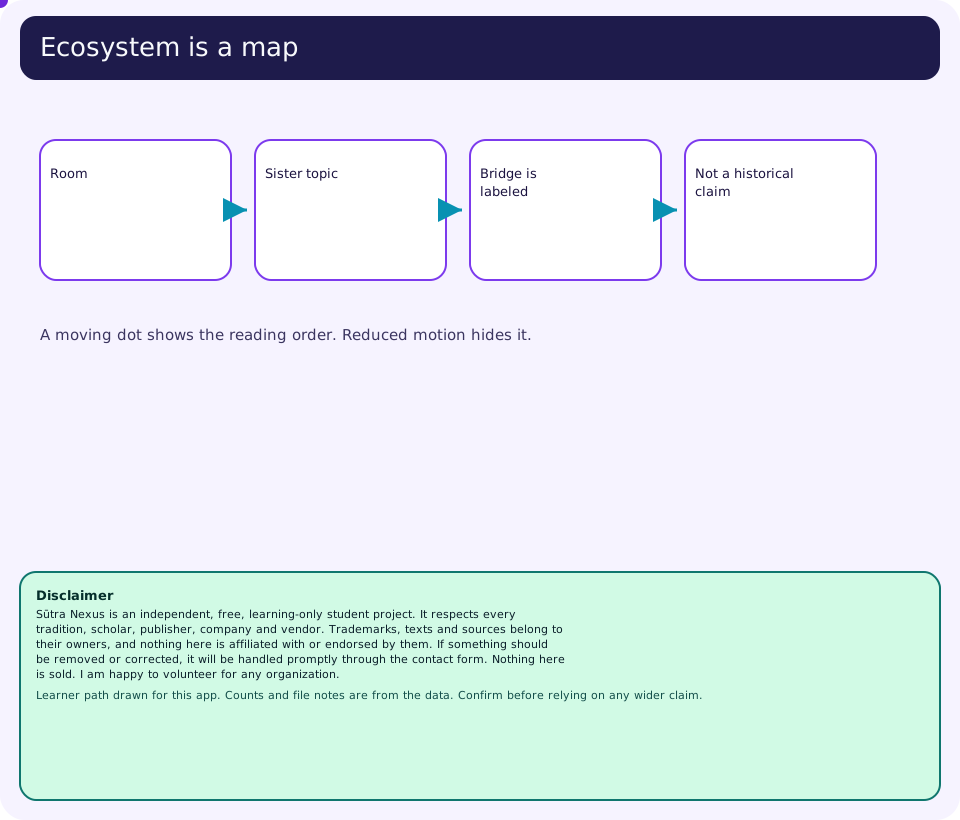
A map of this app. Sister topics point at rooms. Bridges are labeled learner's notes.
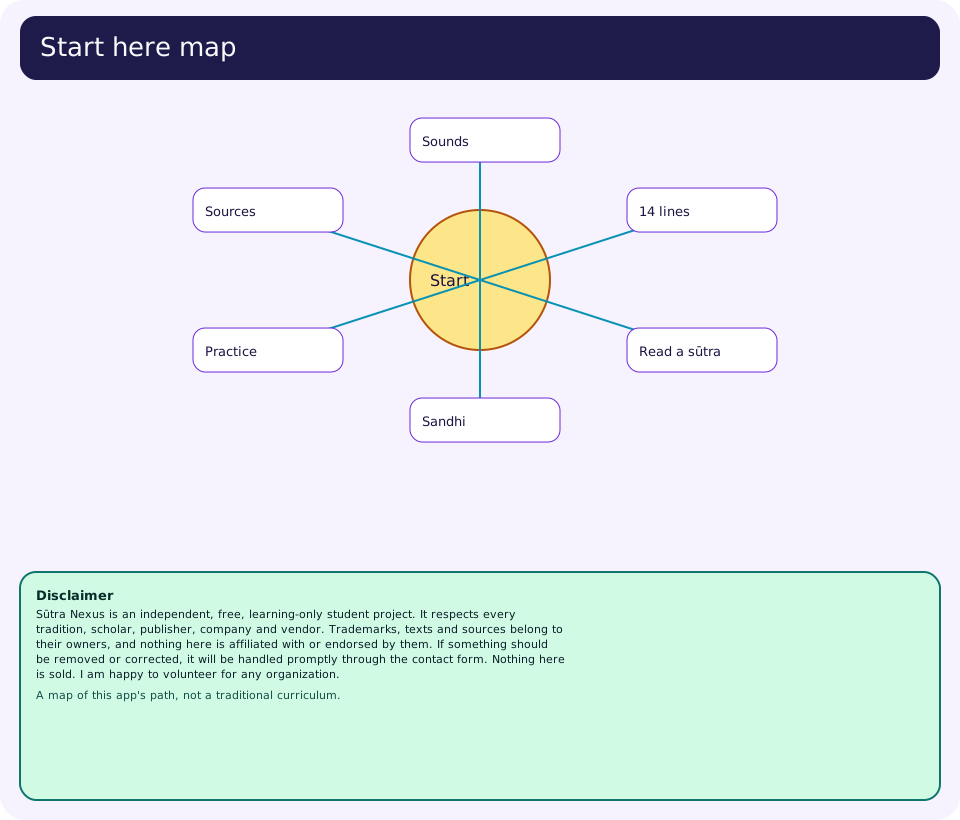
Start here map
A map of this app's path, not a traditional curriculum.
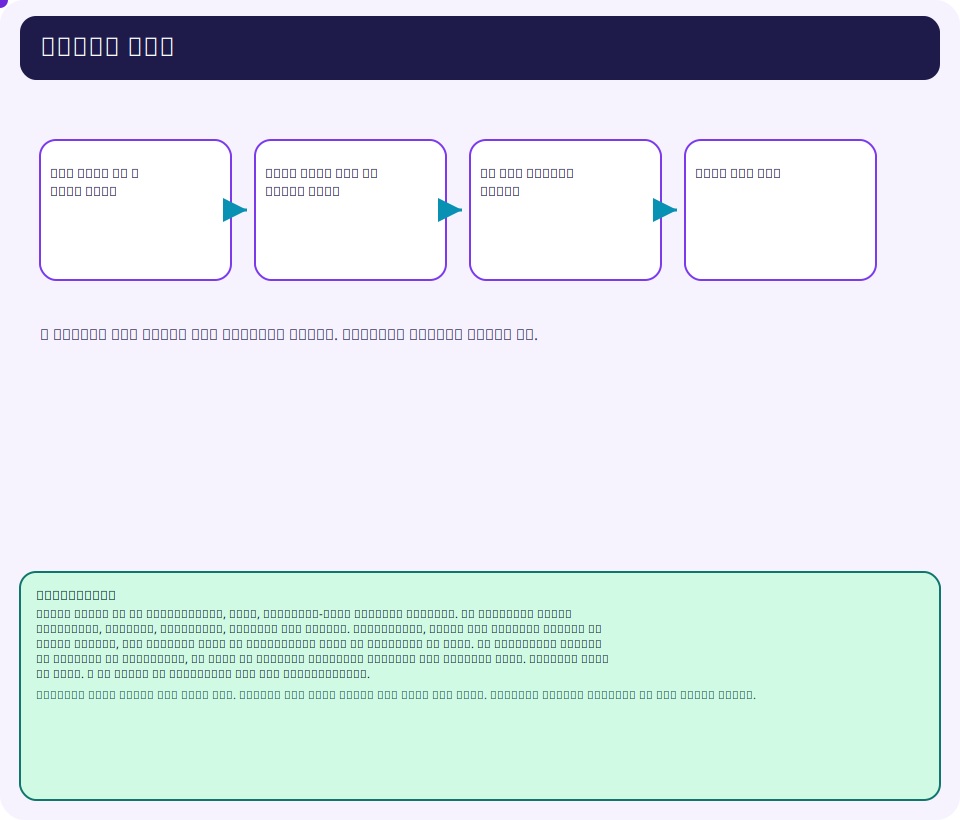
Foundations map
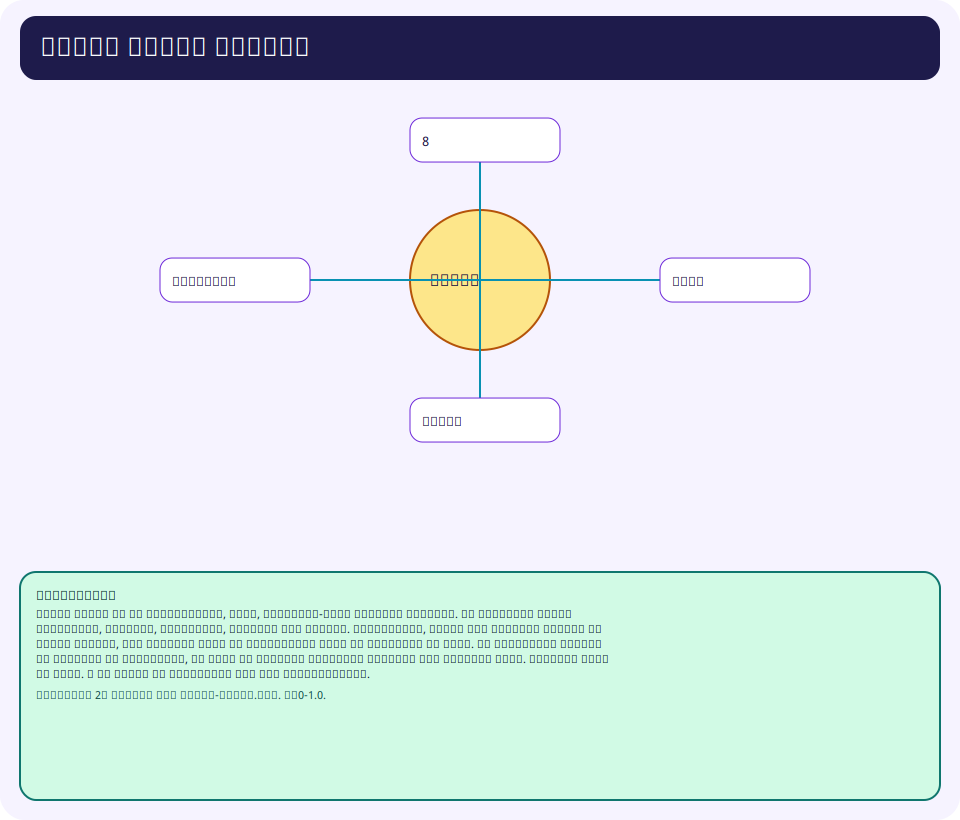
Śikṣā is cited from Wikipedia's short description, checked 2026-10-16.
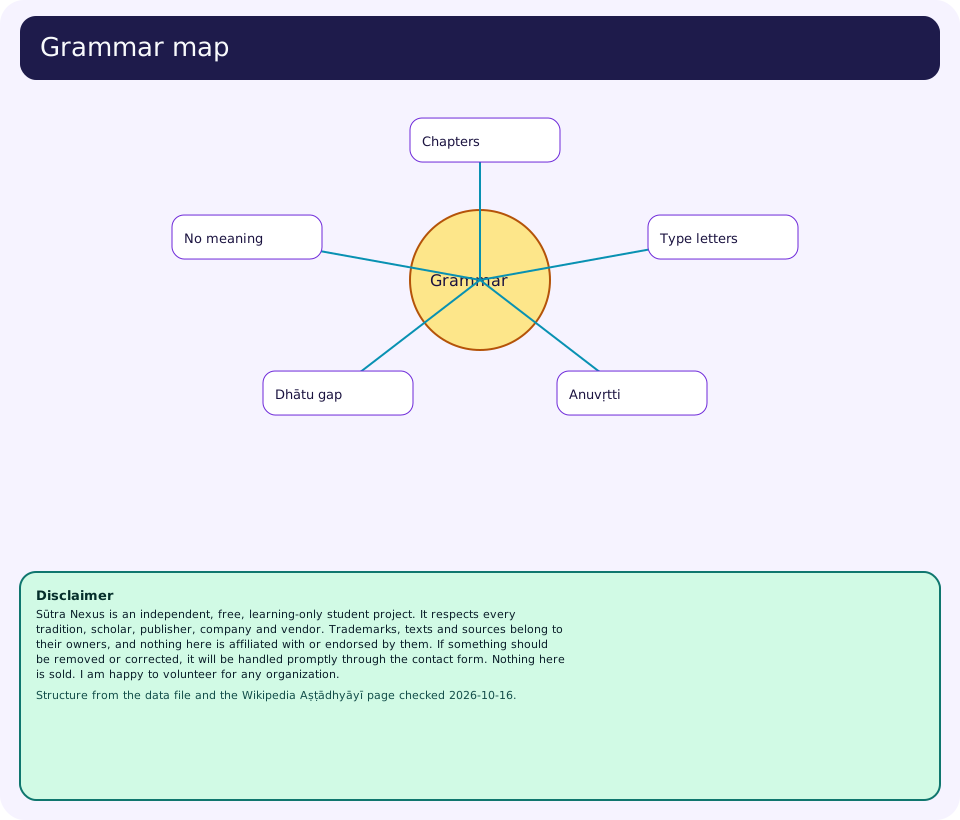
Grammar map
Structure from the data file and the Wikipedia Aṣṭādhyāyī page checked 2026-10-16.
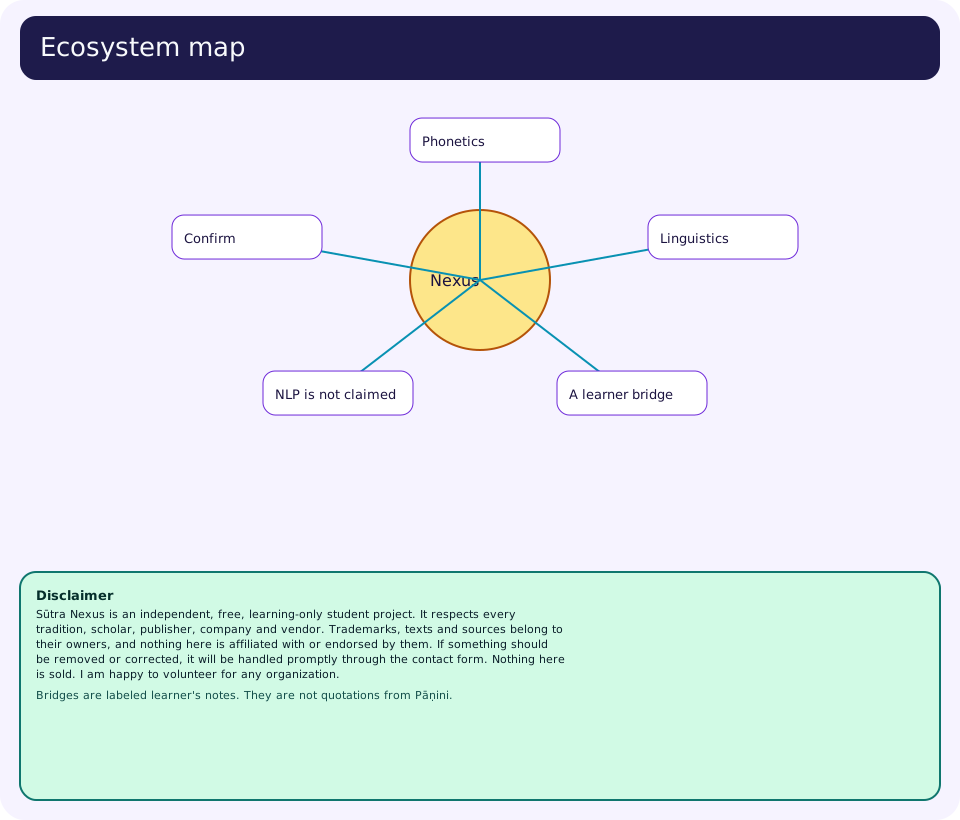
Ecosystem map
Bridges are labeled learner's notes. They are not quotations from Pāṇini.
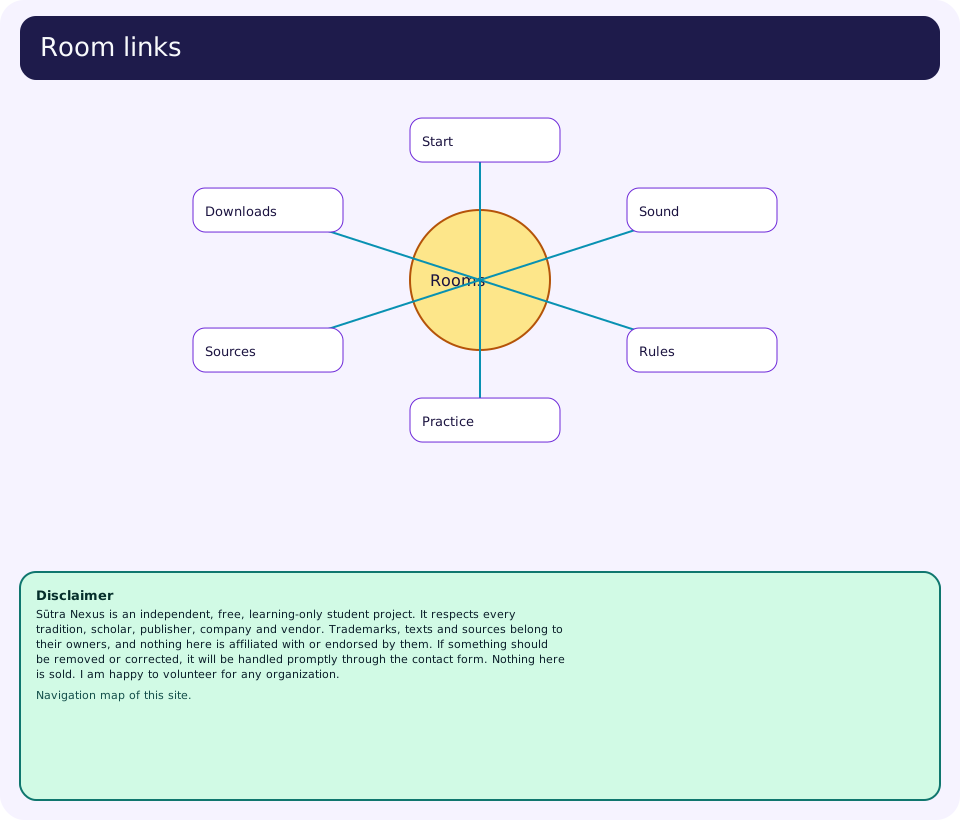
Room links
Navigation map of this site.
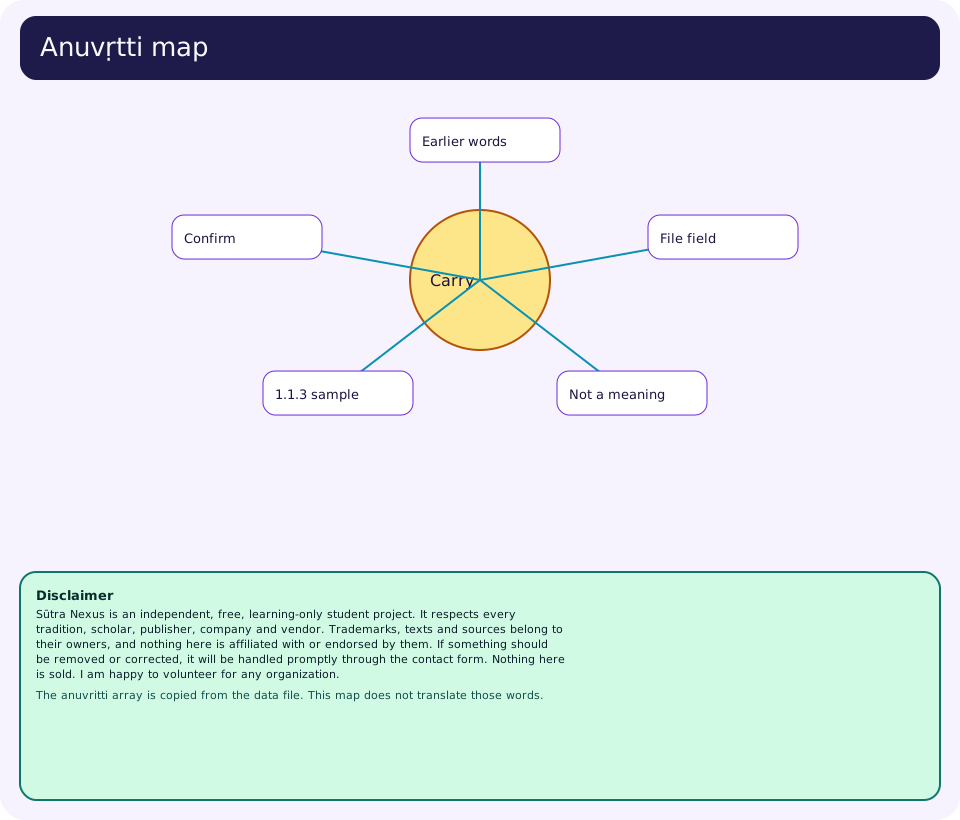
Anuvṛtti map
The anuvritti array is copied from the data file. This map does not translate those words.
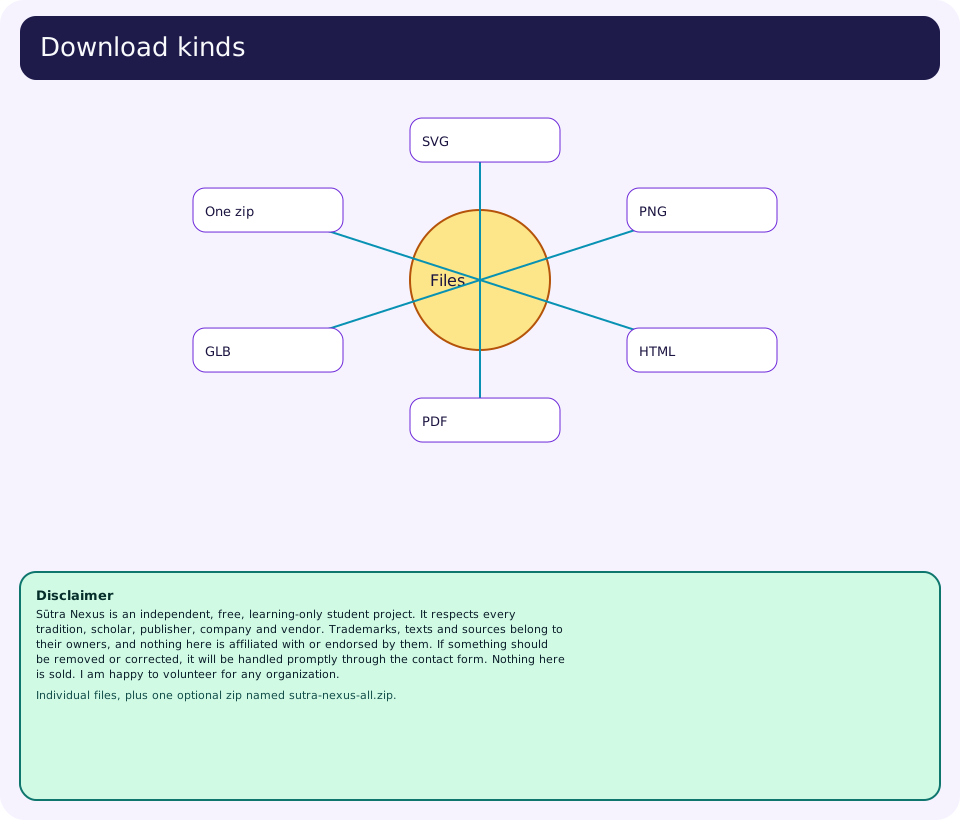
Download kinds
Individual files, plus one optional zip named sutra-nexus-all.zip.
Integration
Phonetics, linguistics, and programming-language teaching all have reasons to look at a named sound set. This page does not cite a specific NLP paper. Confirm before relying on any paper you add.
Future hooks
An open meaning, a human IAST check, and a dhātu list only after its licence is confirmed.
Learn it in 5 minutes
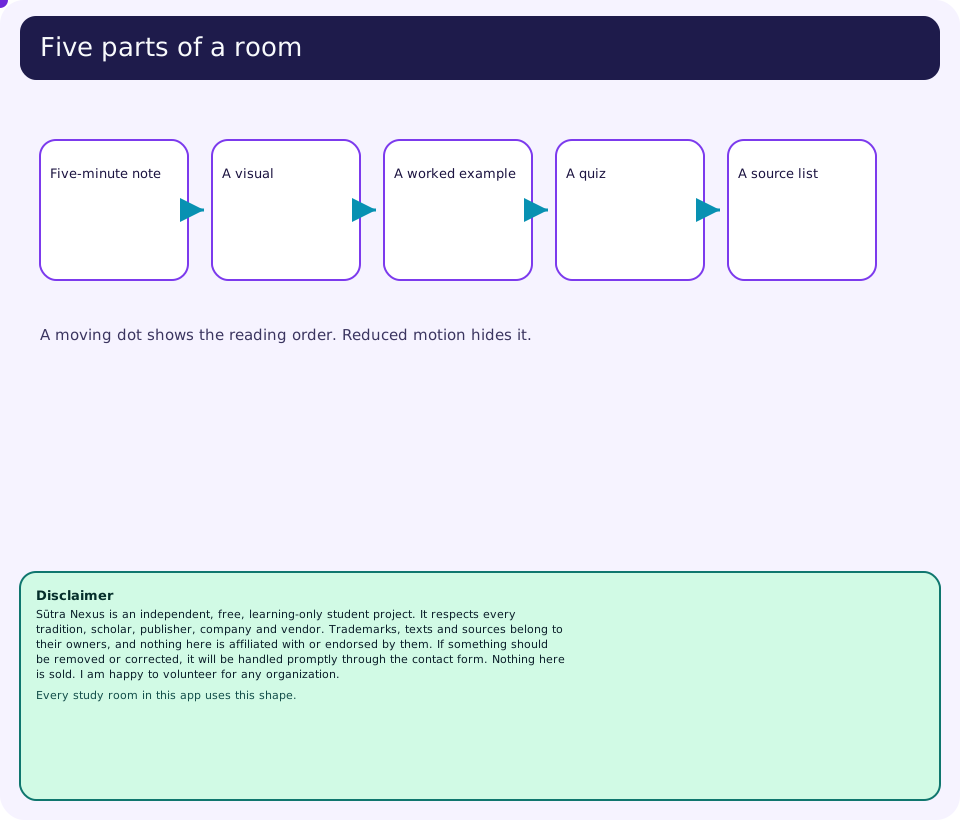
Each study room ends with a glossary, sister topics, a bridge, and a later hook. This page gathers the maps.
A bridge is a learner's note. It is not a quotation from Pāṇini and not a claim that the tradition described software.
No NLP paper is cited here. Confirm before relying if you attach one.
A visual
Start here map. A map of this app's path, not a traditional curriculum.
If it says learner's note, do not quote it as a sūtra.
Quiz
What is a bridge on this site?
Does this page cite an NLP paper?
Where does each study room put its glossary?
Is a sister topic a historical claim?
What future hook is named?
Ecosystem
Glossary
bridge — A learner's analogy, labeled, and not a translation.
Sister topics
Sister rooms are the chips in the section banner.
Bridges
Learner's note (not a translation): this page explains the app. It does not add a rule of the grammar.
Later hooks
An open meaning, and a human check of the IAST. Confirm before relying.
Sources and go deeper
ashtadhyayi-com/data README. The raw README says you are free to use the data in your own projects if you give appropriate credit. No SPDX identifier is stated. last checked 2026-10. Licence: credit required, no formal SPDX, confirmed from the raw README.
English Wikipedia, Aṣṭādhyāyī. The page says the work has 3,983 sūtras in eight chapters, each subdivided into four pādas, and lists vidhi, paribhāṣā, adhikāra, atideśa, niyama, and negation rules. CC BY-SA. last checked 2026-10. Licence: CC BY-SA 4.0.
Resources
Each citation below was opened on 2026-10-16. If a later page changes, confirm before relying.
Learn it in 5 minutes
A link on this page was opened in October 2026 and the licence line is what that page said then.
Wikipedia text is CC BY-SA. The GRETIL e-text page states CC BY-NC-SA 4.0. The data README asks for credit and states no SPDX.
Vasu's English was not confirmed, so no words from it appear. Confirm before relying on any meaning you add later.
A visual
Pratyāhāra ac. Computed from data/maheshvara.json. ac has 9 sounds. Not a translation.
If a source page changes later, what should you do?
Ecosystem
Glossary
source — A page that was opened, with the licence written down.
Sister topics
Sister rooms are the chips in the section banner.
Bridges
Learner's note (not a translation): this page explains the app. It does not add a rule of the grammar.
Later hooks
An open meaning, and a human check of the IAST. Confirm before relying.
Sources and go deeper
ashtadhyayi-com/data README. The raw README says you are free to use the data in your own projects if you give appropriate credit. No SPDX identifier is stated. last checked 2026-10. Licence: credit required, no formal SPDX, confirmed from the raw README.
English Wikipedia, Aṣṭādhyāyī. The page says the work has 3,983 sūtras in eight chapters, each subdivided into four pādas, and lists vidhi, paribhāṣā, adhikāra, atideśa, niyama, and negation rules. CC BY-SA. last checked 2026-10. Licence: CC BY-SA 4.0.
English Wikipedia, Pāṇini. The page reports Cardona (1997) that evidence supports a date no earlier than 400 BCE, and that Hinüber (1989) and Falk (1993) place him in the mid-4th century BCE. The dates are disputed on that page. last checked 2026-10. Licence: CC BY-SA 4.0.
English Wikipedia, Shiksha. Short description on the page: a Vedic-era study of phonetics and phonology, one of six Vedangas. last checked 2026-10. Licence: CC BY-SA 4.0.
English Wikipedia, Sandhi. Short description on the page: a type of sound change at morpheme or syllable boundaries. last checked 2026-10. Licence: CC BY-SA 4.0.
English Wikipedia, IAST. Short description: a transliteration scheme for Indic scripts. The page names the 19th century onward. last checked 2026-10. Licence: CC BY-SA 4.0.
English Wikipedia, Devanagari. Short description: an Indic script used in the Indian subcontinent. last checked 2026-10. Licence: CC BY-SA 4.0.
English Wikipedia, Shiva Sutras (phoneme list). Short description: 14 verses organizing the phonemes of Sanskrit. The page points the Kashmir text to a different article and says it needs more citations. last checked 2026-10. Licence: CC BY-SA 4.0.
English Wikipedia, Shiva Sutras of Vasugupta. Short description: a collection of aphorisms from Kashmir Shaivism. This app did not find a clear 75-versus-77 sentence to quote. last checked 2026-10. Licence: CC BY-SA 4.0.
GRETIL Śivasūtra with vārttika. The page distributes the e-text under CC BY-NC-SA 4.0. Non-commercial and share-alike terms apply to that e-text. No English translation is copied here. last checked 2026-10. Licence: CC BY-NC-SA 4.0, confirmed on the page.
ashtadhyayi.com. The site that reads ashtadhyayi-com/data. Opened 2026-10-16. Commentaries on that site are not copied here. last checked 2026-10. Licence: site content stays with its owners.
Simple Icons 13.21.0 — confirm. Icons for the GitHub organization and Linktree marks. Named here without a link. The licence file was fetched the same day. last checked 2026-10. Licence: CC0-1.0.
Noto Sans Devanagari — confirm. Subset woff2 shipped for the Devanāgarī block. Named here without a link. The font's name table says SIL OFL 1.1. last checked 2026-10. Licence: OFL-1.1.
Downloads
Every file is listed on its own. The zip is optional and is the only archive.
Learn it in 5 minutes
Every drawing is an SVG, a PNG, and an HTML page. Every 3D model is a GLB, a PNG poster, and a credits file.
Cheat sheets are PDF, HTML, and PNG. Templates are DOCX, PDF, and HTML. Flashcards are PDF, JSON, and HTML.
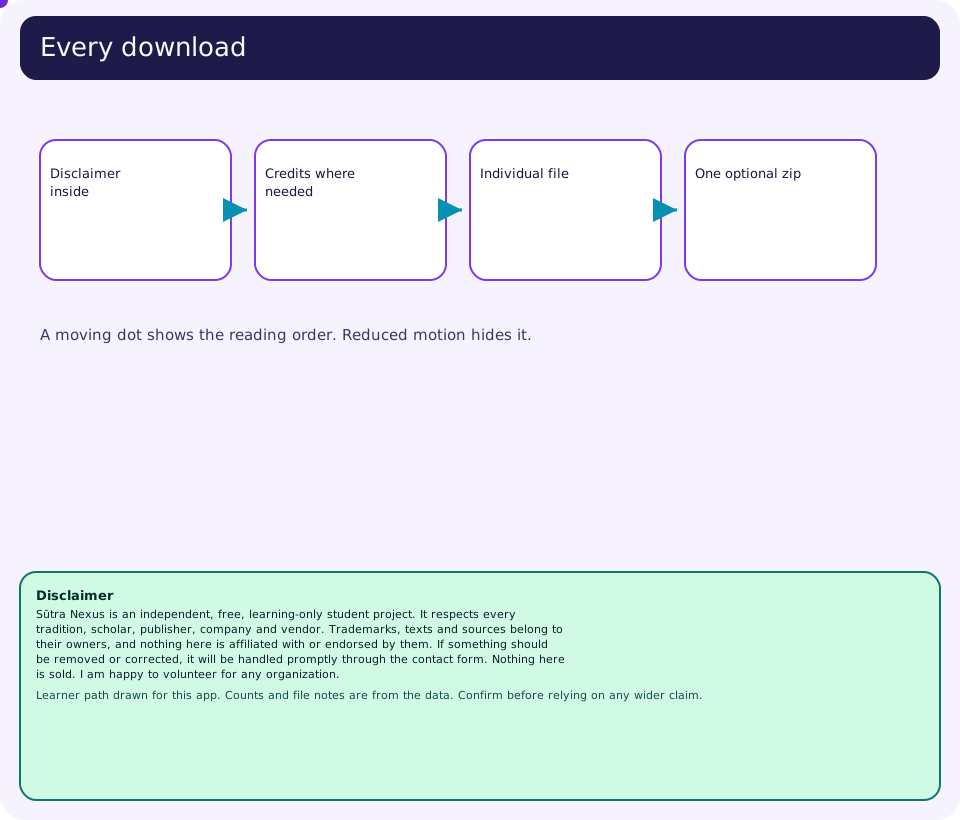
There is one optional zip, sutra-nexus-all.zip. It is the only archive. The same files are also listed one by one.
A visual
Pratyāhāra ac. Computed from data/maheshvara.json. ac has 9 sounds. Not a translation.
The card labeled bundle is the only zip. It repeats the same files and includes a readme with this disclaimer and the credits.
Sources and go deeper
ashtadhyayi-com/data README. The raw README says you are free to use the data in your own projects if you give appropriate credit. No SPDX identifier is stated. last checked 2026-10. Licence: credit required, no formal SPDX, confirmed from the raw README.
English Wikipedia, Aṣṭādhyāyī. The page says the work has 3,983 sūtras in eight chapters, each subdivided into four pādas, and lists vidhi, paribhāṣā, adhikāra, atideśa, niyama, and negation rules. CC BY-SA. last checked 2026-10. Licence: CC BY-SA 4.0.
Glossary
Term
Note
Where
sūtra
A short rule line. This app shows the source text and does not translate it.
How many Māheśvara lines does the glossary's app use?
Ecosystem
Glossary
glossary — A short note for a term used in these rooms.
Sister topics
Sister rooms are the chips in the section banner.
Bridges
Learner's note (not a translation): this page explains the app. It does not add a rule of the grammar.
Later hooks
An open meaning, and a human check of the IAST. Confirm before relying.
Sources and go deeper
ashtadhyayi-com/data README. The raw README says you are free to use the data in your own projects if you give appropriate credit. No SPDX identifier is stated. last checked 2026-10. Licence: credit required, no formal SPDX, confirmed from the raw README.
English Wikipedia, Aṣṭādhyāyī. The page says the work has 3,983 sūtras in eight chapters, each subdivided into four pādas, and lists vidhi, paribhāṣā, adhikāra, atideśa, niyama, and negation rules. CC BY-SA. last checked 2026-10. Licence: CC BY-SA 4.0.
Code libraries are MIT, Apache-2.0, BSD, or ISC. CC0 and CC BY and OFL and CC BY-NC-SA are limited to icons, the font, art, or the cited data, with attribution kept. Vendored files live in vendor/.
Learn it in 5 minutes
Code libraries in vendor/ are MIT or ISC. They are not loaded on the first screen except where a page says so.
Simple Icons 13.21.0 are CC0. Noto Sans Devanagari is OFL 1.1. The two 3D models are original and marked CC0.
The Webex Lab kit was adapted from commit 7631b317cbf2cad236403df960b5d5fac353a6de. Webex and Cisco product copy is not used.
A visual
Pratyāhāra ac. Computed from data/maheshvara.json. ac has 9 sounds. Not a translation.
vendor — A library file kept in this repository, with its licence named.
Sister topics
Sister rooms are the chips in the section banner.
Bridges
Learner's note (not a translation): this page explains the app. It does not add a rule of the grammar.
Later hooks
An open meaning, and a human check of the IAST. Confirm before relying.
Sources and go deeper
ashtadhyayi-com/data README. The raw README says you are free to use the data in your own projects if you give appropriate credit. No SPDX identifier is stated. last checked 2026-10. Licence: credit required, no formal SPDX, confirmed from the raw README.
English Wikipedia, Aṣṭādhyāyī. The page says the work has 3,983 sūtras in eight chapters, each subdivided into four pādas, and lists vidhi, paribhāṣā, adhikāra, atideśa, niyama, and negation rules. CC BY-SA. last checked 2026-10. Licence: CC BY-SA 4.0.
About
Sūtra Nexus is a free learning project by a lifelong student and AI enthusiast moving toward AI omni-channel agents. The note is short on purpose.
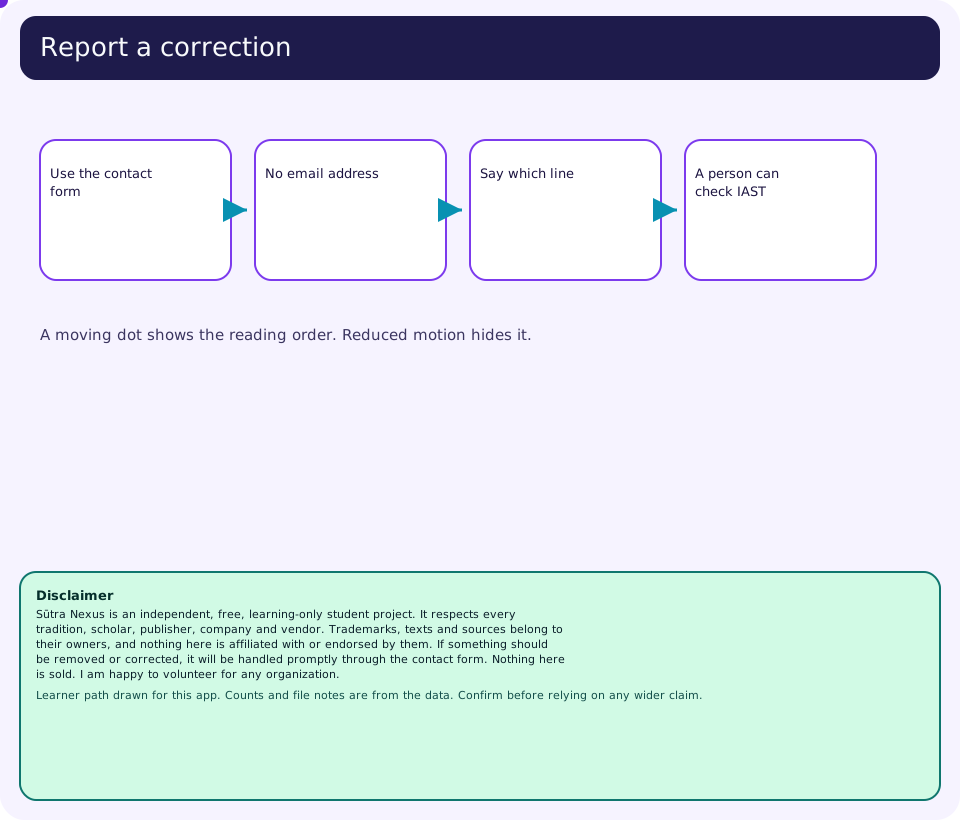
Corrections go through the contact form. There is no email address on this site.
The study wheel below is optional and loads only if you ask, on a wide screen, with motion allowed.
Phones and reduced motion keep the still poster in Downloads.
Learn it in 5 minutes
This is a free learning project by a lifelong student and AI enthusiast moving toward AI omni-channel agents.
Nothing here is sold. Corrections go through the contact form. There is no email address on this site.
The 3D wheel loads only if you ask, on a wide screen, with motion allowed. Phones keep the still poster.
A visual
Pratyāhāra ac. Computed from data/maheshvara.json. ac has 9 sounds. Not a translation.
contact form — The link in the disclaimer. Not an email address.
Sister topics
Sister rooms are the chips in the section banner.
Bridges
Learner's note (not a translation): this page explains the app. It does not add a rule of the grammar.
Later hooks
An open meaning, and a human check of the IAST. Confirm before relying.
Sources and go deeper
ashtadhyayi-com/data README. The raw README says you are free to use the data in your own projects if you give appropriate credit. No SPDX identifier is stated. last checked 2026-10. Licence: credit required, no formal SPDX, confirmed from the raw README.
English Wikipedia, Aṣṭādhyāyī. The page says the work has 3,983 sūtras in eight chapters, each subdivided into four pādas, and lists vidhi, paribhāṣā, adhikāra, atideśa, niyama, and negation rules. CC BY-SA. last checked 2026-10. Licence: CC BY-SA 4.0.